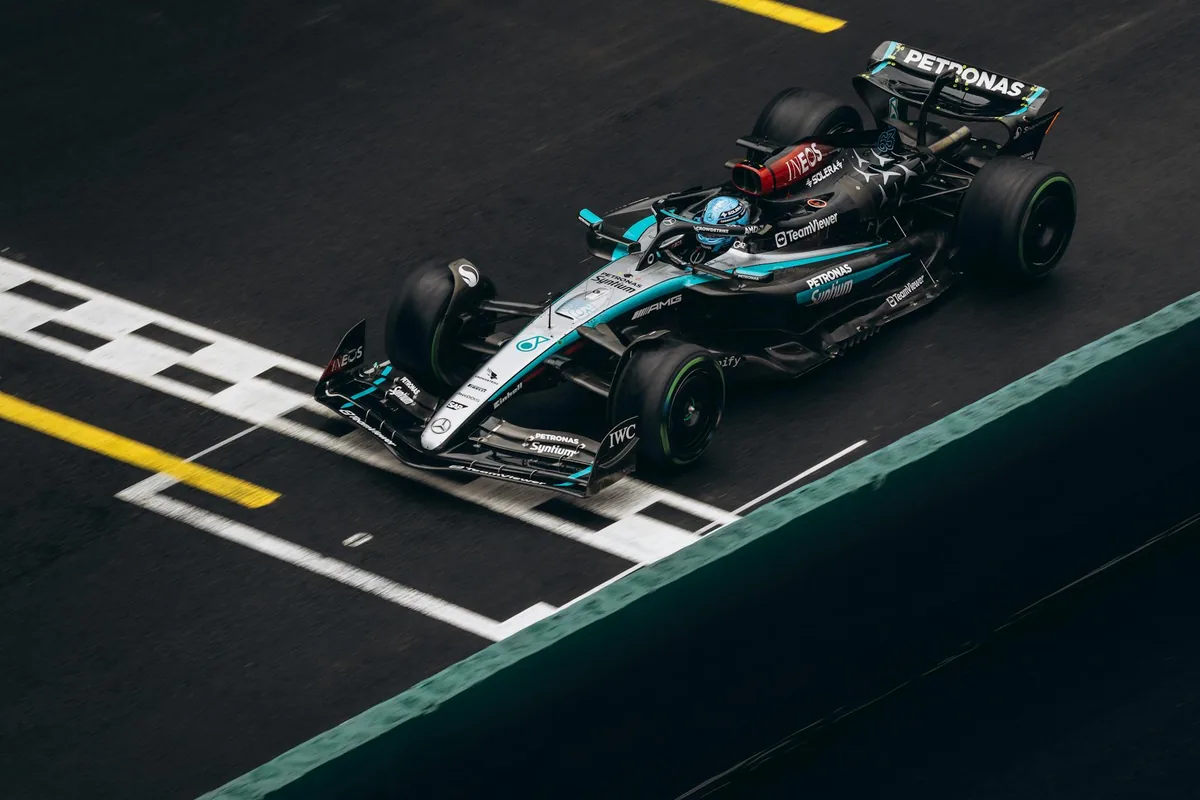
Mercedes Technical Evolution: How the Car Developed Around Hamilton
The partnership between Lewis Hamilton and the Mercedes-AMG Petronas Formula One Team stands as one of the most dominant and synergistic in motorsport history. While Hamilton’s extraordinary talent is undeniable, his six world championships with the Silver Arrows were forged through a continuous, feedback-driven technical evolution. The cars were not merely machines he drove; they were platforms refined around his unique driving style, preferences, and relentless pursuit of performance. This article traces the journey of the Mercedes F1 car’s development, highlighting how engineering and driver became a singular, championship-winning force.
The Foundation: Adapting to a New Era (2013-2016)
Hamilton’s move to Mercedes in 2013 coincided with a team on the precipice of greatness. The final year of the V8 era, with the W04, was a learning period where Hamilton’s feedback began to shape the car’s balance. His preference for a pointy, responsive front end—a trait honed at McLaren—started to influence suspension and aerodynamic philosophy. This period was crucial for building the driver-engineer relationship, particularly with his race engineer, Peter "Bono" Bonnington, a partnership that would become a cornerstone of success.
The true revolution began in 2014 with the dawn of the turbo-hybrid era. The Mercedes W05 was a technological marvel, its power unit (codenamed PU106A) setting a new benchmark. Hamilton’s role was pivotal in making this complex machine drivable. His detailed feedback on energy recovery system (ERS) deployment, brake-by-wire feel, and torque delivery was integral to refining the software maps that managed the 1.6L V6 turbo and hybrid components. This synergy resulted in a dominant 2014 Championship: Dominance in the Hybrid Era Begins. The following years, particularly during the intense 2016 Championship: The Intense Battle with Nico Rosberg, saw the car evolve to be even more efficient and driver-adjustable, with Hamilton utilizing cockpit switches to manage race pace and tire wear more effectively than his rivals.
Peak Refinement: The Hamilton-Tailored Champions (2017-2020)
With wider tires and revised aerodynamics introduced in 2017, Mercedes entered a period of peak technical refinement. The championship battles against Ferrari, detailed in our analysis of the 2017 Championship: Overcoming the Ferrari Challenge, required constant development. Hamilton’s ability to extract qualifying lap time and manage race-long tire degradation became the team’s north star.
Aerodynamic Philosophy and Balance
The aerodynamic philosophy, led by technical directors like James Allison, increasingly favored a stable rear end with high downforce, which complemented Hamilton’s smooth, late-apex cornering style. His feedback on how the car behaved in high-speed corners versus low-speed traction zones directly influenced front wing design, bargeboard complexity, and floor geometry. The team mastered creating a car that was quick over a single lap but, crucially, kind to its tires over a race stint—a hallmark of Hamilton’s Tire Management: Hamilton's Strategic Expertise.
The Pinnacle: The W11
The culmination of this era was the Mercedes W11 of 2020, arguably the most dominant F1 car ever built. It was the ultimate expression of a machine developed around its driver’s capabilities. Its low-drag efficiency, coupled with immense downforce, allowed Hamilton to exploit his Qualifying Perfection: Hamilton's One-Lap Excellence while possessing race pace that was often untouchable. The car’s adaptability on different circuit layouts was a testament to the balanced platform honed over years of his input. This machine was instrumental in securing his 2020 Championship: Breaking Schumacher's Record.
Adaptation and Challenge: The New Regulations (2022-Present)
The ground-effect regulations of 2022 presented Mercedes with its biggest technical challenge of the hybrid era. The team’s initial "zero-pod" concept on the W13 proved problematic, suffering from severe porpoising and a narrow operating window. This period tested the Hamilton-Mercedes symbiosis like never before. Hamilton’s role evolved from refining a dominant package to providing fundamental diagnostic feedback on a recalcitrant car.
His experienced feel was critical in identifying the car’s unpredictable rear end and lack of progressive grip. While the 2022 season was a Adapting to New Regulations Without Title Challenge, Hamilton’s data and feedback became the baseline for a painstaking recovery path. The 2023 W14, and its mid-season transformation, was a direct response to this driver input, moving toward a more conventional sidepod philosophy and a platform that better suited Hamilton’s need for consistent rear stability. This development journey is explored in our 2023 Championship: Analyzing Mercedes' Struggles and Hamilton's Adaptation.
The Symbiotic Process: How Hamilton’s Feedback Shapes Development
The technical evolution is not a one-way street. It is a continuous loop of simulation, on-track testing, and driver feedback. Hamilton’s contribution is multifaceted:
- Simulator Work: He spends significant time in the team’s simulator at Brackley, assessing new components and setup directions before they hit the track. His ability to correlate virtual feelings with real-world performance is exceptional.
- Post-Session Debriefs: These are where the magic happens. Hamilton, with Bono and the performance engineers, dissects every nuance of the car’s behavior. His vocabulary for describing vehicle dynamics—how the car "knuckles" on entry, the "build" of understeer, or the "snappiness" of the rear—provides engineers with precise diagnostic clues.
- Technical Preference Driving Design: As reported by authoritative technical analysts like RaceFans, Hamilton’s longstanding preference for a responsive front end has subtly influenced Mercedes’ mechanical and aero balance choices for nearly a decade, often differing from his teammates’ ideal setups.
Legacy of a Technical Partnership
The Mercedes technical evolution around Lewis Hamilton is a story of mutual elevation. The team provided him with historically competitive machinery, but he, in turn, provided the exquisite feedback and relentless benchmark that pushed the engineering team to new heights. From mastering the complex hybrid systems to refining aerodynamic balance and navigating a radical regulatory shift, Hamilton has been an integral part of the car’s development loop. This unique synergy is what transformed Mercedes from a race-winning team into a dynasty. As Hamilton prepares for a new chapter, this period remains a masterclass in how a driver’s input can become embedded in a car’s DNA, a topic further examined in the broader context of the Mercedes Era (2013-2024): The Dominant Partnership. For continued insights into F1’s technical landscape, resources like the Fédération Internationale de l'Automobile (FIA) provide official regulations and technical documentation.