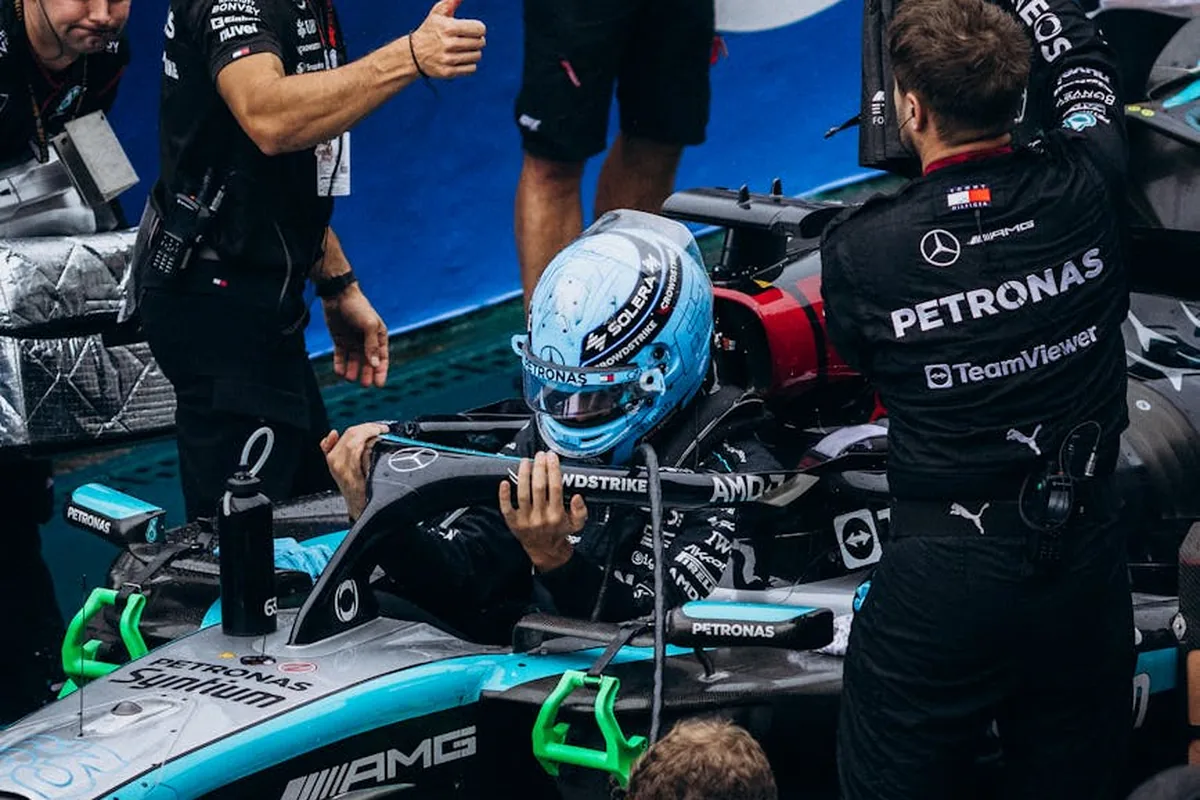
2019 Championship: A Strategic Masterclass
The 2019 Formula 1 World Championship stands as a testament to Lewis Hamilton’s evolution from a phenomenally fast driver into a complete strategic operator. While the Mercedes W10 was a dominant force, the title was not won on sheer car performance alone. It was secured through a campaign defined by relentless consistency, intelligent risk management, and a masterful synergy between driver and team. This season saw Hamilton clinch his sixth world title, moving within one of Michael Schumacher’s record, by executing a plan of near-flawless precision against a spirited challenge from Ferrari and his own teammate, Valtteri Bottas.
The Season Context: A Resurgent Ferrari
Entering 2019, the narrative was one of a resurgent Ferrari. After a strong 2018 challenge that ultimately faltered, the Scuderia appeared to have the fastest car, particularly in qualifying trim. Charles Leclerc’s arrival added a new, aggressive dynamic. For Mercedes and Hamilton, the challenge was clear: withstand Ferrari’s raw speed advantage through superior race execution, reliability, and strategic flexibility. This scenario was a stark contrast to the intra-team battles of 2016 with Nico Rosberg or the sustained pressure from Sebastian Vettel in 2017. The 2019 fight was about applying constant pressure and capitalizing on every opponent's mistake.
Pillars of the Masterclass: Consistency and Capitalization
Hamilton’s 2019 campaign was built on two unshakable pillars: metronomic consistency and ruthless capitalization. While Ferrari secured more pole positions, Hamilton and Mercedes focused on the longer game—race day.
Unmatched Race-Day Execution
Hamilton’s ability to manage tires, fuel, and electrical energy over a race distance was peerless. In races where Ferrari started ahead, such as Bahrain and Canada, Hamilton’s relentless pace and strategic pressure forced errors or created overtaking opportunities through later pit stops. His victory in Monaco, a circuit where qualifying is supposedly everything, was a clinic in controlling a race from the front under intense pressure, showcasing a level of tire management expertise that had become a hallmark of his driving.
Maximizing Points in Adversity
A champion’s season is defined by turning potential low points into solid hauls. The German Grand Prix at Hockenheim was a prime example. In treacherous wet-dry conditions where many, including Bottas and Leclerc, crashed out, Hamilton—starting from 14th on the grid after a qualifying issue—delivered a stunning drive to win. This victory, a 58-point swing relative to his direct title rivals, was the strategic and psychological knockout blow of the season. It echoed his wet weather mastery and demonstrated a mental fortitude that broke the challenge of others.
The Mercedes Machine: Synergy and Strategy
Hamilton’s success was inextricably linked to the formidable Mercedes operation. The Mercedes strategy team operated at a level of calm precision that often outmaneuvered Ferrari. Races like Hungary, where a bold early switch to a two-stop strategy won Hamilton the race, highlighted this tactical superiority. Furthermore, Mercedes’ reliability was bulletproof, while Ferrari’s was not. This operational excellence provided Hamilton with a stable platform upon which to build his championship, a continuity established since the beginning of the hybrid era dominance.
The Psychological Battle and Title Climax
By the summer break, Hamilton had built a commanding lead. The second half of the season became a demonstration of championship management. He consistently finished ahead of the Ferraris, even when they started on pole, applying a psychological stranglehold. The title was mathematically sealed at the United States Grand Prix in Austin, a circuit where Hamilton has historically excelled, as detailed in our COTA performance analysis. His drive from fifth to second, securing the necessary points, was a controlled, calculated performance—the final move in a year-long strategic game.
Legacy and Place in History
The 2019 championship was Hamilton’s third consecutive title and his sixth overall, equaling the tally of legends like Juan Manuel Fangio and moving him one behind Michael Schumacher. More than the statistics, this season showcased Hamilton’s complete transformation. It was won not with the overwhelming car dominance of 2015, but with a mature, intelligent, and relentless application of speed, strategy, and experience. It set the stage for his historic, record-tying seventh title in 2020.
For students of Formula 1 strategy, the 2019 season remains a blueprint for how to win a championship against a car with a qualifying advantage. It underscored that modern F1 titles are won through a perfect alignment of driver skill, team operation, and strategic foresight—a trinity that Hamilton and Mercedes mastered to perfection. As noted by authoritative sources like the official Formula 1 website, Hamilton’s 2019 campaign elevated his status as one of the sport’s all-time great strategic thinkers behind the wheel. Further analysis of his career trajectory can be found on platforms like BBC Sport, which chronicles his evolution from a spectacular rookie to a consummate champion.