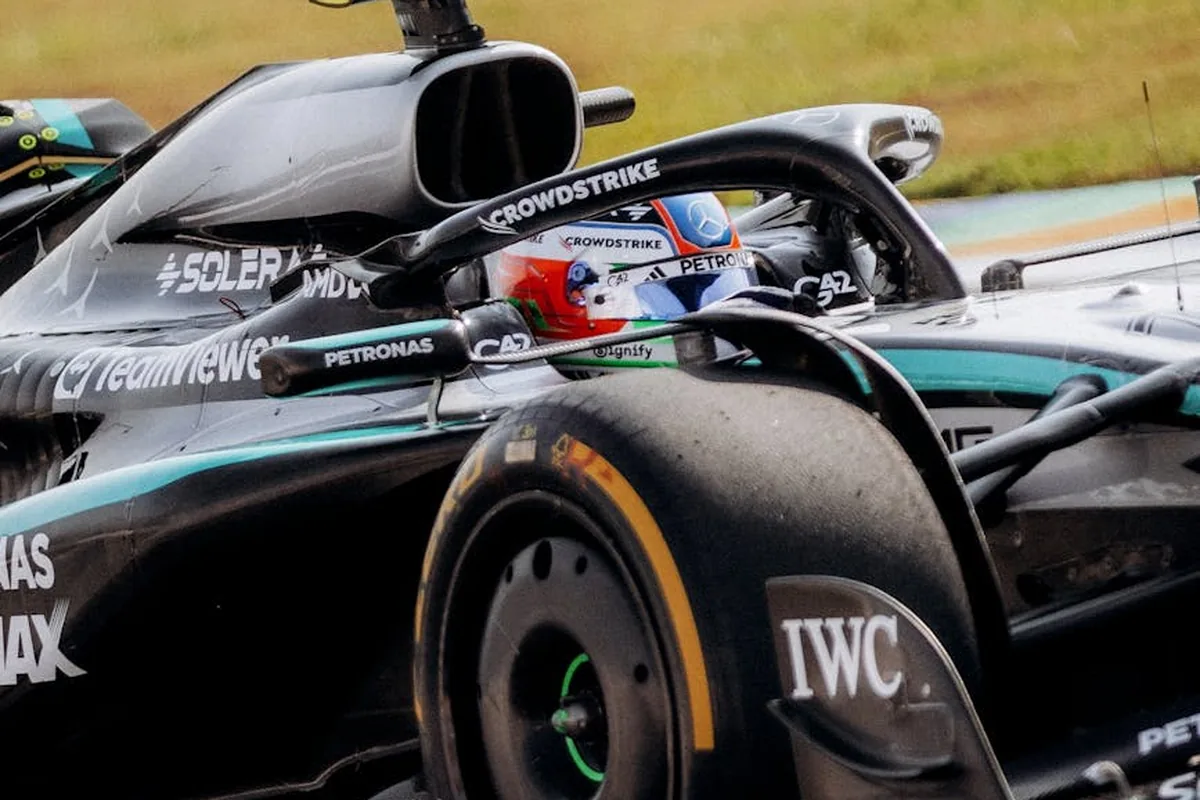
Baku City Circuit: Hamilton's Azerbaijan Performance
The Baku City Circuit, with its blend of high-speed straights and tight, castle-lined corners, stands as one of Formula 1's most unique and demanding challenges. For Lewis Hamilton, the Azerbaijan Grand Prix has been a venue of contrasting fortunes—a stage for strategic brilliance and podium finishes, but also a scene of frustration and missed opportunities. His performances in Baku offer a compelling case study in adaptability, showcasing his skill on a street circuit that often defies predictions and rewards precision.
A Track of Extremes: Understanding the Baku Challenge
Before analyzing Hamilton's results, it's crucial to understand the circuit's character. Baku features the longest full-throttle section on the F1 calendar on the start/finish straight, demanding immense power and low drag. This contrasts sharply with the twisting, narrow, and technical Sector 2 around the historic Icheri Sheher, where mechanical grip and driver confidence are paramount. This Jekyll-and-Hyde nature means car setup is always a compromise, and races are often chaotic, featuring safety cars and unexpected results. Success here requires a driver to master both outright speed and meticulous race management.
The Mercedes Era: A Mix of Mastery and Misfortune
Hamilton's record in Baku since the race's inception in 2016 reflects the unpredictable nature of the event. His first victory came in 2018, a race defined by dramatic tire failures for his then-teammate Valtteri Bottas and a late safety car. Hamilton, who had been running second, kept his composure to inherit the lead and secure a somewhat fortuitous, but strategically earned, win. This victory was a critical points haul during his intense title battle with Ferrari.
Other years have been less kind. In 2017, he finished fifth after being forced to make an unscheduled stop to secure a loose headrest. The 2021 race was a particular low point; while battling for the lead, a rare misjudgment with a magic button setting sent him straight on at Turn 1, relegating him to a 15th-place finish. This error proved costly in the context of the season-long Hamilton vs Verstappen duel.
Key Strengths Showcased in Baku
Despite the mixed results, Hamilton's performances in Azerbaijan highlight several of his core strengths as a seven-time world champion.
- Race Pace and Tire Management: In races where chaos was minimized, Hamilton's ability to manage tire degradation over long stints on Baku's abrasive surface has been exemplary. His strategic prowess, often in collaboration with the Mercedes strategy team, has turned potential top-five finishes into podiums.
- Qualifying Precision: Securing a strong grid position is vital in Baku due to the difficulty of overtaking in Sector 2. Hamilton has secured one pole position here (2021) and has frequently started on the front rows, demonstrating his one-lap capability to extract maximum performance when it counts.
- Chaos Navigation: Baku is notorious for safety car interventions. Hamilton's experience and race craft allow him to read evolving situations, avoid major incidents, and position himself to capitalize on strategic reshuffles, as seen in his 2018 victory.
Statistical Overview and Comparison
From a numbers perspective, Hamilton's Baku record is solid, if not as dominant as at some other circuits. As of the end of the 2023 season, he has one win (2018), two additional podiums (2nd in 2023, 3rd in 2016), and one pole position. He has scored points in six of his eight starts at the track. This consistency in scoring, even on off-days, underscores the remarkable reliability and points-finish streak that has defined his career.
When compared to his overall record on street circuits, Baku presents a unique challenge. Unlike the constant corners of Monaco or Singapore, Baku's long straight places a different emphasis on car performance, often highlighting any straight-line speed deficit his car may have had in certain seasons, particularly during the 2022 regulatory changes.
The 2023 Podium: A Sign of Resilience
Hamilton's drive to second place in the 2023 Azerbaijan Grand Prix was a standout performance during a season where Mercedes was still chasing Red Bull. He maximized the package, executed a clean race, and held off faster challengers to secure a podium. This result was a clear demonstration of his undiminished skill and his ability to adapt to a car that, at that stage, was not the fastest. It was a performance indicative of his return to form and podium consistency that year.
Looking Ahead: The Ferrari Chapter
With Hamilton's seismic move to Ferrari announced for 2025, his future performances at the Baku City Circuit will take on a new dimension. The circuit's power-sensitive layout will test the potency of the Ferrari power unit and the team's ability to produce a car with an efficient drag profile. For Hamilton, conquering Baku with a third different constructor would be a significant achievement, adding to his legacy of success across eras and machinery. It will be a key circuit to watch as part of the broader narrative of his transition to the Scuderia.
Conclusion
Lewis Hamilton's relationship with the Baku City Circuit is a microcosm of modern Formula 1: a blend of supreme skill, strategic complexity, and unpredictable drama. While he may not have the sheer dominance here that he enjoys at circuits like Silverstone or Hungary, his record includes a victory carved from opportunity and podiums earned through intelligent driving. His performances underscore the adaptability and racecraft required to succeed at the highest level, proving that even on a circuit that can be a lottery, the great drivers consistently find a way to influence the result. For more detailed analysis of Hamilton's performances at other specific circuits, explore our deep dives into his Silverstone mastery and his record at Interlagos.
For official race history and further statistics, the Formula 1 official website provides comprehensive data, while detailed circuit analysis can often be found on authoritative motorsport engineering sites like Racecar Engineering.