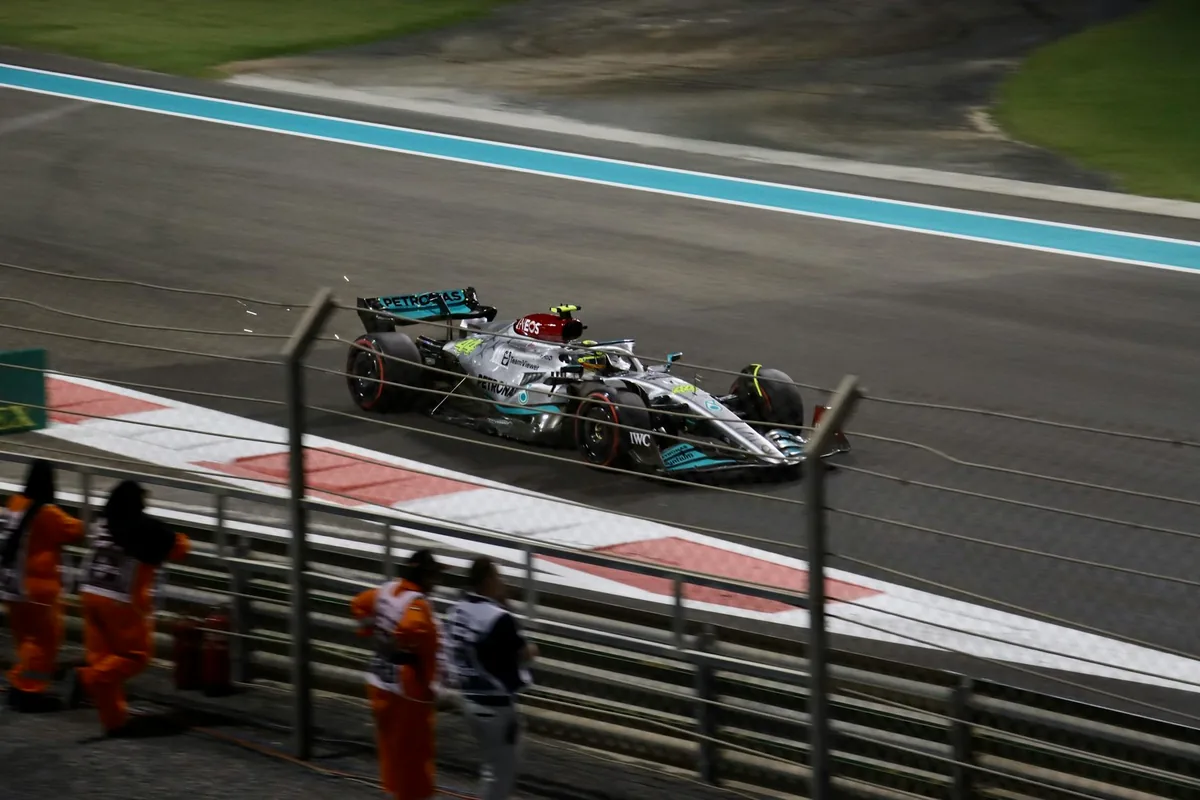
DNF Rate: The Statistical Backbone of Hamilton's Reliability
In Formula 1, raw speed and racecraft are only part of the championship equation. A driver's ultimate success is equally dependent on a less glamorous but critical metric: reliability. For Lewis Hamilton, his remarkably low Did Not Finish (DNF) rate stands as a foundational pillar of his record-breaking career. This statistic, often overshadowed by wins and poles, is a direct reflection of his precision, mechanical sympathy, and the operational excellence of the teams he has driven for. Analyzing Hamilton's DNF rate provides a crucial lens through which to understand his unprecedented consistency and longevity at the pinnacle of motorsport.
Breaking Down the Numbers: A Career Overview
As of the end of the 2023 season, Lewis Hamilton has started over 330 Grands Prix. Within that vast sample, his DNF count remains strikingly low. Excluding races where he was classified but multiple laps down due to severe damage, his mechanical and accident-related retirements number in the low 30s. This translates to a career DNF rate of approximately 10%, a figure that becomes even more impressive when contextualized against his era and rivals.
This reliability is not a product of a single season but a sustained trait. His rookie year in 2007 saw a few retirements, but he quickly established a reputation for bringing the car home. This consistency was a key factor in his dramatic 2008 title win, where maximizing every finish was paramount. The trend continued through his McLaren years, where despite the team's occasional operational fluctuations, Hamilton's personal DNF rate from driver error remained minimal.
The Mercedes Era: A Symbiosis of Driver and Machine
Hamilton's move to Mercedes in 2013 marked the beginning of a period of historically low attrition. The combination of his refined, smooth driving style and Mercedes' bulletproof reliability during the hybrid era created a virtually unstoppable force. From 2014 to 2021, seasons where he fought for the championship every year, his DNFs due to pure mechanical failure were exceptionally rare.
This reliability was a cornerstone of his dominant runs, such as during the peak of Mercedes' supremacy in 2015. While rivals like Sebastian Vettel's Ferrari suffered key retirements in their championship battles, Hamilton's car, managed with expert precision, kept finishing races. This relentless accumulation of points is perfectly illustrated in his remarkable streak of consecutive points finishes, a record that is intrinsically linked to a low DNF rate.
Causes of Retirements: Analyzing the Exceptions
Examining the causes behind Hamilton's relatively few DNFs reveals patterns that further highlight his reliability. The retirements can be broadly categorized:
- Mechanical Failures: These are the rarest category in his Mercedes tenure. Occasional power unit issues or gearbox failures, such as in Malaysia 2016, stand out precisely because they were so unusual for the team.
- First-Lap Incidents & Collisions: A more common, though still infrequent, cause. The high-risk nature of opening laps accounts for several retirements, including notable ones in his intense battles with Nico Rosberg.
- Puncture-Induced Accidents: Events like Baku 2021, where a tire failure led to a crash from the lead, are statistical outliers but demonstrate how even the most reliable driver is subject to variables beyond their control.
- Strategic/Operational Retirements: In rare cases, such as Austria 2018, the team retired the car as a precaution when running outside the points, preserving engine mileage.
What remains conspicuously absent is a long list of DNFs caused by driver error alone. Hamilton's ability to stay out of trouble, manage risk, and extract performance without over-stressing the car is a hallmark of his greatness.
Comparative Context: Hamilton vs. Peers and Legends
To fully appreciate Hamilton's DNF rate, comparison is essential. Throughout his championship battles, his direct rivals often experienced higher attrition. During the 2017 and 2018 seasons, Sebastian Vettel and Ferrari's challenge was undermined by several critical retirements and operational errors, while Hamilton and Mercedes maintained near-flawless execution. This contrast was a decisive factor in Hamilton overcoming Ferrari's pressure.
Historically, his reliability also stands tall. According to F1 statistics repository StatsF1, Hamilton's DNF percentage is among the lowest for drivers with comparable career lengths. When discussing Hamilton vs. Schumacher, reliability is a key differentiator. While Schumacher also had periods of great reliability with Ferrari, his earlier career at Benetton involved more retirements. Hamilton's ability to maintain such a low rate across two different top teams (McLaren and Mercedes) over 17+ seasons is a testament to his adaptable and mechanically sympathetic approach.
The Impact on Race Strategy and Championship Outcomes
A low DNF rate fundamentally changes how a driver and team approach a championship campaign. It allows for aggressive points accumulation and provides strategic flexibility. Knowing the car is likely to finish allows teams like Mercedes to optimize strategy for race wins rather than simply banking points. This reliability was a psychological weapon, increasing pressure on rivals who knew that Hamilton would almost certainly be there at the finish, ready to capitalize on any mistake.
This was never more evident than in the intense 2021 duel with Max Verstappen. While both drivers had moments of contact, Hamilton's low DNF rate from mechanical issues meant the title fight remained razor-close until the final lap. His ability to consistently finish races, often on the podium, is detailed in analyses of his record podium streaks, a feat impossible without exceptional reliability.
Looking Ahead: Reliability in a New Chapter
As Hamilton prepares for his move to Ferrari in 2025, his historic DNF rate faces a new test. Ferrari's operational reliability and strategic consistency have fluctuated in the modern era. Hamilton's experience and feedback will be crucial, but maintaining his personal standard of finishing races will depend on a new technical partnership. This transition adds another fascinating layer to the analysis of his career-defining team switch.
Ultimately, Lewis Hamilton's DNF rate is more than a dry statistic; it is a quantifiable measure of his precision, intelligence, and the high-performance symbiosis he achieved with his engineers. In a sport where every finish counts, his ability to consistently see the checkered flag has been as vital to his seven world championships as his 100+ pole positions and race wins. It is the unshakeable foundation upon which his legacy of sustained excellence is built.