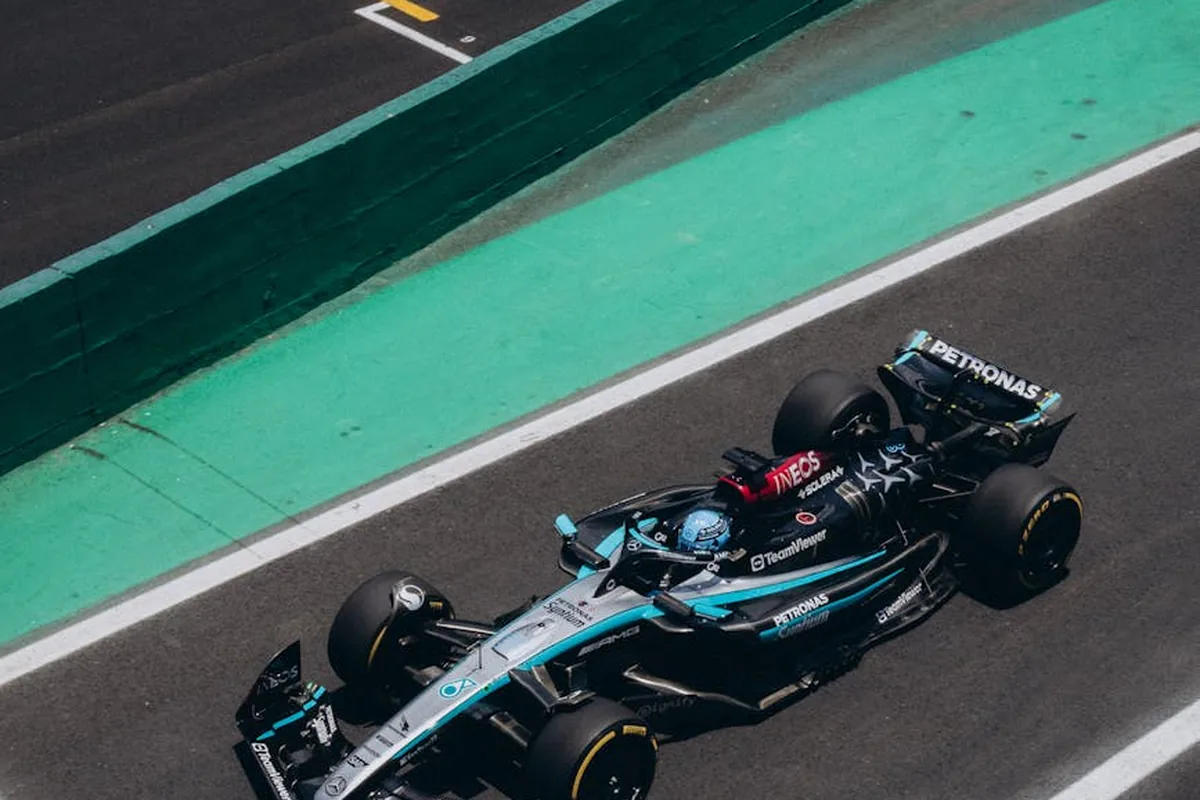
The Strategic Foundation: Why Engine Partnerships Define Modern F1 Success
In Formula 1's complex technical ecosystem, the relationship between a works team and its engine supplier is arguably the single most critical performance differentiator. For Lewis Hamilton, his era of unprecedented dominance with Mercedes-AMG Petronas was fundamentally built upon the team's status as the works outfit for the Mercedes-AMG High Performance Powertrains division. This integrated partnership provided a decisive advantage that powered six of his seven world championships, creating a synergy that customer teams could never fully replicate. The Mercedes power unit's supremacy, particularly at the dawn of the hybrid era in 2014, set a benchmark that reshaped the competitive landscape for nearly a decade.
The Works Team Advantage: Integration Over Supply
The core benefit of a works partnership, as exemplified by Mercedes, is total integration. The power unit is not merely a purchased component but is developed in lockstep with the chassis, aerodynamics, and cooling systems from the earliest design phase. This allows for a holistic car concept where the internal combustion engine, Energy Recovery Systems (ERS), and battery are packaged optimally for aerodynamic and weight distribution benefits. For Mercedes during their peak, this meant designing a car with a lower center of gravity and tighter rear packaging than rivals, a concept that delivered a crushing advantage as detailed in our analysis of Hamilton's dominant 2014 championship win.
This contrasts sharply with the experience of customer teams, who receive a power unit specification that is essentially frozen. They must design their chassis around a pre-defined engine package, often compromising their aerodynamic philosophy. Furthermore, works teams receive the latest software maps and upgrade cycles first, while customer teams may operate with a slight delay. This deep technical symbiosis between Brackley (chassis) and Brixworth (engine) was the bedrock of the team's success, a period explored in depth in our overview of the Mercedes dominance era.
Technical Feedback Loop: The Driver's Role
A less visible but vital aspect of the works partnership is the closed-loop feedback system involving the driver. Lewis Hamilton’s ability to communicate precise feedback on power delivery, drivability, and energy recovery deployment directly to the engineers who designed the unit accelerated development cycles. His input on throttle application and hybrid system management, refined over seasons, helped tailor the power unit's characteristics to his driving style and the team’s strategic needs. This level of influence is rarely available to drivers at customer teams.
The Mercedes PU106 Hybrid: A Decade-Defining Innovation
The introduction of the complex 1.6-liter V6 turbo-hybrid regulations in 2014 was a watershed moment that Mercedes leveraged perfectly. Their PU106 power unit featured a split-turbo design—where the compressor and turbine were placed at opposite ends of the engine—which dramatically improved packaging and reduced turbo lag. More crucially, their mastery of the MGU-H (Motor Generator Unit – Heat) for harvesting energy from exhaust gases gave them a significant ERS advantage.
This technical leap resulted in a power and efficiency deficit that competitors, notably Ferrari and Renault, spent years trying to close. The advantage was so pronounced that it formed the basis for seasons of sustained excellence, such as the unstoppable dominance of the 2015 season. The power unit's reliability and performance were key in turning strategic opportunities into victories, allowing Hamilton and the team to execute aggressive race strategies with confidence.
Impact on Team Dynamics and Championship Battles
The reliability and performance of the Mercedes power unit directly shaped intra-team dynamics and championship outcomes. During the intense Hamilton vs. Rosberg rivalry, both drivers had equal access to the pinnacle of powertrain technology, making their duel a pure contest of driving and strategy. Conversely, when Ferrari or Red Bull mounted a challenge, as with Sebastian Vettel in 2017 and 2018, they were often doing so with a perceived power deficit, forcing them to take more strategic risks.
This engine advantage also insulated Mercedes from the performance fluctuations experienced by their customer teams. While works-team Mercedes enjoyed bulletproof reliability and peak performance, customer teams like Williams or Force India (now Aston Martin) could suffer from installation issues or suboptimal packaging, highlighting that the hardware alone was not enough without the works partnership. The pressure Ferrari applied during the 2018 season, as analyzed in our article on responding to Ferrari pressure, was ultimately overcome by the holistic strength of the Mercedes works operation.
The Evolving Landscape: Convergence and New Challenges
By the 2020s, competitor convergence, particularly from Honda with Red Bull and Ferrari's own internal development, began to erode the absolute power unit advantage. The 2022 ground-effect regulations further shifted the performance emphasis towards chassis aerodynamics, an area where Mercedes initially struggled. This period, examined in our analysis of Mercedes' struggles and Hamilton's adaptation, demonstrated that even the most potent engine partnership could not compensate for a fundamental chassis concept misstep.
The current engine freeze until the 2026 power unit regulations has temporarily limited development, placing a premium on reliability and software optimization. However, the impending 2026 regulations, which will increase electrical power and mandate fully sustainable fuels, promise to reset the competitive order. Manufacturers like Audi will enter as new works operations, while Honda will formally return with Aston Martin. This makes the choice of a works partnership more critical than ever for long-term success.
Conclusion: The Irreplaceable Edge
The story of Lewis Hamilton's success with Mercedes is inextricably linked to the works engine partnership. It provided a foundation of power, efficiency, and reliability that enabled the team to build championship-winning cars around a dominant driver. While aerodynamic genius and operational excellence were vital, they were amplified by an engine advantage born from seamless integration. As Formula 1 moves toward its next technological frontier, the lesson remains clear: ultimate success is most consistently achieved when the heart of the car—the power unit—is developed in unison with the machine it powers. For further reading on the technical evolution of F1 power units, visit the official FIA Technical Department resources, or explore detailed historical analyses at Motor Sport Magazine's archive.