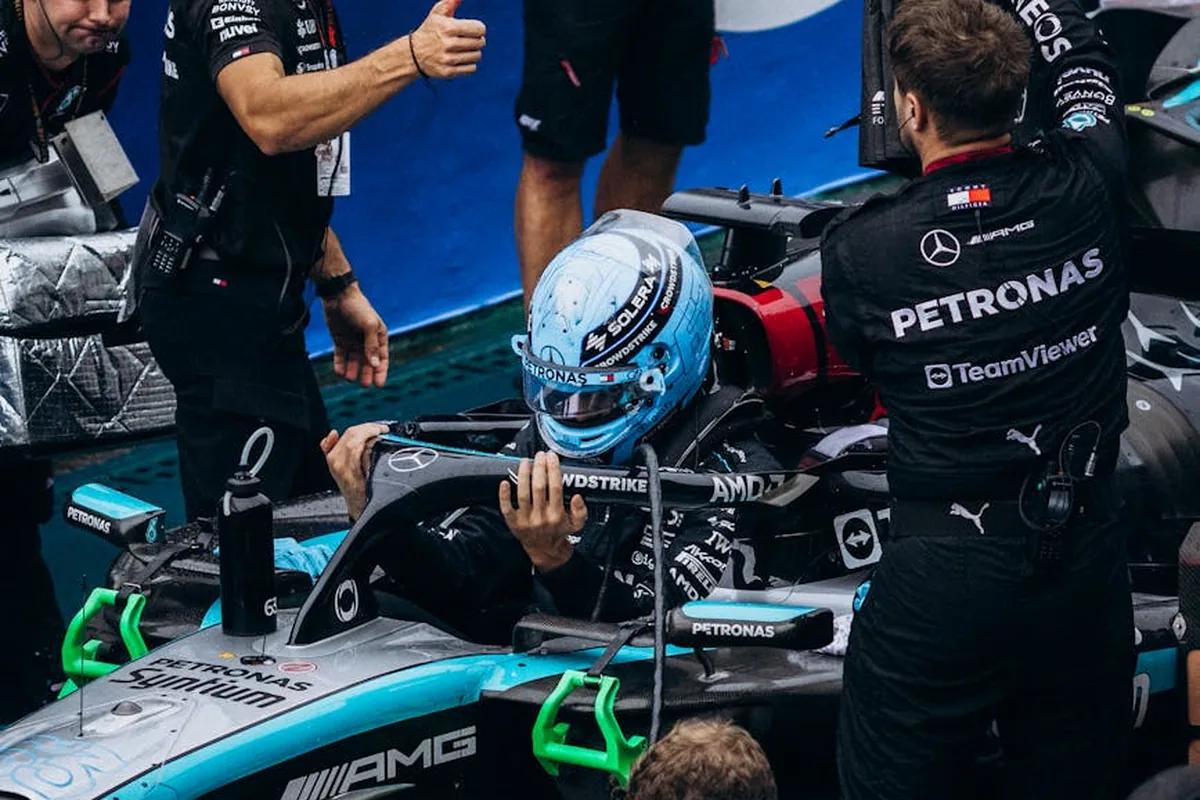
Engine Supplier Relationships: The Mercedes vs Ferrari Power Dynamic
The relationship between a Formula 1 team and its engine supplier is one of the most critical and complex partnerships in motorsport. For Lewis Hamilton, his career-defining success has been intrinsically linked to the Mercedes power unit, a partnership that dominated the hybrid era. As he prepares for a seismic shift to Ferrari in 2025, understanding the contrasting dynamics of these two legendary power unit manufacturers—Mercedes and Ferrari—becomes essential. This analysis delves into the technical, strategic, and cultural differences that define these engine supplier relationships and their impact on a driver's championship prospects.
The Mercedes Power Unit: A Blueprint for Dominance
Hamilton's move to Mercedes in 2013 coincided with a perfect storm of regulatory change and technical brilliance. The introduction of the complex 1.6-liter V6 turbo-hybrid power units in 2014 saw Mercedes establish an unprecedented advantage. The relationship between the Mercedes works team and its High-Performance Powertrains (HPP) division in Brixworth was seamless, characterized by deep integration, rapid development cycles, and relentless innovation.
This synergy was the bedrock of Hamilton's success, providing him with a car that was not only powerful but also remarkably efficient and reliable. The Mercedes power unit's superior energy recovery systems (ERS) and thermal efficiency allowed for strategic flexibility in races, a key factor in numerous victories. This technical partnership fueled an era of dominance, leading to six of Hamilton's seven world championships, including his dominant return to the top in 2014 and the record-breaking campaigns that followed.
Integration and Feedback: A Virtuous Cycle
The works team status meant that the chassis and power unit were developed in concert. Hamilton’s role was pivotal; his detailed technical feedback on power delivery, drivability, and energy management was directly funneled to the engineers at HPP. This created a virtuous cycle of development where the driver's feel directly influenced engine mapping and software updates. This level of integration is a luxury only a works team enjoys and was a significant factor in Mercedes' ability to optimize their package year after year, as seen during periods of sustained excellence from 2013 onward.
The Ferrari Power Unit: Passion, Politics, and Potential
Ferrari represents a fundamentally different model. As both a constructor and an engine supplier, Ferrari’s power unit division is fully in-house, housed within the sprawling Maranello campus. The culture is steeped in history, passion, and intense pressure. For a customer team, receiving a Ferrari engine has historically been a double-edged sword: offering strong peak power but sometimes coupled with strategic and political complexities.
The Scuderia’s engine program has seen dramatic fluctuations. The 2019 season showcased a potent power unit, leading to a strong challenge, while subsequent years were marred by technical directives and performance inconsistencies. The relationship between the works team and its customers, such as Haas and Alfa Romeo/Sauber, is traditionally more hierarchical compared to Mercedes' more collaborative approach with its client teams.
The Works Driver Advantage at Maranello
For Hamilton, joining Ferrari as a works driver in 2025 changes the dynamic entirely. He will be at the epicenter of Ferrari’s technical efforts. The potential for direct influence over the power unit’s development to suit his driving style is enormous. However, he will also inherit the unique pressure of the *Ferrari* political environment, where internal dynamics between the chassis and engine departments can be as challenging as the competition on track. Success will depend on his ability to navigate this and foster the same kind of synergistic relationship he enjoyed at Mercedes.
Comparative Analysis: Reliability, Power, and Philosophy
When comparing the two as engine suppliers, key distinctions emerge:
- Development Philosophy: Mercedes HPP has been characterized by methodical, incremental innovation and extreme reliability. Ferrari has often pursued aggressive, high-reward development paths, which can lead to greater performance volatility.
- Strategic Support: Mercedes’ strategy, honed over years of dominance, became an extension of their technical package. Ferrari’s race strategy has been more frequently questioned, though recent restructuring aims to address this.
- Customer Team Support: Historically, Mercedes has provided its customer teams (like McLaren and Williams) with very competitive, near-identical hardware. Ferrari’s support is robust, but the works team often maintains a developmental edge.
These differences were starkly visible during the intense championship battles between Hamilton and Sebastian Vettel from 2017-2018, where Mercedes’ overall package reliability often proved decisive in the final standings.
Hamilton’s Transition: From Integrated Partner to Maranello Leader
Hamilton’s move is unprecedented in modern F1. He is transitioning from being the central figure in a perfectly tuned, championship-winning machine to becoming the catalyst for a resurgence at the sport’s most iconic team. His experience with the Mercedes power unit’s evolution gives him a unique benchmark.
At Ferrari, his technical feedback will be crucial in steering the development of the 2026 power unit, which will be built under new regulations. His ability to communicate his needs effectively to a new engineering group will be critical. This mirrors, in many ways, the challenge he faced during his career-defining transition from McLaren to Mercedes, albeit at a later stage in his career.
The 2024 season, his final campaign with Mercedes, will be a fascinating preview of his mindset as he concludes this epoch-defining partnership.
The Future of Power Unit Partnerships in F1
The engine supplier landscape is evolving. The 2026 regulation changes, focusing on increased electrical power and sustainable fuels, will reset the competitive order. Mercedes and Ferrari, alongside Red Bull Powertrains (now aligned with Honda), will be at the forefront of this new era.
Hamilton’s move to Ferrari adds a compelling narrative layer to this technical fight. It will test whether the close-knit, integrated model perfected by Mercedes can be transplanted or adapted within Ferrari’s different culture. Furthermore, it highlights the immense value of a driver as a technical partner, capable of influencing not just a car’s setup, but the fundamental direction of a power unit’s development. For more on how technical partnerships shape success, explore our analysis of Mercedes' technical innovations.
Ultimately, the Mercedes vs. Ferrari engine supplier comparison is more than just about horsepower curves and energy deployment. It’s about organizational culture, integration depth, and strategic execution. Hamilton’s journey from one to the other will provide the ultimate case study in how these relationships define a champion’s legacy. For further insight into his career trajectory, consider his return to form in 2023 amidst a challenging car package.
Outbound Resources: For official technical regulations regarding Formula 1 power units, visit the FIA's official documentation. To understand the history of Ferrari's engineering, the Scuderia Ferrari official site provides historical context.