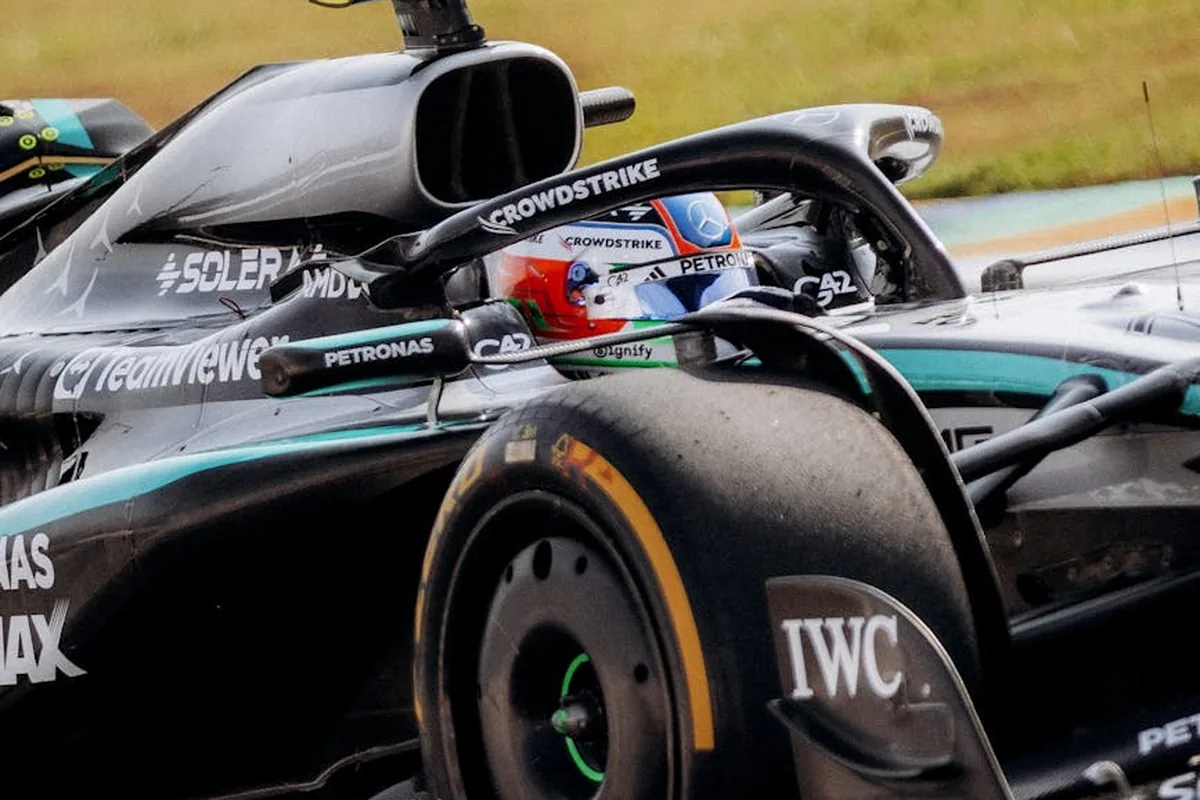
Equaling Schumacher's Record: The Legacy Moment
The 2020 Eifel Grand Prix at the Nürburgring was not just another race. On October 11, 2020, Lewis Hamilton crossed the finish line to claim his 91st Formula 1 victory, drawing level with the legendary Michael Schumacher’s once-untouchable record for most Grand Prix wins. This was a seismic moment in sporting history, a symbolic passing of the torch that transcended statistics. It was the culmination of relentless consistency, supreme talent, and a dominant partnership with Mercedes, marking a pivotal chapter in Hamilton’s journey to be considered among the absolute greatest.
The Road to 91: A Journey of Sustained Excellence
Hamilton’s path to equaling Schumacher’s win tally was defined by a transition from a thrilling, fast rookie to a complete, strategic master of the sport. His early career at McLaren showcased his raw speed, culminating in a dramatic first championship in 2008. However, the consistent, record-breaking success truly began with his move to Mercedes, a decision that initially raised eyebrows but would redefine the sport’s competitive landscape.
The dawn of the hybrid era in 2014 unlocked an unprecedented period of dominance. Hamilton secured his second title that year, a season analyzed in our deep dive on Hamilton's dominant return to the top. This began a streak of championship-winning seasons where victory became a frequent habit. Battles with teammate Nico Rosberg, particularly the intense 2016 championship duel, and fierce competition from Sebastian Vettel’s Ferrari in 2017 and 2018, honed his racecraft and mental fortitude. Each win added to the tally, building momentum toward the historic number.
The Eifel Grand Prix: A Historic Day at the Nürburgring
Circumstances made the 2020 Eifel Grand Prix a fitting stage for history. Held at the iconic Nürburgring, a circuit steeped in German motorsport heritage and intrinsically linked to Michael Schumacher, the race was challenging. Cold temperatures made tire management difficult. Hamilton started second but seized the lead when his pole-sitting teammate Valtteri Bottas suffered a power unit issue.
From there, Hamilton controlled the race with a masterclass in management, holding off the charging Red Bull of Max Verstappen. The significance of the moment was palpable. Upon crossing the line, the Mercedes team radio erupted with congratulations, but the most poignant recognition came from the Schumacher family. Mick Schumacher, Michael’s son and a future F1 driver himself, presented Hamilton with one of his father’s iconic red helmets—a gesture of immense respect that moved Hamilton to tears.
As the official Formula 1 website reported, Hamilton stated, “I don’t even know what to say. I remember watching Michael winning all those Grands Prix… to be up there with him now is just an incredible honor.”
Beyond the Number: Contextualizing the Achievement
While the number 91 was the headline, understanding its weight requires context. Schumacher set his record over 246 starts, a phenomenal hit rate. Hamilton matched it in his 261st start, a testament to similar longevity and consistency. However, the eras differed significantly.
Schumacher’s career featured seasons with fewer races; the calendar expanded during Hamilton’s tenure, offering more opportunities. Conversely, the modern field is widely regarded as more competitive from top to bottom, with greater reliability narrowing the margin for error. Hamilton’s achievement was built against a backdrop of standardized engines, complex hybrid power units, and fierce in-team rivalries. A detailed statistical comparison of these two legends reveals the nuances of their respective dominances.
This milestone also underscored Hamilton’s unique strengths: an unparalleled combination of one-lap qualifying speed (he would later break Schumacher’s pole position record, too), strategic intelligence, and an ability to deliver under pressure. It was a record of quality, not just quantity, featuring wins in the rain, from behind, and in championship deciders.
The Ripple Effect: Impact on Hamilton's Legacy and F1
Equaling the wins record was a transformative moment for Hamilton’s legacy. It shifted the conversation from “one of the greats” to a direct comparison with the statistical benchmark of the sport. It provided irrefutable numerical evidence to support the argument for his greatness, silencing many remaining doubters. This moment paved the way for his next achievement just weeks later: securing a seventh world championship in Turkey to draw level with Schumacher’s title record, a season we analyze in 2020 championship: record-equaling seventh title.
For Formula 1, it was a historic moment that bridged generations. It captivated long-time fans who witnessed Schumacher’s reign and introduced a new audience to a living legend rewriting the history books in real-time. The moment, widely covered by global outlets like BBC Sport, transcended the sport, becoming a major news story.
The Foundation for More: A Springboard to Further History
Far from being a culmination, equaling the record served as a springboard. The mental barrier was broken. Hamilton spoke of feeling "humbled" and "inspired," and that inspiration fueled an even greater drive. He won the very next race in Portugal, taking the record outright with win number 92, and continued to extend it to over 100 victories. The pursuit of the wins record and the seventh title were intertwined, demonstrating a period of peak performance during the Mercedes dominant partnership.
This legacy moment also coincided with Hamilton using his platform more forcefully for social change, advocating for diversity and inclusion within Formula 1 and beyond. His stature as a record-equaling champion amplified his voice, making him not just a sporting icon but a cultural leader, topics explored in our articles on diversity and inclusion advocacy and his knighthood recognition.
Ultimately, equaling Michael Schumacher’s victory record at the 2020 Eifel Grand Prix was more than a statistical tie. It was a profound symbolic moment, a recognition of sustained excellence over a decade and a half, and a definitive point that cemented Lewis Hamilton’s place in the pantheon of sporting immortals. It was the moment the record books were irrevocably rewritten.