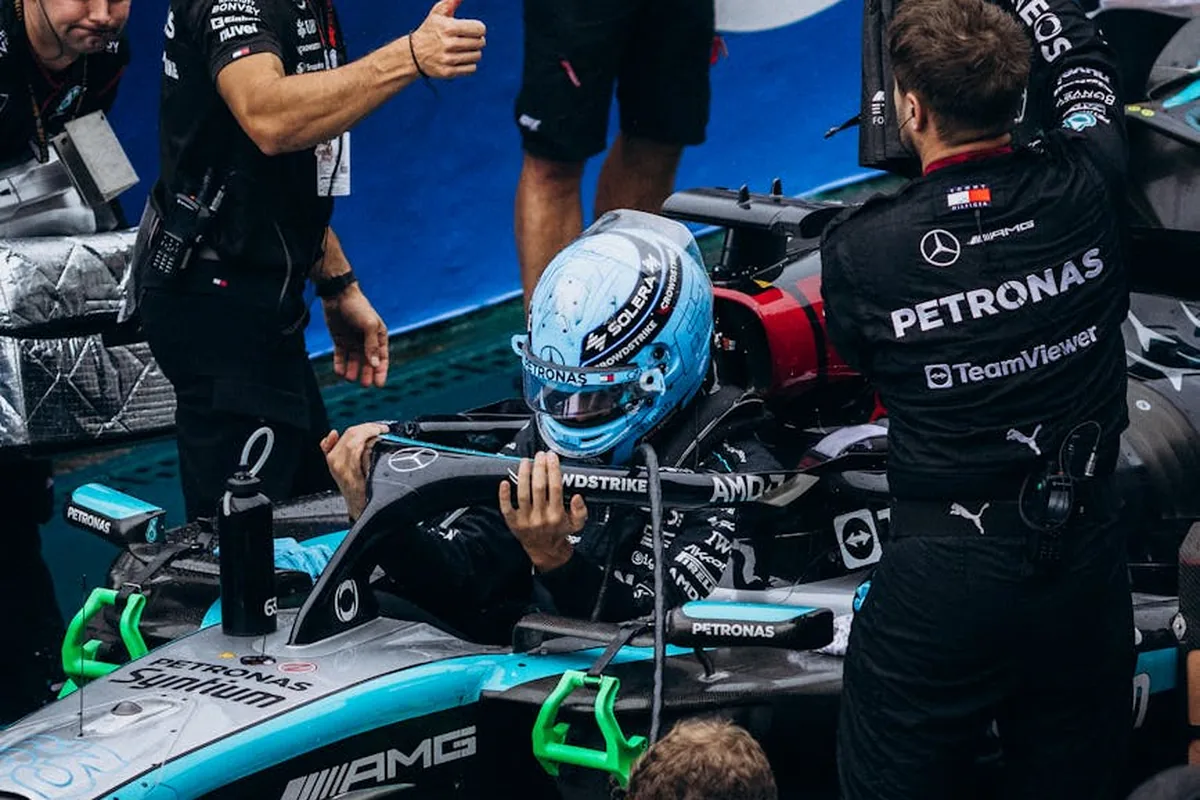
Equalizing Schumacher's Wins Record: 2020 Portuguese Grand Prix
On October 25, 2020, at the Autódromo Internacional do Algarve, Lewis Hamilton crossed the finish line to win the Portuguese Grand Prix. This was not just another victory; it was his 91st in Formula One, drawing him level with Michael Schumacher’s once-seemingly untouchable record for most Grand Prix wins. The achievement was a monumental milestone in Hamilton’s career, symbolizing a decade of sustained excellence and dominance. The race itself was a masterclass in adaptability and race management, perfectly encapsulating the skills that had propelled Hamilton to the pinnacle of the sport’s history books.
The Buildup to a Historic Moment
The 2020 season was already historic, conducted under the shadow of a global pandemic that reshaped the calendar. Hamilton and Mercedes arrived in Portugal in imperious form, having secured the Constructors' Championship at the previous race in Imola. Hamilton himself was on the cusp of a seventh world title, but the immediate focus was on matching Schumacher’s 91 wins. The pressure was immense, but it was a pressure Hamilton had learned to thrive under throughout his Mercedes era.
The Algarve circuit was a new challenge for most drivers, having been added to the calendar as a replacement event. Its undulating layout and low-grip surface, exacerbated by newly laid asphalt, promised a tricky weekend. In qualifying, Hamilton secured pole position, but it was his teammate Valtteri Bottas who initially seized the lead at the start of the race, with Hamilton dropping to third behind the fast-starting McLaren of Carlos Sainz.
A Race of Patience and Supreme Control
The early laps were a test of composure. On the slippery surface, Hamilton bided his time, carefully managing his tires while others grappled with grip. This demonstrated his evolved tire management expertise, a skill honed over years of strategic battles.
The Critical Phase
As the track rubbered in and grip levels improved, Hamilton’s Mercedes came alive. On lap 20, he executed a decisive move on Sainz for second place. Just a few laps later, he closed in on Bottas. Using DRS on the main straight, Hamilton swept past his teammate to take a lead he would never relinquish. The overtake was a display of pure pace and strategic positioning.
Managing the Gap
Once in front, Hamilton controlled the race with metronomic precision. He managed the gap to Bottas, preserved his tires, and responded when necessary to any potential threat. His communication with race engineer Peter ‘Bono’ Bonnington was a model of efficiency, a key component of the Mercedes strategy team's success. He crossed the line 25 seconds clear of Bottas, with Max Verstappen completing the podium.
The Significance of Win Number 91
As Hamilton took the chequered flag, the weight of the achievement was palpable. Schumacher’s record, set during Ferrari’s early-2000s dominance, had stood for nearly a decade and was considered by many a benchmark of F1 success. Matching it was a testament to Hamilton’s longevity, consistency, and partnership with a historically great team.
The victory underscored several key aspects of Hamilton’s career:
- Sustained Excellence: The win was part of a season of utter dominance, driving the formidable Mercedes W11, arguably the most dominant car in F1 history.
- Adaptability: Excelling at a brand-new circuit highlighted his ability to quickly master unfamiliar challenges, a trait evident since his rookie season.
- Mental Fortitude: Handling the immense external expectation to equal a legendary record showcased a champion’s mindset, similar to what he displayed in intense campaigns like the 2016 battle with Nico Rosberg.
In his post-race interview, Hamilton was visibly emotional, dedicating the achievement to his family and team. He spoke of his admiration for Schumacher, making the moment one of respect and historical resonance rather than mere statistical triumph.
Broader Context in the Hamilton Legacy
The 91st win was not an isolated peak but a point on an upward trajectory. It paved the way for him to break the record just two weeks later at the Emilia Romagna Grand Prix, and soon after, to secure his record-breaking seventh world championship in Turkey. This period represented the absolute zenith of his and Mercedes’ power.
This milestone also fueled the ongoing statistical comparison between Hamilton and Schumacher, debates that extend beyond numbers to encompass their eras, teammates, and impact on the sport. Furthermore, it set the stage for the dramatic and controversial 2021 title fight with Max Verstappen, proving that even after such a historic achievement, Hamilton’s competitive fire burned undimmed.
Conclusion: A Masterful Performance for the Ages
The 2020 Portuguese Grand Prix was a race that combined narrative destiny with driving mastery. Lewis Hamilton’s victory to equal Michael Schumacher’s win record was a historic moment delivered through a performance that exemplified his greatest strengths: strategic patience, peerless race pace, and an unerring ability to deliver under pressure. It was a definitive chapter in a career defined by breaking barriers and redefining what is possible in Formula One. For a detailed look at all his victories, explore our complete chronological list of every Lewis Hamilton race win.
For official race highlights and historical context, visit the Formula 1 official website. To learn more about Michael Schumacher's career and records, a reliable resource is the Fédération Internationale de l'Automobile (FIA).