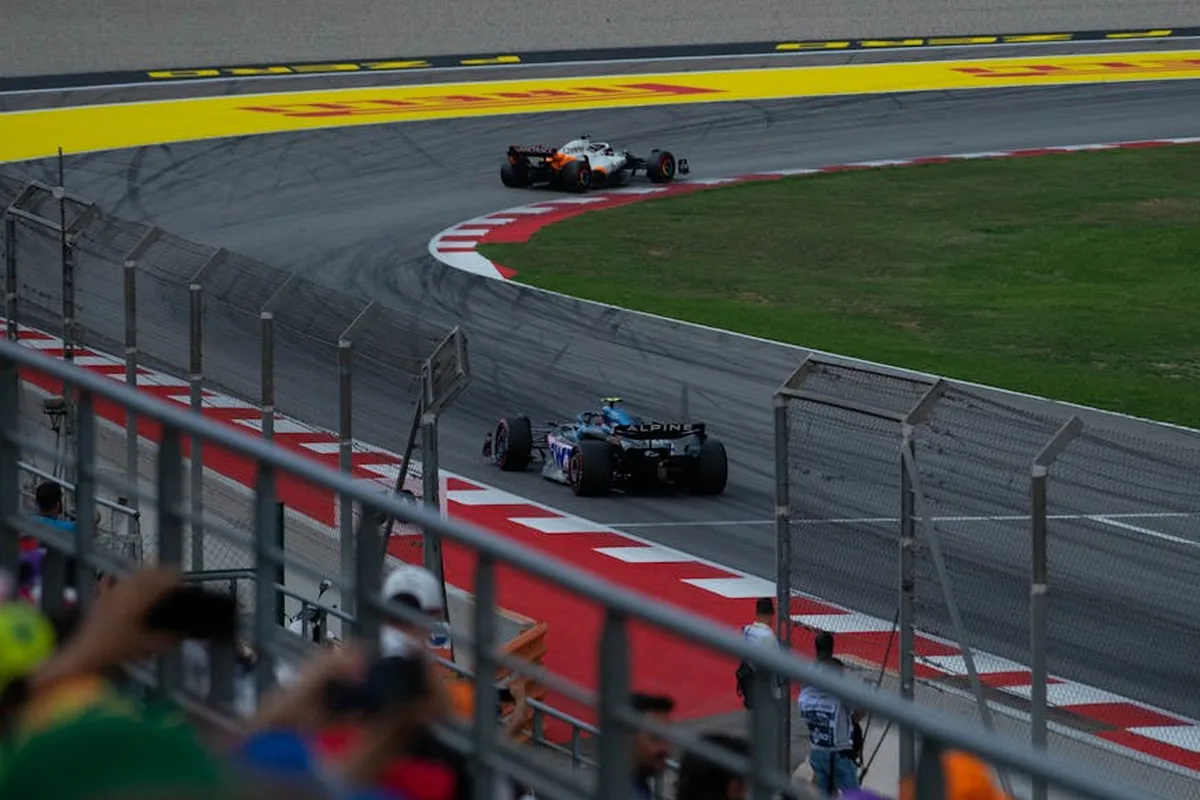
Fuel Management in the Hybrid Era: Hamilton's Efficiency
Fuel management has evolved from a peripheral concern to a central pillar of race strategy in Formula 1's hybrid era. Since 2014, the sport's complex power units, combining a 1.6-liter V6 turbocharged engine with sophisticated Energy Recovery Systems (ERS), demand a delicate balance between outright performance and strict fuel consumption limits. No driver has mastered this intricate discipline more consistently than Lewis Hamilton. His ability to extract maximum pace while meticulously managing a finite 110kg fuel allowance has been a defining characteristic of his success with Mercedes, underpinning multiple world championships.
This expertise transcends mere fuel saving; it represents a holistic understanding of the car's hybrid systems, an innate feel for race rhythm, and a strategic partnership with his engineering team. Hamilton’s proficiency in this area has turned potential limitations into competitive advantages, allowing him to control races from the front, execute strategic undercuts, and defend positions in tense battles. His fuel management is not a defensive tactic but an offensive tool, a subtle art that has contributed significantly to his record-breaking tally of race wins.
The Technical Challenge of the Hybrid Power Unit
The introduction of the current hybrid regulations presented drivers with an unprecedented technical challenge. The power unit is a maze of interconnected systems: the Internal Combustion Engine (ICE), the Motor Generator Unit-Kinetic (MGU-K) harvesting energy from braking, and the Motor Generator Unit-Heat (MGU-H) recovering energy from exhaust gases. Drivers must manage not only fuel flow—capped at 100kg/h—but also the deployment of the stored electrical energy from the ERS.
Hamilton’s skill lies in his seamless integration of these elements. His trademark smooth driving style, with precise braking technique and progressive throttle application, is inherently efficient. This style minimizes tire degradation and reduces mechanical stress, but it also optimizes energy recovery. By braking later and harder, he harvests more kinetic energy into the MGU-K. By managing throttle openings and exhaust flow, he maximizes the efficiency of the MGU-H. This creates a virtuous cycle: efficient driving generates more electrical energy, which can be deployed for additional performance, all while conserving precious fuel.
This technical mastery was foundational to the period of Mercedes dominance, particularly in the early hybrid years. While the car possessed a clear power advantage, Hamilton’s ability to exploit its full potential over a race distance, without exceeding fuel mandates, often made the difference in tight contests.
Race Craft: The Art of Saving Fuel at Pace
For Lewis Hamilton, fuel management is a dynamic, real-time calculation, not a pre-programmed lift-and-coast routine. It is deeply woven into his race craft and situational awareness.
Strategic Fuel Saving Modes
During a Grand Prix, Hamilton works closely with his race engineer, Peter "Bono" Bonnington, to manage fuel targets. The team calculates a required fuel burn rate to reach the finish. Hamilton’s expertise allows him to save fuel in multiple ways: through precise lift-and-coast before braking zones, by short-shifting (changing up gears earlier than the optimal performance point), and by managing the hybrid deployment strategies through steering wheel settings. Crucially, he can execute these measures while maintaining a lap time that covers the threat from rivals, a skill that separates the good from the great.
Overtaking and Defending with Efficiency
Hamilton’s fuel management acuity shines in wheel-to-wheel combat. When planning an overtake, he will often build a surplus of electrical energy in the laps beforehand, allowing for a powerful deployment boost when needed. Conversely, when defending, his smooth style helps him maintain position without engaging in fuel-hungry, erratic maneuvers. His strategic approach was evident in his intense battle with Max Verstappen in 2021, where managing energy and fuel during their epic duels was as critical as outright speed.
Adapting to Race Scenarios
His ability to adapt is key. In a race where he builds a large lead, he can switch to a significant fuel-saving mode, protecting the engine and managing risk. In a tight strategic battle, like many during the four-year fight with Sebastian Vettel and Ferrari, he can operate at a high fuel burn to pressure rivals, force errors, or execute perfect strategic windows for pit stops. This flexibility makes him a formidable and unpredictable opponent.
Case Studies: Efficiency in Championship Moments
Several iconic victories in Hamilton’s career stand as testaments to his fuel and energy management prowess.
The 2018 German Grand Prix is a prime example. Starting 14th after a qualifying hydraulic failure, Hamilton drove a controlled yet aggressive race in changeable conditions. While others, including championship rival Sebastian Vettel, made errors, Hamilton managed his tires, fuel, and hybrid energy impeccably. He climbed through the field and, when the rain fell, made the correct strategic call to stay on dry tires, managing their temperature and his pace to take a stunning victory. Every decision was underpinned by an understanding of the car's total energy usage.
Another masterclass came at the 2020 Turkish Grand Prix. On a newly resurfaced, treacherously slippery track, tire management was the absolute priority. Hamilton, starting sixth, focused on preserving his intermediate tires for an unprecedented 50-lap stint. This required extreme sensitivity on the throttle and brakes, which directly correlated with optimal fuel usage. His ability to nurse the tires to the end while maintaining competitive lap time was a holistic display of car management, securing his seventh world title in the process.
Even in defeat, his efficiency was notable. In the 2016 championship loss to Nico Rosberg, Hamilton’s race pace and car management were often superior, but reliability issues and start troubles cost him. His underlying skill in extracting performance within the car's technical limits remained undimmed.
The Engineer-Driver Partnership
Hamilton’s fuel management success is not a solo act; it is a symphony conducted with his engineering team. The constant dialogue with Bono is critical. Bono provides real-time data on fuel delta (the difference between actual use and target use), lap time requirements, and gaps to competitors. Hamilton synthesizes this information with his own sensory feedback from the car.
This partnership, built on trust and clear communication, allows for nuanced strategy. Hamilton can report exactly how the car feels and how much margin he has, enabling the team to make bold strategic calls, such as extending a stint to gain a positional advantage or pushing before a pit stop to secure an undercut. This synergy is a hallmark of the Mercedes strategy team at its best.
Legacy and Evolution
As Formula 1 continues to emphasize sustainability, with the introduction of fully sustainable fuels in 2026, the principles Hamilton has honed will become even more central. His career in the hybrid era has redefined what it means to be a complete racing driver. Speed alone is no longer sufficient; the champion must also be a master systems manager, a tactician of energy, and a paragon of efficiency.
Hamilton’s legacy in this domain is clear. He has demonstrated that peak performance and strict efficiency are not mutually exclusive but are, in fact, complementary. He turned the technical constraint of fuel saving into a canvas for his racecraft, adding a cerebral, strategic layer to his undeniable speed. This combination has been instrumental in building his record of remarkable consistency and championship success. As the sport looks to the future, the benchmark for efficient performance has been set by Lewis Hamilton’s masterful command of the hybrid era's greatest technical challenge.
For further technical details on Formula 1's hybrid power units and fuel regulations, the official FIA Technical Department provides authoritative resources. Additionally, in-depth analysis of energy recovery systems can be found through engineering publications like SAE International.