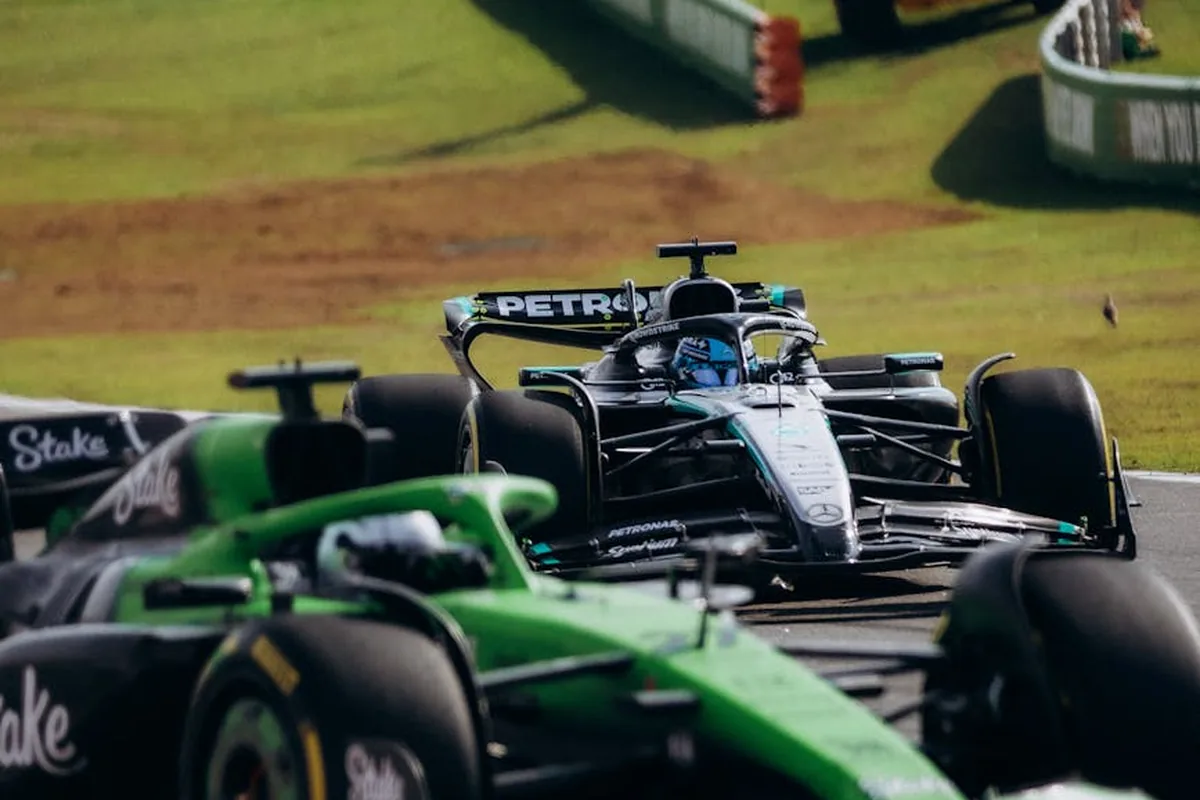
Fuel Saving Techniques: Hamilton's Efficiency Mastery
In modern Formula 1, raw speed is only half the battle. The other half is meticulous efficiency, and no driver has mastered the art of fuel management in the hybrid era better than Lewis Hamilton. His ability to extract blistering pace while preserving precious kilograms of fuel is a cornerstone of his success, transforming a technical constraint into a strategic weapon. This deep dive explores the techniques, mindset, and racecraft that define Hamilton's fuel-saving mastery.
The Hybrid Era Imperative
The introduction of the complex V6 turbo-hybrid power units in 2014 fundamentally changed the role of a driver. With a strict 100kg fuel limit per race and intricate Energy Recovery Systems (ERS) to manage, drivers became efficiency engineers behind the wheel. Hamilton’s adaptation to this new paradigm was immediate and dominant, as seen in his dominant return to the top in 2014. His seamless integration with the Mercedes team’s technical philosophy allowed him to conserve fuel without a perceptible loss in lap time, a skill that became a key differentiator in his championship campaigns against rivals like Sebastian Vettel and Nico Rosberg.
Technical Symbiosis with the Mercedes Power Unit
Hamilton’s efficiency is built on a profound understanding of his machinery. The Mercedes power unit, particularly in its peak years, was a masterpiece of thermal and fuel efficiency. Hamilton learned to work in perfect harmony with its characteristics. This involved precise throttle modulation to keep the engine within its most efficient operating window, and intelligent harvesting of energy under braking to replenish the ERS battery for deployment later on straights. This technical feedback loop was crucial, as detailed in our analysis of Mercedes' technical evolution around his driving style.
The Art of Lift-and-Coast
The most visible fuel-saving technique is "lift-and-coast," where a driver lifts off the throttle early before a braking zone, allowing the car to decelerate partially on its own before applying the brakes. While all drivers employ this, Hamilton’s execution is notable for its subtlety and consistency.
- Precision Timing: Hamilton lifts off at the exact millisecond required to hit his braking marker at the perfect speed, losing minimal time. This requires an intimate knowledge of track conditions and tire degradation.
- Smooth Inputs: His steering, throttle, and braking inputs are exceptionally smooth, preventing sudden energy surges that waste fuel. This smoothness is a hallmark of his throttle application technique.
- Race-Long Discipline: He integrates these micro-adjustments into his driving from the first lap, building a crucial fuel buffer for the race's critical phases, such as a late safety car restart or a final push to overtake.
Strategic Fuel Management in Race Scenarios
Hamilton’s fuel-saving prowess is not a standalone skill; it is woven into his broader race strategy. His ability to manage fuel dynamically based on race circumstances is what separates him from his peers.
Building a Buffer for Attack or Defense
In the early and middle stages of a race, Hamilton often runs at a prescribed, efficient pace—fast enough to maintain position or pressure, but with a focus on saving fuel. This builds a "fuel delta" that can be deployed strategically. If he needs to attack in the final stint, he can use this saved fuel to run a richer engine mode and higher revs for extra power. Conversely, if he is defending a lead, the buffer allows him to respond to threats without risking a fuel shortage. This strategic depth was pivotal in intense battles, such as the 2017 championship fight against Ferrari.
Adapting to Unforeseen Events
Safety cars and virtual safety cars are critical junctures. While they save fuel for the entire field, Hamilton’s pre-existing buffer allows him greater strategic flexibility when the race resumes. He can afford to be aggressive on the restart without immediate fuel concerns, a key component of his noted safety car restart mastery. Furthermore, his efficient driving provides a margin of safety if the race goes longer than expected or if he needs an extra lap at qualifying pace to secure a fastest lap point.
The Mental and Physical Discipline
Fuel saving is as mentally taxing as it is physical. It requires relentless concentration to maintain lap time while constantly monitoring fuel numbers, engine settings, and gap management on the steering wheel. Hamilton’s legendary race focus allows him to process this data stream while operating at the limit. Physically, it demands extreme fitness to make constant, minute adjustments to pedal pressure and steering angle for two hours without lapse. This discipline complements his other conserved resources, most notably his tire management expertise, creating a driver who is exceptionally kind on his car's consumables.
Evolution and Legacy
Hamilton’s efficiency has evolved throughout his career. At McLaren, he honed his raw speed. The move to Mercedes for the 2013 season coincided with the dawn of the hybrid era, forcing him to add this meticulous layer to his skill set. As the regulations have tightened and fuel efficiency has become even more paramount, his mastery has only grown. This skill contributed significantly to periods of Mercedes' unstoppable dominance and was a critical factor in close fights, such as the 2021 tactical title fight against Max Verstappen.
His approach has set a new standard in F1, proving that the fastest driver is also the one who can manage finite resources most effectively. For further technical insight into the hybrid power units that made this skill so vital, the FIA's official technical regulations provide detailed context, while analysis from motorsport engineering experts like Racecar Engineering often breaks down the complexities of fuel flow and energy management.
In conclusion, Lewis Hamilton’s fuel-saving mastery is a silent engine of his success. It is a complex blend of technical understanding, precise car control, strategic foresight, and iron discipline. In an era defined by efficiency, he has consistently turned a limitation into one of his greatest strengths, fueling his journey to become one of Formula 1's most decorated champions.