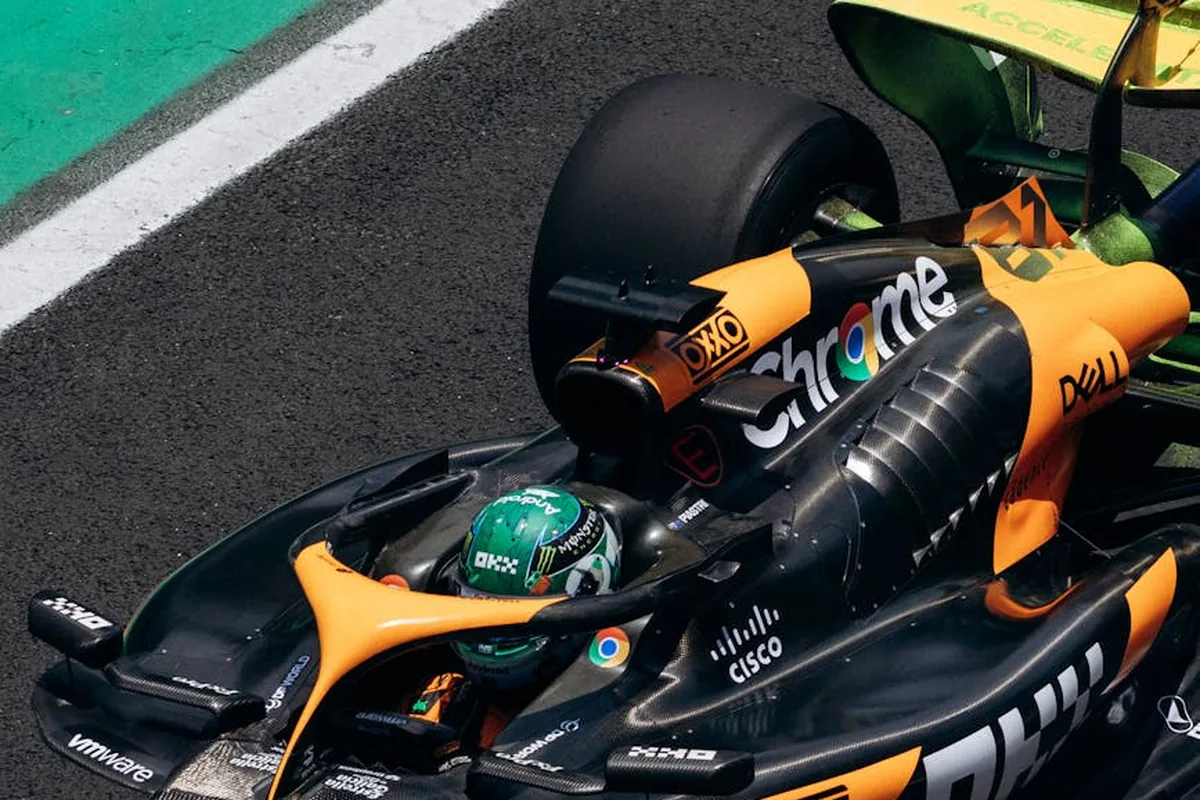
Hamilton vs. Häkkinen: A Tale of Two McLaren Champions
Lewis Hamilton and Mika Häkkinen are two of the most celebrated names to emerge from the McLaren stable, each defining an era of Formula 1 with their unique blend of speed and style. While Häkkinen, the "Flying Finn," was the ice-cool assassin of the late 1990s, Hamilton has become a global icon and statistical titan in the 21st century. Comparing their legacies is not merely a tally of championships but an exploration of contrasting careers, driving philosophies, and impacts on the sport. This analysis delves into the careers of these two champions, separated by a generation but united by their success with one of F1's most historic teams.
Career Trajectories and Defining Eras
The paths Hamilton and Häkkinen took to the summit of F1 are markedly different, reflecting the changing nature of the sport itself. Häkkinen's journey was one of resilience. After a severe crash in 1995 threatened his career, he fought back to become McLaren's team leader, clinching back-to-back World Championships in 1998 and 1999 during an intense rivalry with Michael Schumacher's Ferrari. His era was defined by a fierce, often binary, head-to-head battle.
Hamilton's career, by contrast, has been a story of sustained dominance across multiple competitive landscapes. His sensational rookie season in 2007 nearly won the title, and he secured his first championship in dramatic fashion in 2008. After a period of competitive years at McLaren, his career-defining move to Mercedes coincided with the hybrid era, leading to an unprecedented run of six titles in seven years between 2014 and 2020. His battles have been multifaceted, spanning intense teammate rivalries with Nico Rosberg and fierce inter-team fights with Sebastian Vettel and Max Verstappen.
Häkkinen: The Peak of the McLaren-Mercedes Partnership
Häkkinen's success was built on the formidable McLaren-Mercedes package of the late 90s, a car often considered a technical masterpiece. His driving was characterized by breathtaking, almost ethereal, smoothness and a relentless qualifying pace. His championships were won in a pressure-cooker environment against Schumacher, cementing his reputation as a clutch performer who could deliver under the utmost stress, as seen in his iconic overtake for the lead at Spa in 2000.
Hamilton: Transcending Teams and Regulations
Hamilton's legacy is one of adaptability and longevity. He has won championships in different technical eras (normally aspirated V8 and hybrid V6), with different teams (McLaren and Mercedes), and against a diverse set of rivals. His ability to evolve with the car and regulations is a key pillar of his success. While his early career showcased raw, aggressive talent, his Mercedes years have highlighted a masterful combination of race craft, strategic intelligence, and technical feedback.
Driving Style and On-Track Philosophy
Their approaches behind the wheel offer a fascinating study in contrasts, though both were supremely fast over a single lap.
Mika Häkkinen was the epitome of the "racer's racer." His style was incredibly clean, precise, and fluid. He possessed a magical feel for the car's limit, often making blistering pace look effortless. He was not known for wheel-to-wheel aggression in the manner of Schumacher or later Hamilton, but when he attacked, it was decisive and calculated. His famous "overtake of the century" on Schumacher at Spa-Francorchamps in 2000 is a perfect example: a high-risk, high-reward move executed with surgical precision at one of the circuit's most challenging points.
Lewis Hamilton has showcased a more versatile and evolving style. His rookie season revealed an audacious, overtaking-heavy approach. Over time, he has blended that aggressive racecraft with supreme tire management and strategic patience. His qualifying prowess is legendary, holding the all-time pole position record. Hamilton is also renowned for his wet-weather mastery, an area where his car control and feel are most visibly demonstrated. His style is more muscular and adaptive than Häkkinen's pristine smoothness, capable of wrestling a difficult car to a result, as seen often in the recent regulatory cycle.
Statistical Legacy and Career Longevity
This is where the comparison diverges significantly due to the sheer scale and length of Hamilton's career.
- Championships: Hamilton (7) | Häkkinen (2)
- Race Wins: Hamilton (103) | Häkkinen (20)
- Pole Positions: Hamilton (104) | Häkkinen (26)
- Podiums: Hamilton (197) | Häkkinen (51)
- Career Span (Races): Hamilton (330+) | Häkkinen (165)
Häkkinen's career, while brilliant, was relatively compact. He chose to retire at the end of 2001, walking away from the sport at his peak to focus on family life—a decision that added a layer of mystique to his legacy. His statistics reflect a champion who achieved his goals during a specific, highly competitive window.
Hamilton's numbers are historical, having broken most of Michael Schumacher's major records, including wins and championships. His career is defined by its marathon duration at the highest level. From his McLaren beginnings to his era of dominance with Mercedes, he has remained a constant title threat for over 15 years, a testament to his skill, fitness, and motivation.
Impact and Legacy Beyond the Track
Both drivers have left indelible marks on F1's culture, though in different ways.
Häkkinen is remembered with immense respect and affection within the F1 community. His "Iceman" persona, his epic battles with Schumacher, and his dignified retirement solidified him as a classic F1 hero—a pure driver whose legacy is firmly rooted in his on-track exploits during a beloved era of the sport.
Hamilton's impact has been transformative and global. He has used his platform to advocate powerfully for diversity, inclusion, and environmental sustainability, challenging the sport's traditional culture. His ventures into fashion, music, and business have broadened F1's appeal. Hamilton is not just a racing driver; he is a cultural figure whose influence extends far beyond the cockpit. His knighthood in 2021 recognized both his sporting achievements and his wider societal impact.
Conclusion: Different Champions, Enduring Legends
Comparing Lewis Hamilton and Mika Häkkinen is ultimately a comparison of context. Häkkinen was the quintessential top driver of his time—a two-time champion who beat the best of his generation in Michael Schumacher in fierce, season-long duels. His legacy is one of sublime skill, resilience, and a definitive chapter in McLaren's history.
Hamilton has transcended his time to enter the conversation as perhaps the greatest statistical force the sport has ever seen. His legacy is built on unprecedented success, remarkable longevity, and a profound impact on the sport's global image and internal culture.
Both, however, share the DNA of McLaren champions: incredible one-lap speed, race-winning instinct, and the ability to perform under pressure. Häkkinen's career shines as a brilliant, focused beam of light from a specific period. Hamilton's radiates as a sustained supernova, illuminating and changing the landscape of Formula 1 itself. For more on how Hamilton matched up against other legends, explore our comparison of Hamilton vs. Schumacher. To understand the era Häkkinen dominated, the official Formula 1 website hosts extensive archives, while detailed career retrospectives can be found on authoritative motorsport databases like Motorsport Stats.