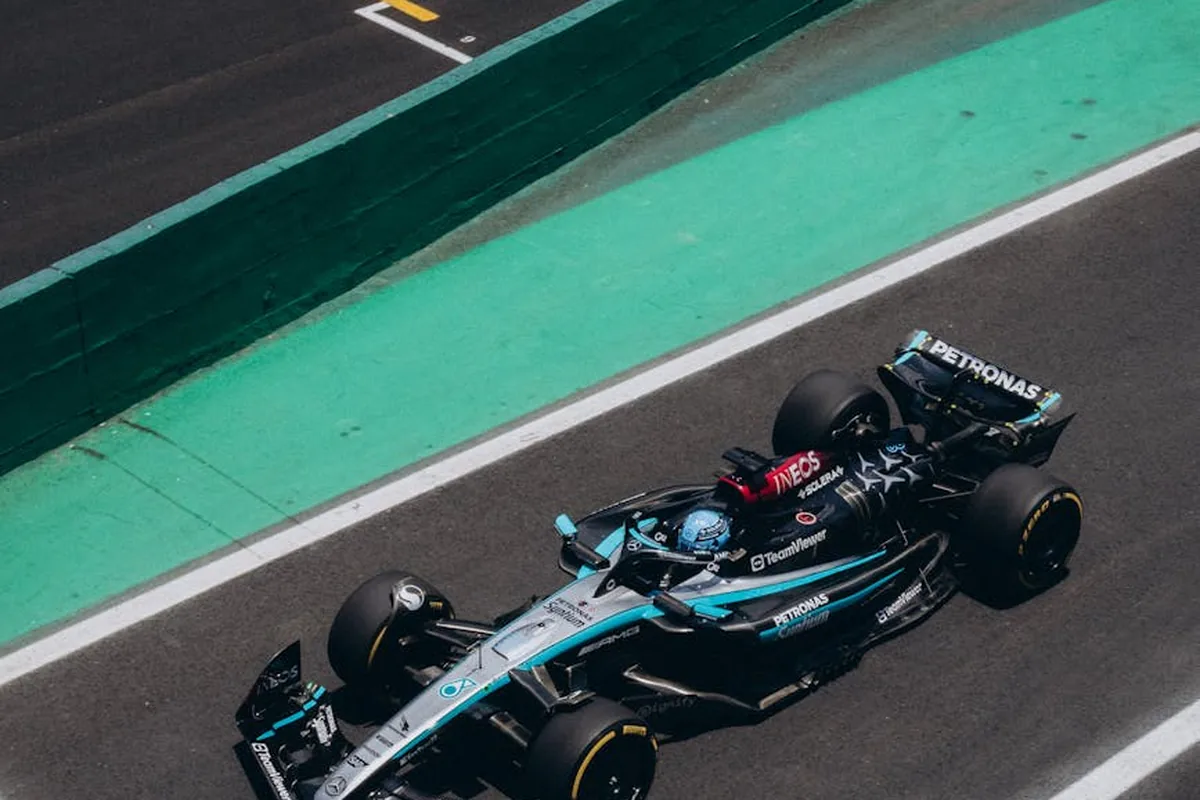
Hamilton vs. Piquet: Bridging the Generations in Formula 1
Comparing Formula 1 champions from different eras is a complex but fascinating exercise. Lewis Hamilton, the modern icon with seven world titles, and Nelson Piquet, the three-time champion of the 1980s, represent distinct philosophies, technologies, and challenges. While their statistics place them in different stratitudes, a deeper analysis reveals compelling parallels in their careers, their approach to racing, and their undeniable impact on the sport. This comparison across eras examines their championship journeys, driving styles, and legacies beyond the racetrack.
Championship Context and Career Trajectories
Both drivers achieved their success in distinct competitive landscapes. Nelson Piquet secured his three championships (1981, 1983, 1987) in an era of intense mechanical and political rivalry, most notably with Brabham and Williams. His titles were hard-fought, often relying on technical ingenuity and strategic cunning. His 1981 championship, for instance, was a masterclass in points accumulation during a turbulent season.
Lewis Hamilton’s championship record is unprecedented. His seven titles span a career that began with a dramatic rookie season and evolved into a period of sustained dominance with Mercedes. His first title in 2008 was a dramatic last-corner affair, while his later championships, such as in 2014 and 2020, showcased sheer supremacy. Unlike Piquet, who moved between teams to find winning machinery, Hamilton’s legacy is deeply intertwined with one constructor’s era of dominance, similar to how Piquet was central to Brabham’s success in the early 80s. For a deeper look at Hamilton's career-defining team transition, see our analysis of his move from McLaren to Mercedes.
Driving Style and Technical Adaptation
The core of any driver comparison lies in their technique and adaptability. Nelson Piquet was renowned for his smooth, calculated style. He was a master of car preservation, often managing tires and fuel with exceptional efficiency—a critical skill in an era of high fuel consumption and tire wear. He combined this with fierce intelligence, working closely with engineers like Gordon Murray to develop technically advanced cars, most famously the Brabham BT49 and the turbocharged BMW-powered Brabham BT52.
Lewis Hamilton’s style has evolved from aggressive, raw speed in his McLaren years to a more holistic mastery in the hybrid era. His qualifying prowess is legendary, but his race craft, particularly in wet conditions and in managing complex tire strategies, mirrors Piquet’s strategic mind. Both drivers possessed an innate feel for a car's limits and could provide precise technical feedback, making them invaluable development drivers. Hamilton’s role in the technical evolution of Mercedes is a direct parallel to Piquet’s influence at Brabham and Williams.
Rivalries and Team Dynamics
Their careers were defined by intense rivalries. Piquet’s most famous feud was with Ayrton Senna, a bitter and personal conflict that transcended the track. He also had significant battles with teammates like Nigel Mansell at Williams, a partnership fraught with tension that ultimately propelled the team to success in 1986 and 1987, albeit with controversy.
Hamilton has navigated multiple era-defining rivalries. His battle with Nico Rosberg at Mercedes was a relentless intra-team war that culminated in the intense 2016 championship. His multi-year duel with Sebastian Vettel, particularly the 2017 and 2018 seasons, showcased classic inter-team competition. Most recently, his 2021 clash with Max Verstappen defined a generation. Both Piquet and Hamilton thrived under pressure, using rivalry as a catalyst for peak performance, though their public personas in these conflicts differed markedly.
Legacy and Impact Beyond the Track
Here, the paths of Hamilton and Piquet diverge significantly, reflecting the evolution of the sport and society. Nelson Piquet’s legacy is firmly rooted in his on-track achievements and his reputation as a clever, sometimes controversial, winner. His post-racing life has been less public, though he remains a respected figure from F1's classic era.
Lewis Hamilton has built a legacy that extends far beyond his record pole positions and 100+ race wins. He has become a global icon and a powerful voice for change. His advocacy for diversity and inclusion and social justice has challenged Formula 1's status quo. His knighthood in 2021 recognized not just sporting excellence but also his service off the track. This broader cultural impact has no direct parallel in Piquet’s career, highlighting how the role of a top athlete has transformed.
Statistical Snapshot and Era Considerations
Raw statistics tell a clear story of different scales, but must be viewed through the prism of their eras. Hamilton’s records for wins and poles were set in an era of unprecedented calendar length and car reliability. Piquet competed in fewer races per season, with far higher mechanical failure rates. His 23 wins from 204 starts was a formidable strike rate in the context of the 1980s.
A more telling comparison might be their championship consistency and ability to win with different teams. Piquet won titles with two different constructors (Brabham, Williams). Hamilton has won with two different teams (McLaren, Mercedes), demonstrating an ability to adapt and lead. Both faced seasons of adversity; for Hamilton, the 2022 season was a test of perseverance without a title-contending car, much like some of Piquet's years at Lotus later in his career.
For authoritative historical data and context on Nelson Piquet's career and era, the official Formula 1 website provides a comprehensive archive. Additionally, detailed technical analyses of 1980s Formula 1 cars can be found through resources like Motor Sport Magazine.
Conclusion: Champions of Their Time
Comparing Lewis Hamilton and Nelson Piquet ultimately underscores that greatness is defined within the context of an era. Piquet was the brilliant tactician and technical collaborator of the turbocharged, ground-effect 1980s—a ruthless competitor in a dangerous time. Hamilton is the consummate modern hybrid-era athlete, combining otherworldly talent with technological symbiosis, longevity, and a transformative social voice. Both are three-time champions (with Hamilton achieving much more), both possessed a unique blend of speed and intelligence, and both left an indelible mark on their respective generations of Formula 1. Their careers, though separated by decades, are connected by the timeless thread of what it takes to reach the very pinnacle of motorsport.