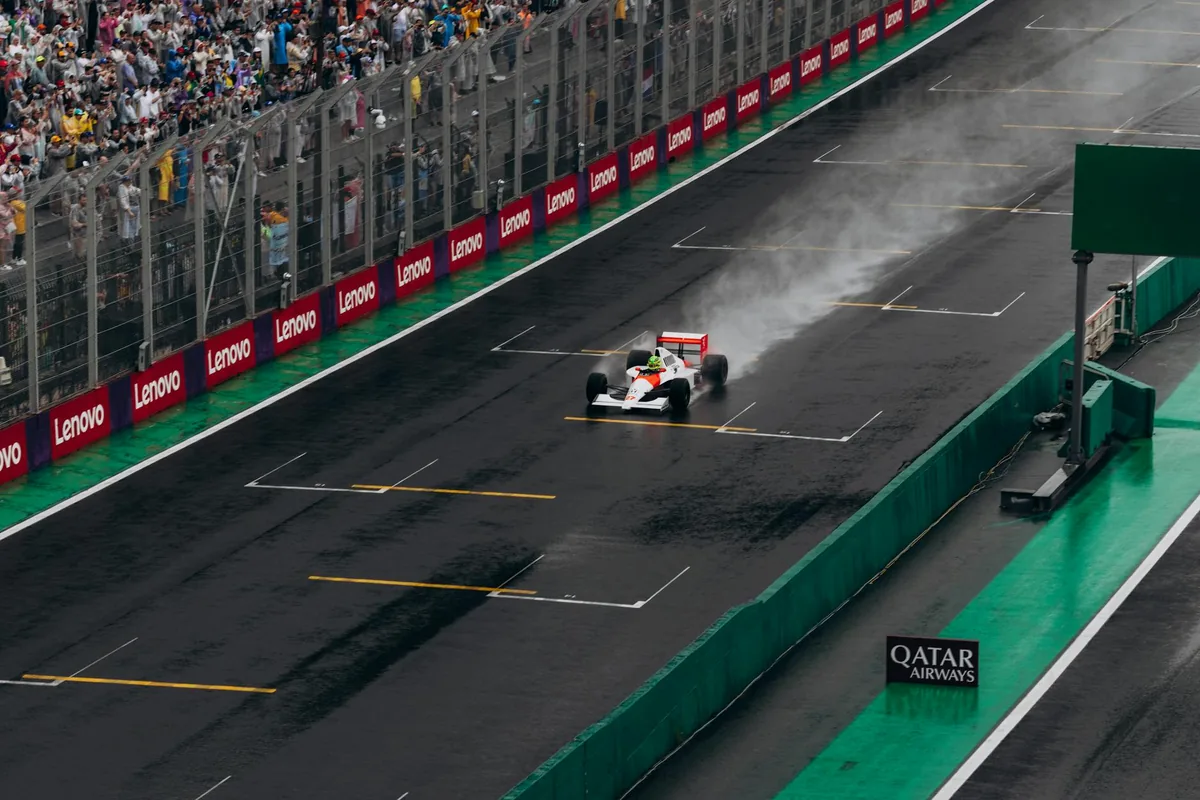
Hamilton vs Piquet: Three-Time Champions Compared
Lewis Hamilton and Nelson Piquet are both three-time Formula One World Champions, yet their careers, eras, and legacies present a fascinating study in contrasts. Hamilton, the modern-day icon with a record-equaling seven titles, secured his third championship in 2015. Piquet, the charismatic and often controversial Brazilian, clinched his third and final crown in 1987. Separated by decades, comparing their journeys to three titles reveals much about the evolution of F1 itself, from the raw danger of the 1980s to the technological pinnacle of the hybrid era.
Paths to a Third Championship: Dominance vs. Opportunism
The manner in which each driver secured their third title underscores the different challenges of their respective eras. Lewis Hamilton's third championship came during the peak of Mercedes' unprecedented dominance in the hybrid era. His 2015 season was a masterclass in consistency and speed, winning 10 races and securing the title with three rounds to spare. It was a campaign built on relentless performance and a superior car, detailed in our analysis of Mercedes' unstoppable dominance that year.
In stark contrast, Nelson Piquet's third title in 1987 was a tactical triumph in a far less reliable and more dangerous period. Driving for Williams-Honda, his season was a battle of attrition against teammate Nigel Mansell. Piquet's approach was calculated; understanding the fragility of the turbocharged engines, he often prioritized finishing over outright qualifying glory. His championship was sealed after Mansell's dramatic crash in practice at Suzuka, highlighting the fine line between success and failure in that period. Piquet’s win tally (three) was lower than Mansell’s (six) that year, proving that championship success isn't solely about race wins.
Driving Style and Technical Adaptation
Their driving philosophies were shaped by the technical demands of their cars. Hamilton is renowned for his smooth, precision-based style, exceptional tire management, and peerless mastery in wet conditions. His ability to provide detailed technical feedback has been crucial throughout his career, especially during his dominant Mercedes partnership.
Piquet, known as "The Professor," was a master technician and a brilliant test driver. He possessed an innate understanding of car setup and engineering, often spending countless hours in the garage fine-tuning his machine. His style was more aggressive and less smooth than Hamilton's, suited to the ground-effect and turbocharged monsters of the 1980s. Both, however, share the critical trait of being able to develop a car around their driving style, a key component of sustained success.
Era Context: Danger, Technology, and Competition
Any comparison must account for the vastly different landscapes of Formula One. Piquet raced in an era of extreme danger, with minimal safety standards, active political warfare between teams (most famously with McLaren), and engine reliability that was a lottery. Winning a championship required not just speed but immense bravery and mechanical sympathy.
Hamilton's era, particularly during his third title win, was defined by technological sophistication, hybrid power units, and relentless data analysis. The physical danger, while ever-present, was significantly reduced. The competition, however, remained fierce, as seen in Hamilton's intense battles with Sebastian Vettel in 2017 and 2018, analyzed in our breakdown of their four-year championship fight. The consistency required to win in the modern era is staggering, as evidenced by Hamilton's remarkable record of consecutive points finishes.
Legacy and Impact Beyond the Track
Both drivers transcended the sport, but in profoundly different ways. Nelson Piquet was a defining character of the 1980s, famous for his sharp wit and often incendiary comments. His rivalry with Ayrton Senna, both on and off the track, is legendary. His legacy is that of a brilliant, cunning champion who thrived in F1's wilder years.
Lewis Hamilton's impact extends far beyond his seven world titles. He has used his platform to champion diversity, inclusion, and sustainability, pushing Formula One to confront its shortcomings. His knighthood in 2021 recognized not only his sporting achievements but his cultural influence. As a global icon, Hamilton's legacy is intertwined with social progress, setting him apart from champions of previous generations.
For further insight into how Hamilton's career compares with other legends from different eras, explore our analysis of Hamilton versus Michael Schumacher.
Statistical Snapshot: The Numbers Behind Three Titles
While Hamilton's statistics have continued to grow since his third title, a snapshot at the point of achieving their third championship is revealing:
- Lewis Hamilton (end of 2015): 3 Championships, 43 Wins, 49 Pole Positions, 76 Podiums, 1,344 career points.
- Nelson Piquet (end of 1987): 3 Championships, 20 Wins, 24 Pole Positions, 60 Podiums, 481 career points (under a different points system).
The numbers reflect the longer seasons and higher reliability of the modern era. Hamilton's qualifying prowess is also evident, a skill explored in our deep dive into his qualifying mastery and pole position percentage.
Conclusion: Champions of Their Time
Comparing Lewis Hamilton and Nelson Piquet is not about declaring one superior, but about appreciating how each mastered the unique challenges of their time in Formula One. Piquet was the cunning professor of a brutal, politically charged era, winning his third title through intelligence and resilience. Hamilton, the consummate modern athlete, achieved his third crown through a blend of supreme talent, technical partnership, and relentless consistency during a period of technical dominance. Both etched their names into history as three-time champions, but their stories highlight the incredible evolution of the sport they conquered. For a deeper look at the car that powered Hamilton's third title, read our analysis of the Mercedes technical evolution during his era.
To understand the context of F1 in the 1980s and Piquet's career, the official Formula 1 website's historical section provides valuable archival race reports and data.