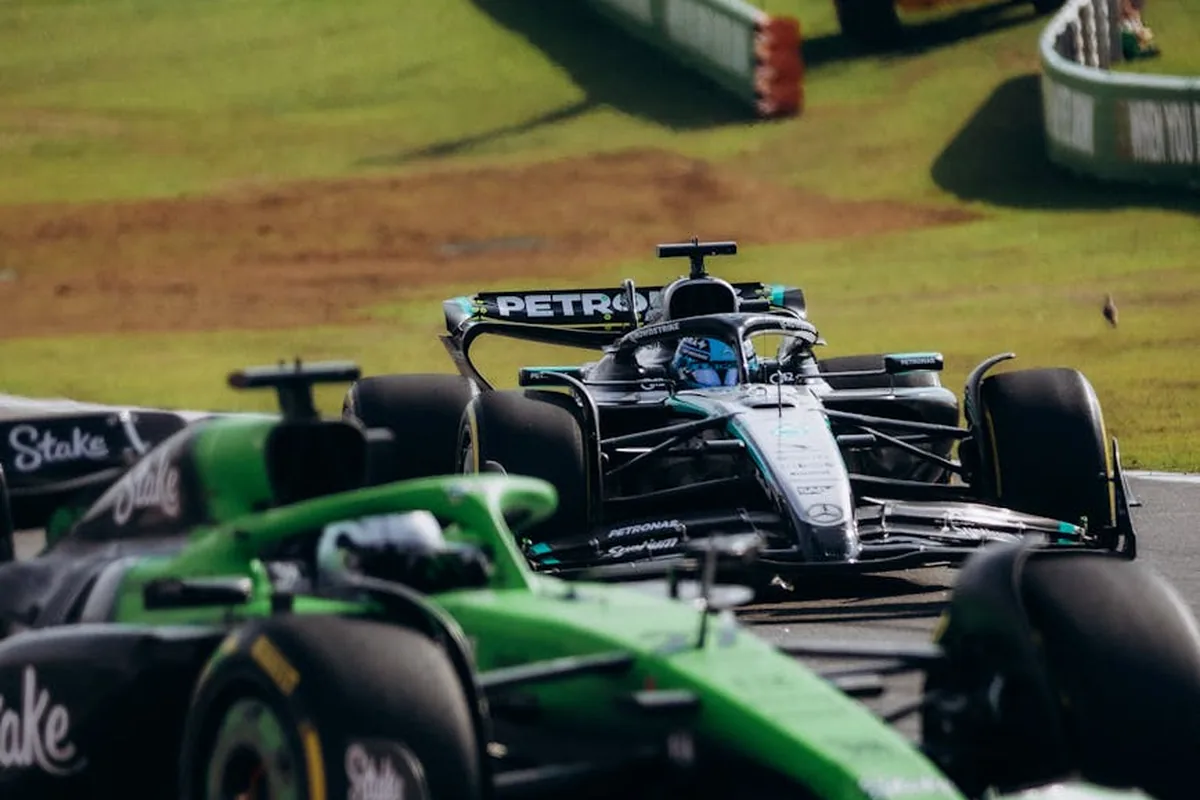
Hamilton vs Senna: Defining Greatness Across Generations
The debate between Ayrton Senna and Lewis Hamilton stands as one of the most compelling in Formula 1 history. Separated by eras, technology, and circumstance, both drivers have forged legacies that transcend statistics, becoming cultural icons. Comparing them is not a simple matter of tallying wins, but an exploration of contrasting paths to immortality, their impact on the sport, and the indelible marks they left on and off the track.
Statistical Supremacy vs. Mythic Intensity
On paper, Hamilton’s numerical achievements are unparalleled. With seven World Championships, over 100 race wins, and more pole positions than any driver in history, his career represents a sustained period of dominance rarely seen. His success, particularly during the Mercedes era from 2013 onward, was built on a combination of supreme skill, technical feedback, and relentless consistency. Titles like his record-breaking seventh in 2020 showcase a driver operating at the peak of his powers for over a decade.
Senna’s statistics—three World Championships and 41 wins—while formidable, tell only part of his story. His legacy is defined by a mythic quality, an almost supernatural talent that was most vividly expressed in qualifying laps and in wet conditions. His three titles came in an era of fierce competition against Alain Prost and Nigel Mansell, where mechanical reliability was less certain. The raw, visceral emotion of his driving, particularly his legendary performances at Monaco and Donington in 1993, created a narrative of a driver pushing beyond the limits of car and circuit.
Contrasting Eras and Challenges
The F1 landscapes they conquered were fundamentally different. Senna raced in a period of immense danger, where safety advancements were still evolving. The physical and mental courage required was of a different magnitude, a context that forever colors his heroics. His cars were manual, physically demanding machines that required a more aggressive, instinctive style.
Hamilton’s career, especially post-2014, unfolded in the highly complex hybrid era. Success demanded not just blinding speed but a deep understanding of intricate energy recovery systems, tire management algorithms, and constant telemetry feedback. His championships, such as the intense 2017 battle with Sebastian Vettel, were won through a blend of racecraft, strategic acumen, and technical partnership with his team. While the cars are safer, the competition has never been closer, requiring a different kind of perfection.
The Nature of Their Dominance
Senna’s dominance was often explosive and singular. He sought to demoralize opponents by securing pole position by massive margins, establishing control from the very front. His racecraft was aggressive and uncompromising, embodied in his famous philosophy: "If you no longer go for a gap that exists, you are no longer a racing driver."
Hamilton’s dominance has been characterized by adaptable mastery. He can win from pole, as seen in his numerous hat-trick victories, but is equally renowned for his comeback drives and strategic versatility. His peerless skill in wet conditions echoes Senna’s own, but is coupled with a calculated, data-informed approach to race management that defines the modern era.
Legacy Beyond the Cockpit
Both drivers expanded the role of a Formula 1 champion into that of a global ambassador, though in distinct ways. Senna’s legacy is deeply tied to his Brazilian identity. His success became a source of immense national pride, especially for a country facing economic hardship. His tragic death at Imola in 1994 immortalized him as a fallen hero, and the Ayrton Senna Institute has since impacted millions of lives through education, cementing his philanthropic legacy.
Hamilton’s impact has been transformative in terms of diversity, inclusion, and activism within the sport. As F1's first and only Black driver, he has used his platform to champion racial equality, push for greater diversity in motorsport, and advocate for environmental sustainability. His influence extends into fashion, music, and business, reshaping what it means to be a modern sporting icon. This broader cultural impact is a significant pillar of his legacy, much like Senna’s humanitarian work is to his.
The Intangible: Spirit and Inspiration
For many, Senna represents the pure, romantic spirit of racing. His passion, his flaws, his otherworldly talent, and his tragic end create a narrative of Shakespearean proportions. He is often viewed as the ultimate qualifier, the rain master, the driver who could will a car beyond its limits through sheer force of personality and skill.
Hamilton inspires through a narrative of breaking barriers and sustained excellence. His journey from a council estate in Stevenage to becoming the most successful driver in F1 history is a powerful story of determination. His ability to adapt, evolve, and remain at the top across different regulatory eras—from his first title in 2008 to his battles in 2021 and beyond—demonstrates a unique longevity and resilience. His knighthood in 2021 formalized his status as a British sporting legend.
Conclusion: Complementary Legends
Declaring one driver "greater" than the other is ultimately a subjective exercise shaped by personal values and the era one identifies with. Ayrton Senna is the eternal symbol of racing’s raw, dangerous soul and uncompromising pursuit of perfection. Lewis Hamilton is the embodiment of modern, holistic excellence—a statistical titan who has also become a catalyst for social change within the sport.
Their comparison enriches the tapestry of Formula 1. Senna’s legacy inspired a generation, including a young Lewis Hamilton. Hamilton, in turn, has built upon that inspiration to scale unprecedented heights and drive the sport forward in new directions. Both, in their own ways, are defining figures whose impacts, as explored in our comparison with Michael Schumacher, continue to shape the past, present, and future of Formula 1. For further insight into Senna's career and philosophy, the official Ayrton Senna Foundation website provides authoritative resources, while the official F1 website offers comprehensive statistics and historical context for both champions.