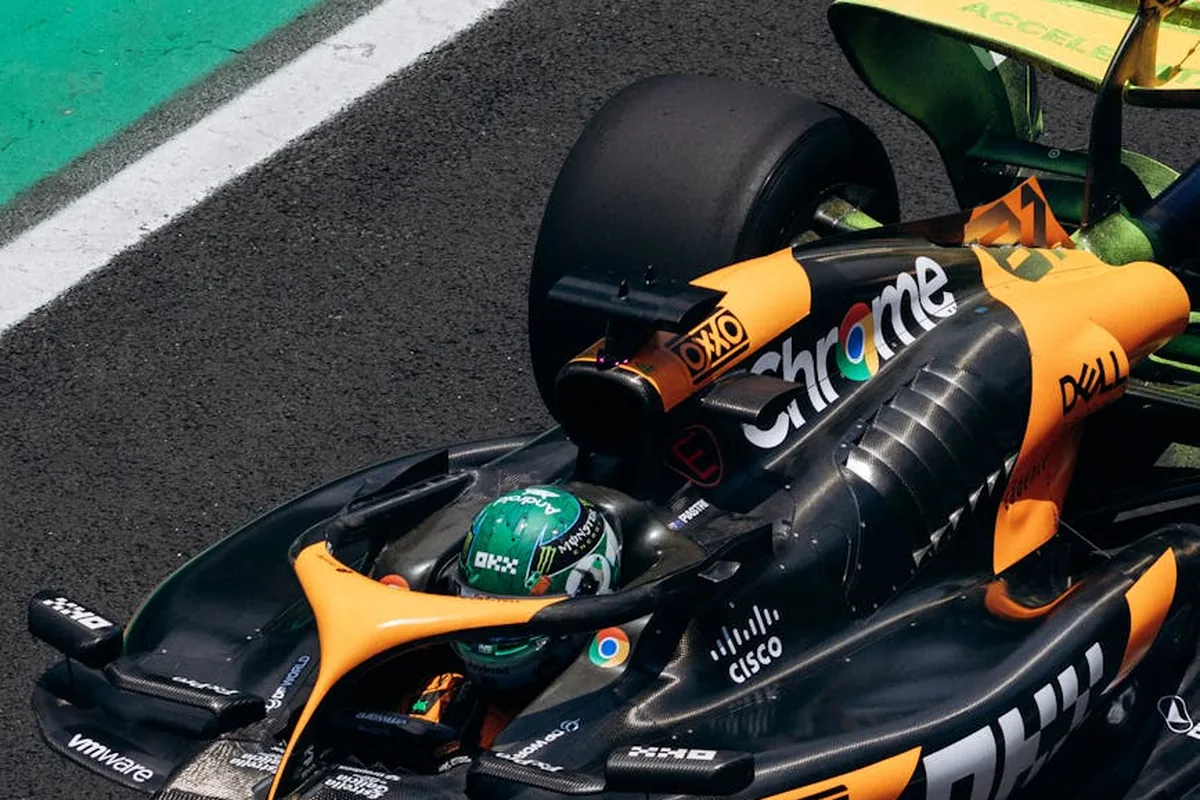
Interlagos, Brazil: Hamilton's Performance at a Historic Circuit
The Autódromo José Carlos Pace, universally known as Interlagos, is more than just a race track for Lewis Hamilton. It is a venue steeped in personal and professional history, a place where championship dreams have been both realized and shattered, and a circuit that consistently demands a driver's absolute best. From the dramatic rain-soaked finale of 2008 to his stunning comeback drives in the hybrid era, Hamilton's relationship with the Brazilian Grand Prix is a compelling chapter in his storied career, defined by resilience, mastery, and profound emotional connection.
A Championship Forged in the Rain: The 2008 Breakthrough
No analysis of Hamilton at Interlagos can begin without the defining moment of his early career. The 2008 Brazilian Grand Prix remains one of the most dramatic title deciders in Formula 1 history. Entering the race with a seven-point lead over Ferrari's Felipe Massa, Hamilton needed only a fifth-place finish to secure his maiden world championship. In treacherous wet-dry conditions, a late rain shower turned the race on its head. As Massa crossed the line to win, Hamilton, struggling on wet tires, was passed by Sebastian Vettel for fifth place on the penultimate corner of the final lap, seemingly losing the title. Moments later, in a twist of fate immortalized in F1 lore, Hamilton passed Timo Glock's dry-tire-shod Toyota at the final corner to reclaim the crucial fifth position. This last-gasp maneuver clinched the championship by a single point. The emotional rollercoaster of that day cemented Interlagos as the stage for Hamilton's first championship, a breakthrough that announced his arrival as a world-class talent under immense pressure.
Mastering the Hybrid Era: Dominance and Comeback Drives
With the dawn of Mercedes' supremacy in 2014, Hamilton's performances at Interlagos evolved from strategic nail-biters to displays of sheer dominance and incredible recovery. The circuit, with its long, climbing start/finish straight, demanding middle sector, and anti-clockwise layout, suited the powerful Mercedes package perfectly.
Pole Positions and Commanding Wins
Hamilton secured six pole positions at Interlagos between 2014 and 2021, often converting them into victory with a commanding performance. His wins in 2016 and 2018 were particularly assertive, controlling the race from the front and managing tire degradation on one of the most physically taxing circuits on the calendar. These victories were crucial building blocks in his championship campaigns, showcasing the synergy between driver and machine during the peak of the Mercedes dominance era.
The Art of the Comeback: 2016 and 2021
Beyond straightforward wins, Hamilton produced two of the greatest comeback drives of his career in Brazil. In 2016, a crash in qualifying left him starting from the back of the grid. In a display of stunning racecraft and overtaking prowess, he carved through the field in changeable conditions to finish an astonishing fourth, a drive that kept his title hopes alive in his intense battle with Nico Rosberg. Even more remarkable was his 2021 performance. After being disqualified from qualifying due to a rear wing infringement, he started the Sprint Race from the back, finishing fifth to start the Grand Prix in tenth. In a masterclass of wet-weather driving and aggressive overtaking, he stormed to victory, passing title rival Max Verstappen in the process. This drive is a prime example of his wet weather mastery and relentless competitive spirit.
Circuit Characteristics and Hamilton's Adaptability
Interlagos is a unique challenge that plays to several of Hamilton's core strengths. The circuit's anti-clockwise nature places unusual strain on the driver's neck muscles, demanding supreme physical fitness. Its bumpy surface requires a delicate touch and excellent mechanical sympathy to extract pace without damaging the car. The technical middle sector, with its sequence of medium and high-speed corners like the "Reta Oposta" and "Descida do Lago," rewards precision and smooth inputs—hallmarks of Hamilton's driving style. Furthermore, São Paulo's frequent and unpredictable rain showers have often turned races into strategic lotteries, an area where Hamilton and the Mercedes strategy team have frequently excelled. His ability to manage tires over a stint while maintaining competitive lap times, a skill detailed in our analysis of his tire management expertise, is critical at a track known for high degradation.
Emotional Resonance and Fan Connection
Beyond statistics, Interlagos holds a special place in Hamilton's heart. The passionate Brazilian fans, who have a deep appreciation for racing heroes, have always embraced him. The memory of his first championship, coupled with his thrilling performances, has forged a strong bond. He has often spoken about the track's special atmosphere and the emotional weight it carries for him. This connection was vividly displayed in 2021 when, after his spectacular comeback win, he was draped in both the Brazilian and British flags during the podium celebration—a gesture acknowledging the support of the local crowd and the historic significance of the venue. This fan connection is part of the broader evolution of his public image and relationship with the global F1 audience.
Statistical Legacy at Interlagos
Hamilton's record at the Brazilian Grand Prix stands among the best in the sport's history. His achievements include:
- Multiple Wins: Three Grand Prix victories (2016, 2018, 2021), plus a win in the 2021 Sprint Qualifying race.
- Qualifying Prowess: Six pole positions, highlighting his one-lap speed on this demanding layout.
- Podium Consistency: Ten podium finishes, demonstrating remarkable consistency across different car generations and conditions.
- Championship Deciders: The scene of two of his title-clinching moments (2008, 2021) and several critical races in other championship campaigns.
This record underscores his longevity and ability to perform at the highest level at one of F1's most historic circuits. For a complete look at his success across all venues, explore our race wins by circuit statistics.
Conclusion: A Defining Venue in a Legendary Career
Interlagos represents a microcosm of Lewis Hamilton's Formula 1 journey: initial breakthrough, periods of dominant performance, incredible adversity overcome, and a deep, emotional connection to the sport's heritage. From the soaked asphalt of 2008 to the strategic brilliance of his hybrid-era wins and the sheer defiance of his 2021 comeback, his performances in Brazil have consistently risen to the occasion demanded by this legendary circuit. As the F1 calendar continues to evolve, the Brazilian Grand Prix remains a constant test of a driver's skill, nerve, and heart—a test that Lewis Hamilton has repeatedly passed with flying colors. His legacy at Interlagos is not merely a collection of results, but a compelling narrative of triumph, resilience, and the relentless pursuit of greatness that defines his career. For insights into how he has adapted to new challenges in later seasons, read our analysis of his return to form in the 2023 season.
To explore the official history and current layout of the circuit, visit the Formula 1 official guide to the Brazilian Grand Prix. For detailed historical race data and statistics, StatsF1 provides a comprehensive resource on Interlagos.