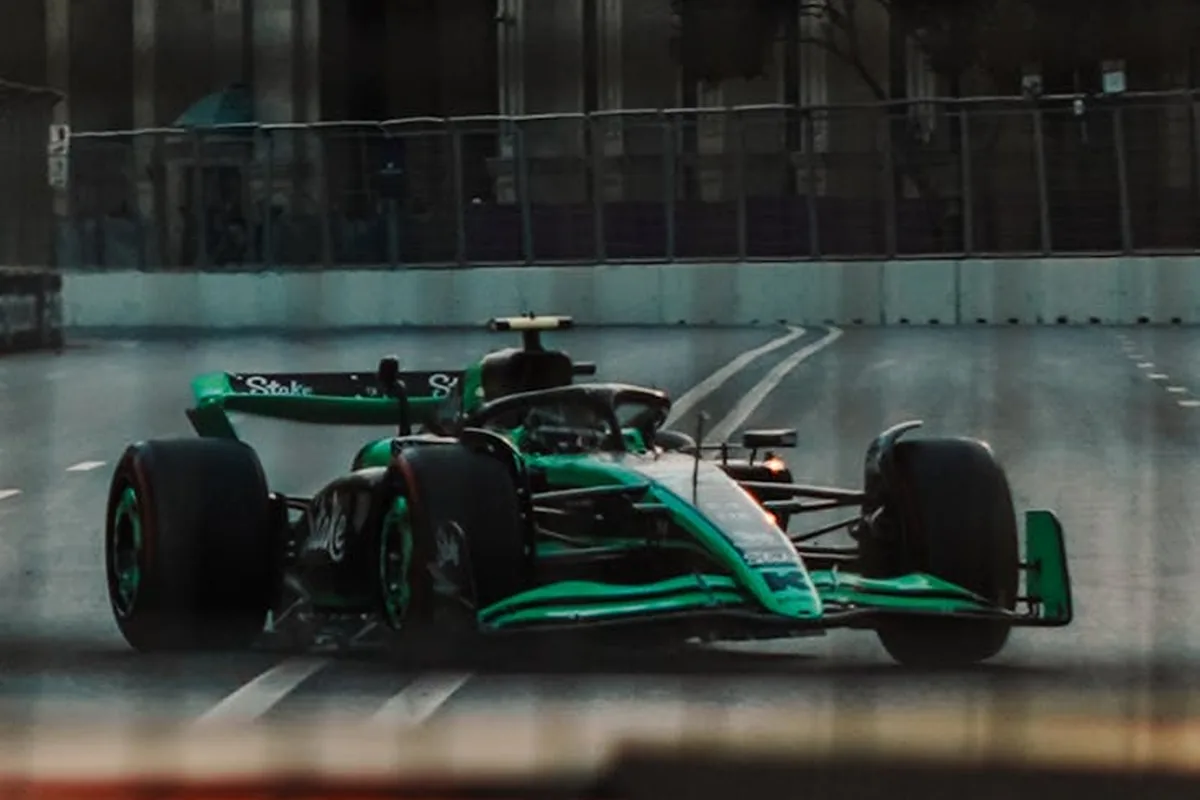
Marina Bay, Singapore: Night Race Mastery
The Marina Bay Street Circuit in Singapore stands as one of the most formidable challenges on the Formula 1 calendar. A high-downforce, high-degradation track run under the floodlights, it demands a unique blend of precision, endurance, and strategic brilliance. For Lewis Hamilton, this venue has been a stage for both supreme dominance and painful setbacks, showcasing the full spectrum of skills required to master the Singapore night race. His record here is a compelling study in adaptability and racecraft under intense pressure.
The Ultimate Physical and Mental Test
Racing in Singapore is an ordeal unlike any other. The combination of 90% humidity, temperatures exceeding 30°C (86°F), and 23 corners packed into a 5.063 km lap pushes drivers to their absolute physical limit. The circuit is a relentless sequence of 90-degree turns, tight chicanes, and short straights, placing a premium on mechanical grip, aerodynamic efficiency, and flawless braking. One mistake often leads to the unforgiving barrier, making concentration for nearly two hours a monumental mental task. Success here requires a car that is responsive and a driver who can manage tires and fuel while extracting every millisecond.
Hamilton’s physical conditioning, honed over his career, has been a critical asset at Marina Bay. His ability to maintain peak performance deep into the race, when fatigue sets in for others, has often been the differentiator. This endurance is a cornerstone of his remarkable consistency record, a trait that has defined multiple championship campaigns.
Hamilton's Singapore Rollercoaster: Triumph and Tribulation
Hamilton’s relationship with the Singapore Grand Prix is a narrative of dramatic highs and lows, reflecting the circuit’s capricious nature.
Early McLaren Struggles and a Breakthrough Win
In his initial seasons with McLaren, Singapore was a bogey track. Retirements and off-pace performances characterized his early outings. The turning point came in 2009, where he seized an opportunistic victory in a chaotic race, demonstrating the race-winning instinct that would become his trademark. This win was a significant moment during his McLaren years, proving he could conquer the sport’s toughest street circuit.
Mercedes Dominance and Strategic Masterclasses
The advent of the hybrid era and Mercedes’ supremacy transformed Hamilton’s Singapore fortunes. His victories in 2014, 2017, and 2018 were exhibitions of total control. The 2018 win, in particular, was a strategic masterpiece. Starting from pole, he executed a flawless "overcut" strategy, building a devastating gap on fresh tires to emerge ahead of title rival Sebastian Vettel after the pit stops. This race was a pivotal blow in their intense four-year championship battle and showcased the seamless operation of the Mercedes strategy team.
The Pain of Near Misses
For all the success, Singapore has also delivered cruel blows. The 2012 race saw him leading comfortably before a gearbox failure robbed him of victory. More recently, the 2023 weekend exemplified frustration, where a promising qualifying was undone by race-day misfortunes. These moments underscore how Marina Bay offers no guarantees, punishing even the smallest technical or strategic error.
Keys to Success at Marina Bay: A Hamilton Case Study
Analyzing Hamilton’s performances reveals the core competencies needed to win in Singapore.
- Qualifying Supremacy: Track position is paramount. Hamilton’s record-tying four poles at Marina Bay (2009, 2014, 2017, 2018) stem from his one-lap excellence and ability to build temperature in the tires through the twisting final sector, a critical skill for a single flying lap.
- Tire Management Genius: The abrasive surface and constant cornering shred tires. Hamilton’s sensitive driving style, with smooth throttle application and precise braking technique, allows him to extend stints and maintain race pace, a form of strategic expertise that defines his racecraft.
- Strategic Flexibility: Safety Cars are a near-certainty. Hamilton and his team have repeatedly shown an ability to adapt on the fly, making bold calls that capitalize on chaos, a hallmark of his dominant Mercedes partnership.
- Race Start Precision: The run to Turn 1 is critical. Hamilton’s launch mastery has often protected his pole position or gained crucial places, setting the tone for his evening.
Singapore in the Championship Tapestry
Hamilton’s Singapore successes are not isolated events but pivotal chapters in his title campaigns. The 2014 victory cemented his momentum during his dominant return to the top. The 2017 win was a crucial strike back against Ferrari during an intense season-long challenge. The 2018 victory broke a three-race winning streak by Sebastian Vettel and was instrumental in securing his second-half championship dominance. Conversely, setbacks here in other years, like 2016, contributed to the pressure in his narrow title loss to Nico Rosberg.
The Future Under the Lights
As Hamilton prepares for a new chapter with Ferrari in 2025, the Singapore Grand Prix will remain a key benchmark. The circuit’s characteristics will test the adaptability of his new team and his own enduring skills. His legacy at Marina Bay is already secure: a four-time winner who tamed one of F1’s greatest challenges through a blend of raw speed, physical fortitude, and cerebral race management. For fans and analysts, his performances here offer a concentrated look at the qualities that have made him a seven-time world champion. For more on how he compares to other legends of the sport, see our statistical comparison with Michael Schumacher.
To understand the full technical challenge of the Marina Bay circuit, the official Formula 1 website provides detailed track analysis. Furthermore, insights into the extreme physical demands placed on drivers can be found in this BBC Sport report on Singapore GP preparation.