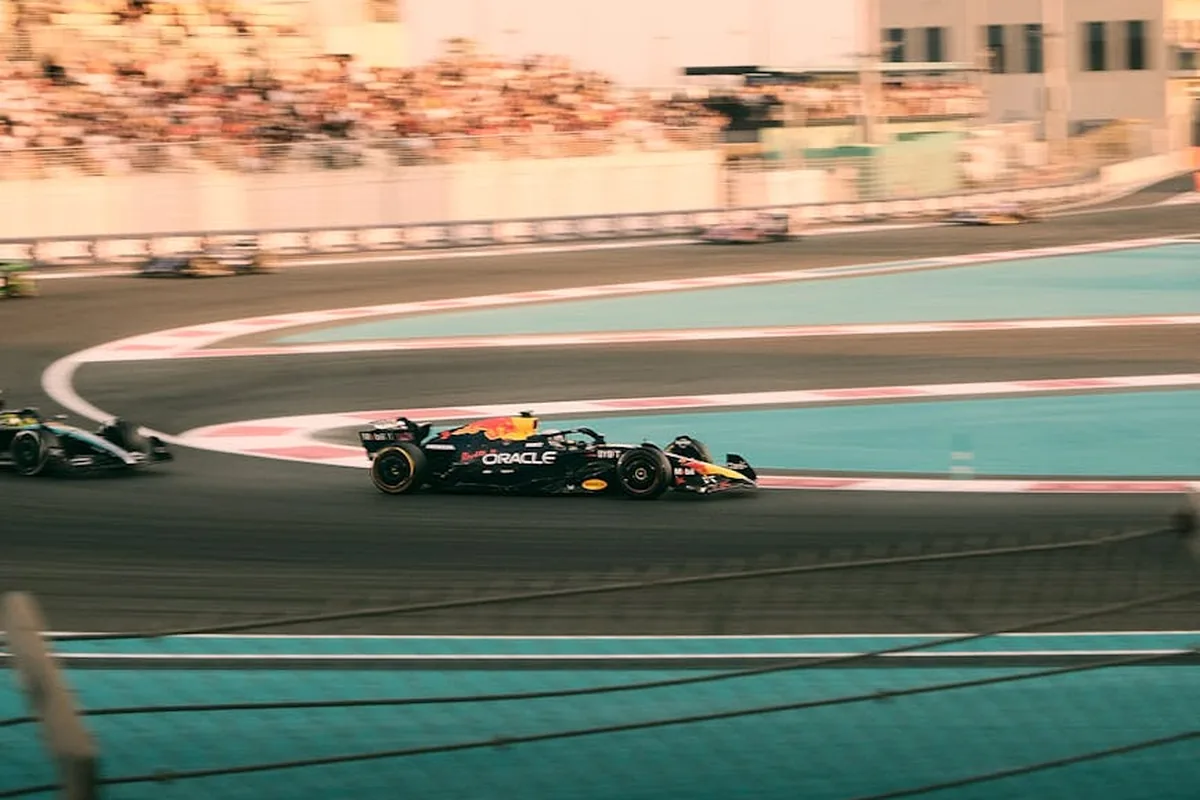
Mercedes Strategy: The Engine Room of a Championship Dynasty
The Mercedes-AMG Petronas Formula One Team's era of dominance, particularly from 2014 to 2021, was built on a foundation of technical brilliance and driver talent. However, the often-overlooked catalyst that transformed raw speed into championship trophies was its strategic operation. The Mercedes strategy team, operating from the pit wall and the remote garage at Brackley, became a benchmark in Formula 1 for precision, adaptability, and collaborative decision-making. This deep dive explores the dynamics, processes, and key figures behind the strategic masterstrokes that defined Lewis Hamilton's most successful years.
The Structure of a Winning Strategy Team
Mercedes' strategic success was never the work of a single individual but a meticulously coordinated symphony of experts. At the core was the Race Strategy Group, a multi-layered team with clearly defined roles ensuring every variable was considered.
The Pit Wall Hierarchy
The visible nerve center during a Grand Prix, the pit wall, housed key decision-makers. The Team Principal (Toto Wolff) provided ultimate authority and managed the broader political and sporting landscape. The Technical Director (often James Allison in later years) oversaw the car's technical performance envelope. Crucially, the Race Strategist and the Chief Race Engineer (for Hamilton, Peter 'Bono' Bonnington) formed the critical link between data and driver. This structure ensured strategic calls were informed by engineering reality and driver feedback simultaneously.
The "War Room" in Brackley
While the pit wall handled live execution, a larger team of strategists, data engineers, and simulation specialists worked remotely from the team's headquarters. This group ran complex predictive models in real-time, comparing hundreds of potential scenario outcomes based on live data. They provided the pit wall with probabilistic analyses, answering critical "what-if" questions about rival strategies, safety car probabilities, and tire wear projections. This dual-layer approach created a formidable decision-support system.
The Decision-Making Process: Data Meets Instinct
Mercedes' process balanced cold, hard data with seasoned racing instinct. It typically followed a clear framework:
- Pre-Race Simulation: Thousands of race scenarios were modeled, creating a "playbook" for likely events.
- Live Data Synthesis: During the race, telemetry from the car, competitor lap times, tire data, and weather radar were aggregated into a single dashboard.
- Option Generation: The Brackley team and pit wall would generate multiple strategic options, each with a projected outcome.
- Collaborative Debate: A rapid, concise discussion would occur between the pit wall players. Driver input, via the race engineer, was a vital component here.
- Commitment and Execution: Once a call was made, the entire team—pit crew, driver, and engineers—executed with flawless synchronization.
This process was tested most severely in high-pressure championship moments, such as the intense Hamilton vs Rosberg rivalry or the strategic duels with Ferrari, detailed in our analysis of overcoming the Ferrari challenge in 2017.
Key Strategic Tenets of the Mercedes Era
Several philosophical pillars underpinned the team's approach, which evolved from dominant seasons to hard-fought battles.
Flexibility Over Rigidity
While they had a plan, Mercedes prided itself on abandoning it faster than anyone else. A classic example was the 2020 Turkish Grand Prix, where Hamilton's tire management on a long stint on worn intermediates was a race-long strategic adjustment that clinched his seventh title, a masterclass we break down in our Turkish GP analysis.
Risk Assessment and Championship Context
Strategic calls were always weighted by championship implications. In a dominant year, they could afford conservative, points-maximizing strategies. During a tight fight, like the 2021 tactical battle with Red Bull, the calculus shifted towards aggressive, race-winning moves. Understanding when to take strategic risks was a hallmark of their success.
The Driver as a Sensor
The strategy team treated Hamilton not just as an executor but as a critical data source. His feedback on tire feel, car balance, and competitor pace was integrated into the models. This synergy between driver and strategist was a force multiplier, allowing for strategic calls that played to Hamilton's supreme strengths in tire management and race pace.
Learning from Adversity: When Strategy Stumbled
Even the best teams make errors, and these moments were pivotal in refining the Mercedes machine. The 2021 season finale in Abu Dhabi was an extreme case of external factors overturning a sound strategic position. Earlier lessons came from races like Monaco 2015, where a misjudged undercut cost Hamilton a win, or the 2016 Spanish GP collision between Hamilton and Rosberg. Each failure led to process reviews, simulation updates, and improved communication protocols. The team's ability to adapt was later tested in the challenging 2022-2023 regulatory era, where strategic excellence often salvaged results from a uncompetitive car.
The Human Element: Trust and Communication
Beyond processes and data, the human dynamics were essential. The relationship between Hamilton and his race engineer, Peter Bonnington, was built on years of trust and shorthand communication. Similarly, the pit wall dynamic between Toto Wolff, the strategist, and the technical director required mutual respect and the ability to debate under extreme pressure. This culture, where the best idea won regardless of hierarchy, was cultivated deliberately. As noted by the team's former Chief Strategist, James Vowles, in an interview with Formula 1, trust was the non-negotiable foundation for split-second decisions.
Legacy and Evolution
The Mercedes strategy team set a new standard in Formula 1, forcing every competitor to elevate their own strategic operations. Their approach demonstrated that modern F1 is won not just by the fastest car, but by the most intelligently deployed package. As Hamilton prepares for a new chapter, the strategic principles honed at Mercedes—data-driven yet agile, collaborative yet decisive—will remain a core part of his arsenal. The team's own strategic evolution continues, facing new challenges in F1's current competitive landscape, a journey that began with Hamilton's first season with Mercedes in 2013 and evolved through an era of unprecedented success.
For further insight into the technical partnership that enabled these strategic calls, explore our analysis of the Mercedes technical evolution throughout the hybrid era. The FIA's official website also provides detailed sporting regulations that govern race strategy, offering context for the framework within which teams like Mercedes operate.