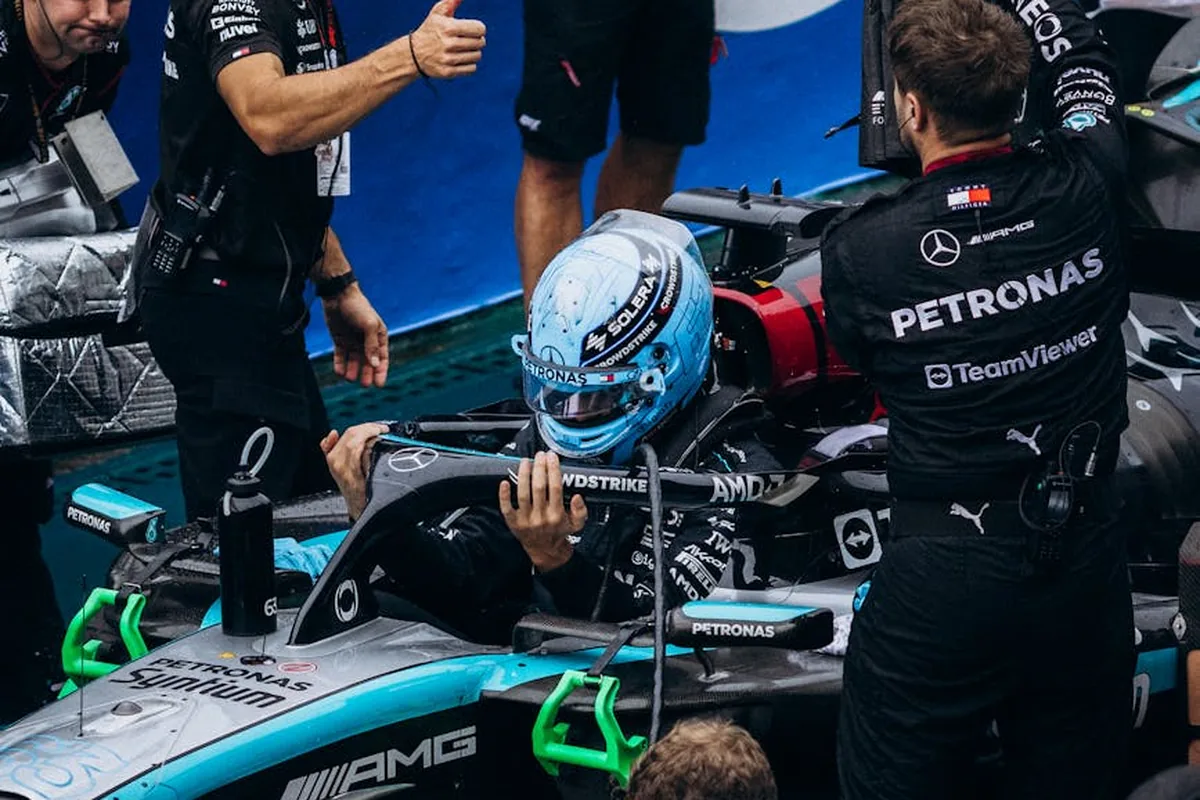
The Anatomy of a Points Machine: Understanding Hamilton's Consistency
In Formula 1, raw speed wins races, but relentless consistency wins championships. While Lewis Hamilton’s record tally of 103 victories and 104 pole positions rightfully captures headlines, his staggering record of points finishes forms the bedrock of his unprecedented success. This metric, more than any other, reveals the combination of supreme skill, mechanical reliability, and mental fortitude that has defined his career. Analyzing Hamilton's points finishes is not merely a statistical exercise; it is a study in longevity and the disciplined accumulation of results that has propelled him to seven world titles.
From his debut in 2007 to the present day, Hamilton has finished in the points in over 85% of his Grand Prix starts. This figure becomes even more remarkable when considering the evolution of points systems and the increased reliability of modern F1 cars. His career embodies the principle that to win championships, a driver must first be a constant fixture at the front, minimizing off-weekends and capitalizing on every opportunity to score. This foundational consistency allowed him to seize titles in fiercely competitive years like 2008 and during the intense battles of the hybrid era.
Defining the Streak: Records of Unbroken Scoring
Hamilton's consistency is perhaps best exemplified by his record-breaking streak of consecutive points finishes. Between the 2018 British Grand Prix and the 2020 Bahrain Grand Prix, he finished in the points for 48 consecutive races—a record that stands as a testament to both his and Mercedes' operational excellence. This streak spanned multiple seasons, different technical regulations, and various competitive landscapes, including the fierce 2018 fight with Ferrari and his dominant 2020 campaign.
What makes this streak so significant is not just its length, but the quality within it. It wasn't a run of mere top-10 finishes; it was predominantly a sequence of podium results and victories. This highlights a key differentiator: Hamilton's "consistency" is typically a consistency at the very sharp end of the grid. Even when not winning, he was almost always there to pick up significant points, applying relentless pressure on rivals and ensuring that any mistake they made was punished in the championship standings. For a deeper dive into this specific record, see our analysis of his most consecutive points finishes.
The McLaren Foundation: Building Reliability
Hamilton's propensity for regular scoring was evident from his very first season. As a rookie, he finished his first nine races on the podium—an unprecedented feat that immediately signaled his exceptional talent and composure. Throughout his McLaren years, he developed the racecraft and strategic mind needed to convert potential wins into solid points on difficult days. Seasons like 2012, where he was frequently the fastest driver but hampered by operational issues, demonstrated his ability to salvage results from adversity, a skill that would become paramount later in his career.
The Mercedes Era: Systemizing Excellence
The move to Mercedes marked the beginning of a period where consistency was engineered into the very fabric of the team's operation. The dominant V6 hybrid era cars, particularly machines like the W11, were not only fast but remarkably reliable. This partnership allowed Hamilton's natural consistency to flourish into a near-automatic process. During the peak years of Mercedes' dominance, a non-points finish was a true aberration. The team's strategic prowess, detailed in our look at the Mercedes strategy team, played a crucial role in minimizing risks and securing points even on sub-optimal days.
Beyond the Car: The Driver's Role in Sustained Scoring
While car performance is fundamental, attributing Hamilton's points record solely to machinery would be a profound misreading. His personal input is the critical variable that transforms a fast car into a points-scoring fortress. Several key attributes underpin this:
- Race Intelligence and Tire Management: Hamilton’s mastery of tire management is a cornerstone of his consistency. His ability to extend stints, maintain pace on worn rubber, and adapt strategy mid-race has repeatedly turned potential lower finishes into podiums or wins.
- Mechanical Sympathy and Feedback: His role in car development and his precise, smooth driving style contribute directly to reliability. By minimizing stress on the power unit and chassis, he reduces the risk of mechanical DNFs—the ultimate consistency killer.
- Mental Resilience: The capacity to perform at an elite level every weekend, across a 20+ race season, is a mental discipline. Hamilton has shown an exceptional ability to reset after setbacks, ensuring that a single DNF or poor result doesn't spiral into a loss of form.
This driver-centric consistency was never more evident than during the 2023 season. In a Mercedes car that was clearly not the fastest, Hamilton's relentless point-scoring—including multiple podiums—was instrumental in securing second place for the team in the Constructors' Championship, outperforming the car's inherent pace through sheer racecraft.
Comparative Context: Hamilton Against History
To fully appreciate Hamilton's scoring consistency, it must be viewed in a historical context. When compared to other legends of the sport, his numbers are extraordinary. For instance, while Michael Schumacher also had periods of immense dominance and reliability, the points systems and length of seasons during his prime were different. Hamilton's career has coincided with the expansion to over 20 races per season and points systems that reward top-ten finishes, making his volume of points finishes historically unique.
His record becomes even more impressive when considering the quality of competition. Achieving such consistency while battling fierce rivals like Nico Rosberg in 2016, Sebastian Vettel across 2017 and 2018, and Max Verstappen in 2021 required a level of performance that rarely dipped. As noted by the official Formula 1 website, Hamilton holds the record for the most points scored in the sport's history—a direct function of his finishing frequency and positions.
The Legacy of the Points Finisher
Lewis Hamilton's legacy will understandably be framed by his seven world championships and his victory tally. However, the true engine of that success has been his unwavering ability to finish races in the points. It is the quiet, week-in, week-out accumulation of results that builds unassailable championship leads and applies psychological pressure on competitors. This consistency provided the platform for his dramatic comebacks, such as in 2018, and allowed him to capitalize when rivals faltered.
As he approaches a new chapter with Ferrari in 2025, this attribute will be as valuable as ever. Adapting to a new car and team environment will present fresh challenges, but Hamilton's fundamental discipline as a points finisher—his racecraft, intelligence, and relentless pursuit of the finish line—remains a transferable skill. It is this ingrained consistency, more than any single lap speed, that has made him not just a champion, but a sustained force in Formula 1 for over seventeen years. For further statistical breakdowns of his career performance, explore our analysis of his points per race average and overall race dominance metrics.