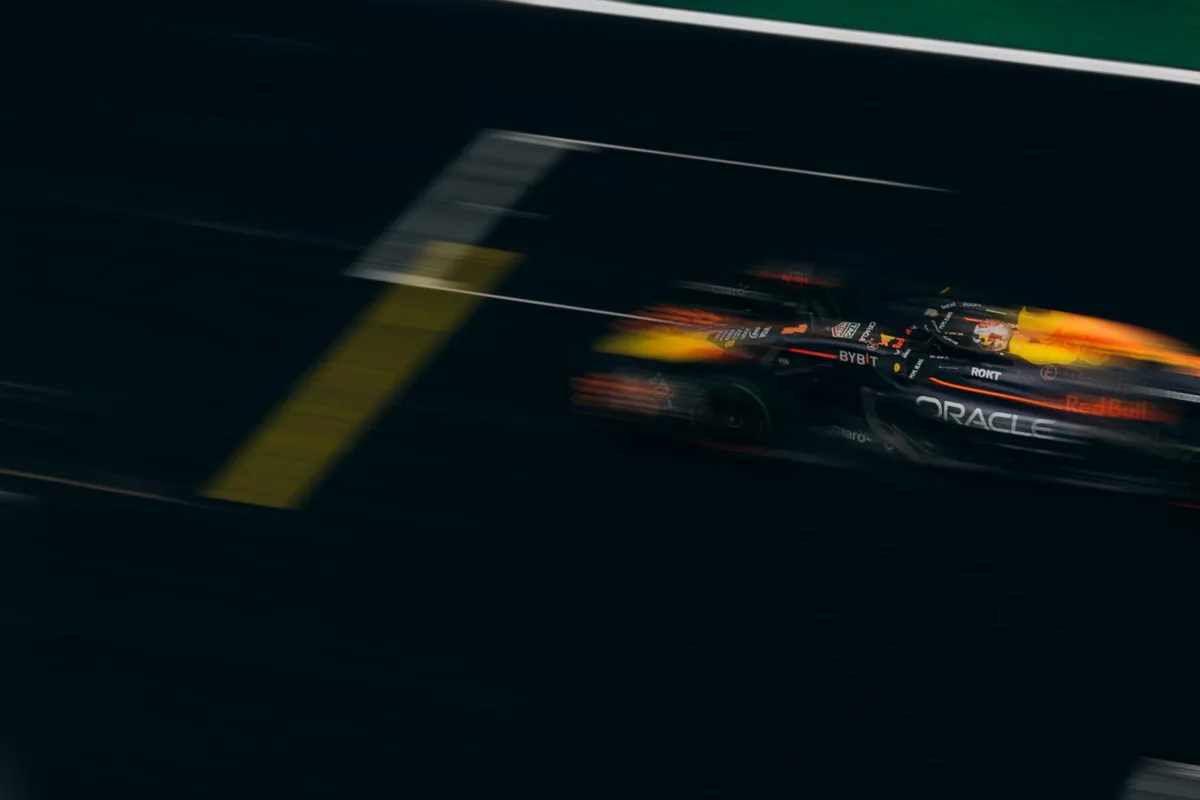
Qualifying Excellence: The Anatomy of a Hamilton Pole Lap
Lewis Hamilton’s record-breaking tally of pole positions stands as one of the most formidable achievements in Formula 1 history. More than just raw speed, a Hamilton qualifying lap is a symphony of precision, adaptability, and psychological warfare. It represents the culmination of car setup, engineering feedback, and a driver's innate ability to extract every millisecond from a circuit. This analysis delves into the key components that define Hamilton's one-lap excellence, examining the technical, mental, and strategic mastery behind his qualifying dominance.
The Foundation: Technical Symbiosis and Car Development
Hamilton’s qualifying prowess cannot be separated from his deep technical involvement. His ability to provide precise, actionable feedback to engineers has been a cornerstone of his success, particularly during the Mercedes dominance era. This synergy allows his race engineers and the strategy team to tailor the car's balance specifically for a qualifying trim, optimizing every aspect for a single flying lap.
This process was perfected in cars like the dominant Mercedes W11, where Hamilton’s input on aerodynamic balance, mechanical grip, and power unit deployment was integral. His understanding extends to the Energy Recovery System usage, managing complex hybrid power delivery to ensure maximum electrical deployment is available at the precise points on the lap where it yields the greatest time gain. This technical partnership, built over years, transforms a fast car into a pole-position weapon.
The Lap Construction: Phases of a Perfect Qualifying Run
A pole-position lap is built in distinct phases, each requiring a unique skill set. Hamilton’s mastery across all phases is what sets him apart.
The Out-Lap: Preparation and Tire Engineering
Before the timed lap begins, the out-lap is a critical preparation phase. Hamilton is a master at preparing his tires—bringing them into the optimal temperature and pressure window without overheating or graining them. His smooth yet aggressive application of throttle and brakes on the out-lap is a calculated ritual, ensuring the rubber is in a state of perfect readiness when he crosses the start/finish line to begin his flyer.
Sector One: The Ultimate Launch
The first sector often includes the main straight and heavy braking zones, making the initial launch and race start mastery techniques partially applicable. Here, Hamilton’s explosive yet controlled application of power is key. He maximizes acceleration while minimizing wheelspin, a skill honed over thousands of practice starts. His precision under braking for the first corner sets the tone for the entire lap, carrying minimum speed into the apex without compromising exit trajectory.
Sector Two: Rhythm and Flow
The middle sector typically features a circuit's technical heart—a sequence of medium and high-speed corners. This is where Hamilton’s natural feel for a car’s balance shines. His steering input precision and mid-corner corrections are minimal, allowing the car to maintain a fluid rhythm. He excels at connecting complex corners, using the exit of one to perfectly position the car for the entry of the next, a skill particularly evident at flowing circuits like Silverstone or Suzuka.
Sector Three: Maximum Commitment and Exit Speed
The final sector often determines pole position. With tires at their peak temperature and sometimes beginning to fade, this phase demands maximum commitment. Hamilton’s ability to brake later and carry more speed through the final corners, while ensuring a perfect exit onto the start/finish straight, is legendary. He manages the delicate balance between aggressive tire use and maintaining grip, ensuring the car is perfectly settled for the final acceleration zone. This phase underscores his braking technique, where his late, hard initial application is followed by a progressive release that rotates the car without unsettling it.
The Mental Game: Pressure and Adaptability
Qualifying is as much a mental battle as a physical one. Hamilton’s ability to deliver under intense pressure, especially in head-to-head battles, is a defining trait. This was never more evident than during his intense rivalry with Nico Rosberg at Mercedes, where Saturday afternoons became a direct psychological duel. He thrives in high-stakes moments, such as the 2021 championship fight, where his qualifying performances against Max Verstappen were consistently breathtaking.
His adaptability is another key weapon. Whether dealing with changing track conditions, evolving car balance, or a sudden drop in temperature, Hamilton can alter his driving style mid-session to find time where others cannot. This skill is most visible in wet weather driving, where his feel for grip in changing conditions has produced some of his most iconic pole laps, such as at Silverstone in 2008 or Turkey in 2020.
Strategic Evolution and Milestone Moments
Hamilton’s approach to qualifying has evolved with regulations and car philosophy. In the early hybrid era, with a significant car advantage, the strategy was often about managing margins. In more competitive seasons, like the 2017 championship battle with Ferrari, it became about extracting every possible thousandth of a second. The pursuit of perfection led to historic milestones, none more symbolic than his 100th pole position in Spain, a record that seemed unbreakable and stands as a testament to his longevity and speed.
Analyzing his pole position percentage across different eras reveals a remarkable consistency. Even in less dominant cars, such as during the 2023 season with Mercedes, his ability to put the car on the front row demonstrated that his qualifying genius is not solely machinery-dependent.
Data and Marginal Gains
In the modern data-driven era of F1, Hamilton utilizes telemetry and simulation to refine his laps to an extraordinary degree. Working closely with his engineers, he dissects each corner, analyzing traces of throttle, brake, and steering to find minuscule improvements. This pursuit of marginal gains—a better line through a single kerb, a slightly different throttle application on exit—is the difference between pole and second on the grid. This analytical approach complements his natural talent, creating a complete qualifying driver.
The Legacy of One-Lap Speed
Lewis Hamilton’s qualifying record is a pillar of his legacy. It provided the platform for many of his 103 race victories, allowing him to control races from the front and execute strategic masterclasses. From his first pole in Australia 2007 to his most recent, the approach remains the same: a relentless, detail-oriented pursuit of the perfect lap. As he embarks on a new chapter with Ferrari in 2025, this qualifying excellence will be a crucial asset. For aspiring drivers and fans alike, a Hamilton pole lap remains the gold standard of Saturday performance—a breathtaking display of skill, nerve, and technical harmony that continues to define an era of Formula 1. For further statistical analysis of his qualifying achievements, the official Formula 1 website maintains comprehensive records, while technical insights can be found through authoritative sources like Autosport's in-depth coverage.