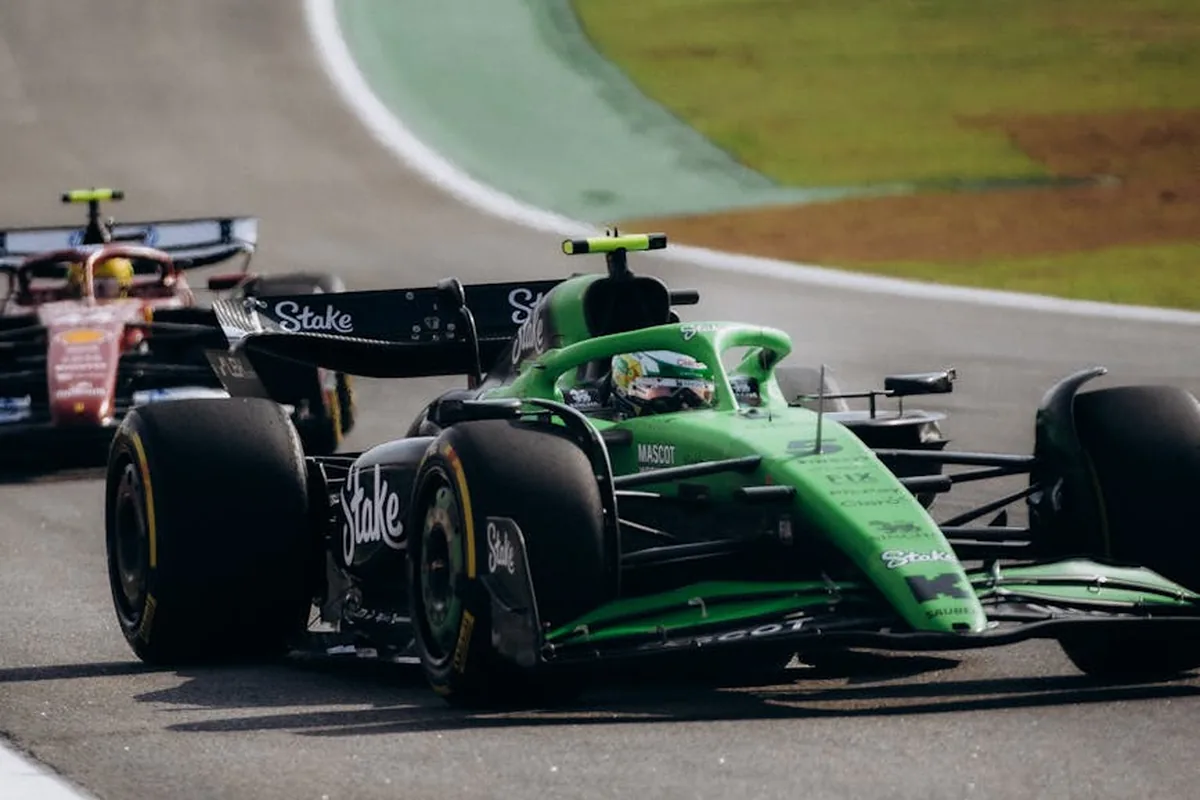
Qualifying Lap Construction: The Anatomy of a Perfect Lap
In Formula 1, a qualifying lap is a high-pressure, high-reward masterpiece of precision. It is the ultimate expression of a driver's skill, a car's potential, and a team's preparation condensed into a single, fleeting lap. For a driver like Lewis Hamilton, whose record-breaking pole position tally stands as a testament to his one-lap prowess, constructing the perfect qualifying lap is a meticulous science. This analysis breaks down the critical phases and components that go into building a lap that can secure the most coveted starting spot on the grid.
The Foundation: Preparation and Mindset
Long before the car leaves the garage for a qualifying run, the groundwork is laid. The process begins with extensive simulator work, where drivers memorize every braking point, turn-in apex, and track evolution characteristic. Engineers analyze reams of data from practice sessions to fine-tune the car's setup for maximum single-lap speed, often sacrificing long-run race pace for qualifying performance. This technical partnership, as seen in Hamilton's work with figures like James Allison, is crucial for optimizing every component.
Equally important is the driver's mental state. Qualifying demands a unique aggression and commitment, a willingness to flirt with the track limits and the car's physical limits without crossing the line into a costly mistake. It requires a clear, focused mind, able to block out championship pressure and execute with robotic consistency. This mental fortitude has been a hallmark of Hamilton's career, evident in critical sessions throughout his championship years.
The Three-Act Structure of a Qualifying Lap
A perfect qualifying lap can be viewed as a three-act performance: the out-lap, the flying lap, and the in-lap. Each serves a distinct and vital purpose.
The Strategic Out-Lap
The out-lap is not merely a journey to the start line; it is a critical preparation phase. The driver must manage multiple objectives simultaneously: bringing the tires up to their optimal operating temperature and pressure window, warming the brakes, and charging the hybrid Energy Recovery System (ERS) battery. This requires a specific driving technique—aggressive weaving, hard braking, and sharp acceleration—to generate heat without excessively degrading the tire surface. A poorly executed out-lap leaves the driver with "cold" tires for the first sector, immediately costing precious tenths.
The Flying Lap: Peak Performance
This is the lap that counts. The flying lap is a symphony of controlled aggression, where every input must be perfect. It can be further dissected into its core technical elements:
- Braking Technique: The cornerstone of lap time. Drivers must brake at the absolute latest possible moment, with immense pressure, before trail-braking into the corner to rotate the car. Hamilton's legendary braking precision allows him to consistently brake meters later than rivals, gaining time before the corner even begins.
- Corner Entry and Apex: The goal is to achieve the minimum possible speed at the apex without compromising exit. This requires perfect steering input and throttle modulation to balance the car, avoiding understeer that widens the line or oversteer that induces time-killing wheelspin.
- Corner Exit and Throttle Application: This is where the most significant time is gained or lost. Smooth, early application of full throttle is paramount. Any wheelspin scrubs off speed down the following straight. Hamilton's renowned smooth power delivery ensures maximum traction, catapulting the car onto the next straight with optimal acceleration.
- Straight-Line Speed: While dependent on engine power and drag, the driver's role is to maximize ERS deployment. Managing the harvest and deployment of electrical energy to ensure it's fully available for key straights is a complex task mastered in the hybrid era.
The In-Lap: Data and Recovery
Once the timing line is crossed, the focus shifts immediately to preservation and feedback. The driver must cool the car's critical components—brakes and engine—while returning to the pits. This lap is also vital for communicating with the engineer, providing immediate feedback on the car's balance, tire feel, and any track evolution noticed during the push.
The Role of Track Evolution and Adaptability
Qualifying is a dynamic battle against a changing track. As more rubber is laid down, the circuit generally gains grip—a phenomenon known as track evolution. This is why the final moments of a session (especially Q3) are often the fastest. A driver and team must judge this perfectly, ensuring they are on track at the optimal moment with tires at their peak.
This demands immense adaptability. Conditions can change between runs, and a perfect lap requires adjusting braking references and turn-in points on the fly. This adaptability is especially crucial in variable conditions, an area where Hamilton's wet weather mastery often translates into superior qualifying performances, as he can find grip where others cannot.
Case Study: The Psychological and Strategic Battle
Qualifying is as much a psychological duel as a technical one. The timing of runs, the battle for track position to secure a clean lap, and the mind games between rivals all play a part. A driver must also manage risk versus reward. Pushing to the absolute limit increases the chance of a mistake that could ruin a lap or cause a crash. The perfect lap exists in that narrow band between maximum attack and controlled error.
We've seen this high-stakes drama repeatedly in Hamilton's career, particularly during intense rivalries. The strategic cat-and-mouse games with Nico Rosberg at Mercedes, detailed in our analysis of their intense teammate rivalry, often played out dramatically in qualifying. Similarly, the strategic nuances of his battles with Sebastian Vettel, such as during the 2017 Ferrari challenge, were frequently decided by Saturday afternoon supremacy.
Conclusion: The Ultimate Synthesis
Building the perfect qualifying lap is the ultimate synthesis of man, machine, and team. It requires technical perfection, physical bravery, strategic intelligence, and psychological resilience. From the meticulous preparation to the millisecond decisions at 200 mph, every element must align. For a driver like Lewis Hamilton, whose career is defined by these moments of peak performance, qualifying excellence is not a happy accident but the result of a refined, repeatable process—a process that has cemented his legacy as one of the greatest qualifiers in the sport's history. As the FIA's official resource on sporting regulations and technical frameworks underscores, the rules create the stage, but it is the driver's skill that delivers the masterpiece. Further insights into the engineering behind such performances can be found through authoritative technical analyses from sources like Racecar Engineering.