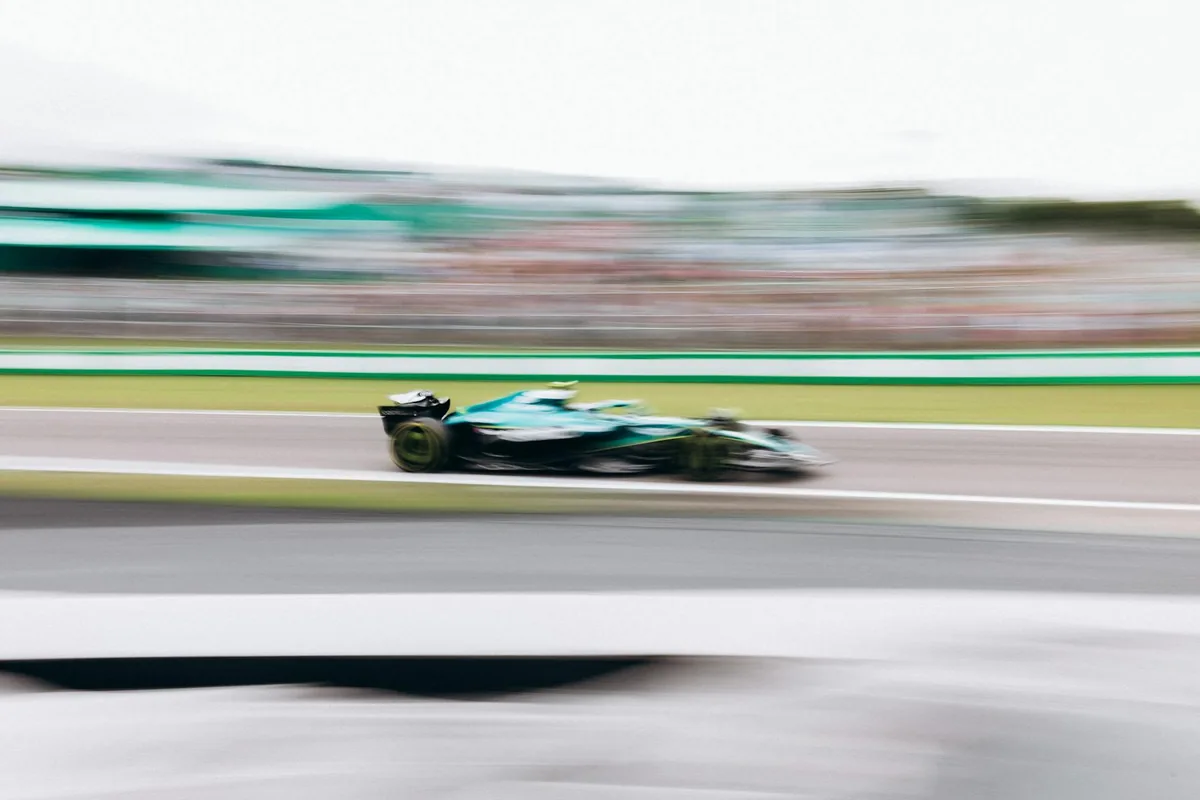
Qualifying Lap Optimization: The Anatomy of Hamilton's One-Lap Excellence
In Formula 1, the single lap is the ultimate test of a driver's raw speed, precision, and nerve. Nowhere is this more critical than in qualifying, where a hundredth of a second can dictate an entire race weekend. Lewis Hamilton has built a significant portion of his legendary career on this discipline, amassing a record-breaking number of pole positions. His one-lap excellence is not merely a product of a dominant car but a repeatable, optimized process honed over nearly two decades at the pinnacle of motorsport. This analysis deconstructs the key components of Hamilton's qualifying lap mastery.
The Mental Blueprint: Preparation and Mindset
Hamilton's qualifying supremacy begins long before he leaves the garage. His approach is rooted in meticulous preparation and a specific psychological framework. He treats each qualifying session as a series of crescendos, building pace and confidence through each segment (Q1, Q2, Q3) rather than seeking a miracle lap on the final attempt. This methodical build-up allows him to extract the maximum from the car and tires at the precise moment it matters most.
His ability to perform under the intense pressure of Q3, especially in tight championship battles like the 2017 Championship: The Intense Battle with Sebastian Vettel or the 2021 Championship: The Controversial Abu Dhabi Finale, showcases a mindset that thrives when the stakes are highest. He visualizes the lap, processes real-time feedback from his engineer, Peter "Bono" Bonnington, and possesses an uncanny ability to reset and deliver after a minor error, a trait that has defined many of his clutch pole positions.
Technical Symbiosis: Communicating with the Car
A qualifying lap is a dialogue between driver and machine. Hamilton’s greatest skill may be his sensory feedback and communication with his engineers. He provides exceptionally detailed telemetry through his driving feel, describing tire temperatures, balance shifts, and aerodynamic behavior with a vocabulary that directly translates into setup changes.
This feedback loop was crucial during the Mercedes Dominance: The Championship Years (2013-Present), where his input helped refine cars like the historically dominant Mercedes W11: Analysis of Hamilton's Most Dominant Car. His ability to adapt his style to extract qualifying pace from different car philosophies—from the aggressive, blown diffuser era at McLaren to the complex hybrid turbo cars at Mercedes—underscores his technical adaptability. This synergy is explored further in our analysis of his Technical Feedback: Hamilton's Role in Car Development.
Corner-Specific Optimization
Hamilton doesn't just drive a lap; he engineers it corner by corner. His process involves:
- Braking Technique: Mastering the fine line between maximum deceleration and locking a tire. His trail-braking is exceptionally smooth, rotating the car mid-corner to minimize time spent off-throttle.
- Throttle Application: A progressive, precise squeeze on exit that maximizes traction and minimizes wheelspin, crucial for modern high-torque hybrid power units.
- Energy Management: In the hybrid era, managing the deployment of electrical energy (ERS) over a single lap is a strategic puzzle. Hamilton optimizes its use for the most critical acceleration zones, often saving a final boost for the last sector.
The Art of the Build Lap and Tire Preparation
Modern Pirelli tires require careful thermal preparation to reach their optimal operating window for one flying lap. Hamilton and the Mercedes Strategy Team have perfected the "build lap" or out-lap. This involves a specific sequence of weaving, braking, and acceleration to bring tire temperatures and pressures up uniformly without overheating the surface.
His skill in this area provides a consistent platform for his flying laps. Furthermore, his capacity to manage tire deg over a single lap allows him to push harder in the final sector when others' tires are beginning to drop off. This tire management prowess, critical in races, is condensed and intensified for qualifying, as detailed in our analysis of his Tire Management: Hamilton's Strategic Expertise.
Adaptability: Mastering Changing Conditions
True qualifying greatness is proven when conditions are imperfect. Hamilton’s record in mixed or wet weather qualifying sessions is peerless. His sensitivity to changing grip levels allows him to find confidence where others hesitate. A standout example is the 2020 Turkish Grand Prix qualifying, held on a newly resurfaced, slippery track, where he secured a stunning pole that set up his title-clinching masterclass.
This adaptability extends to mastering different circuit layouts. Whether it's the high-speed commitment of Monza, the technical complexity of Monaco, or the flowing rhythms of Silverstone, Hamilton tailors his approach. His success at varied venues is statistically broken down in our Circuit Statistics: Hamilton's Performance Across All F1 Tracks.
Evolution and Legacy
Hamilton's qualifying prowess has evolved. In his McLaren Years: Hamilton's F1 Beginnings (2007-2012), his one-lap speed was explosive and often breathtakingly aggressive. With Mercedes, it matured into a more calculated, repeatable, and strategic form of dominance. The numbers tell the story: his record pole position tally, a testament to sustained excellence.
This excellence is a composite skill. It merges the psychological fortitude of a champion, the technical acuity of a development driver, the physical precision of an elite athlete, and the adaptable feel of a natural racer. As he embarks on a new chapter with Ferrari in 2025, this one-lap mastery will remain a foundational weapon. For a deeper statistical dive into this record, explore Pole Positions: Breaking Down Hamilton's Record.
To understand the technical regulations that define modern qualifying battles, the official FIA Sporting Regulations provide the framework. Furthermore, detailed telemetry analyses and driver comparisons, such as those often published by Motorsport.com, offer additional insight into the fine margins of qualifying performance.