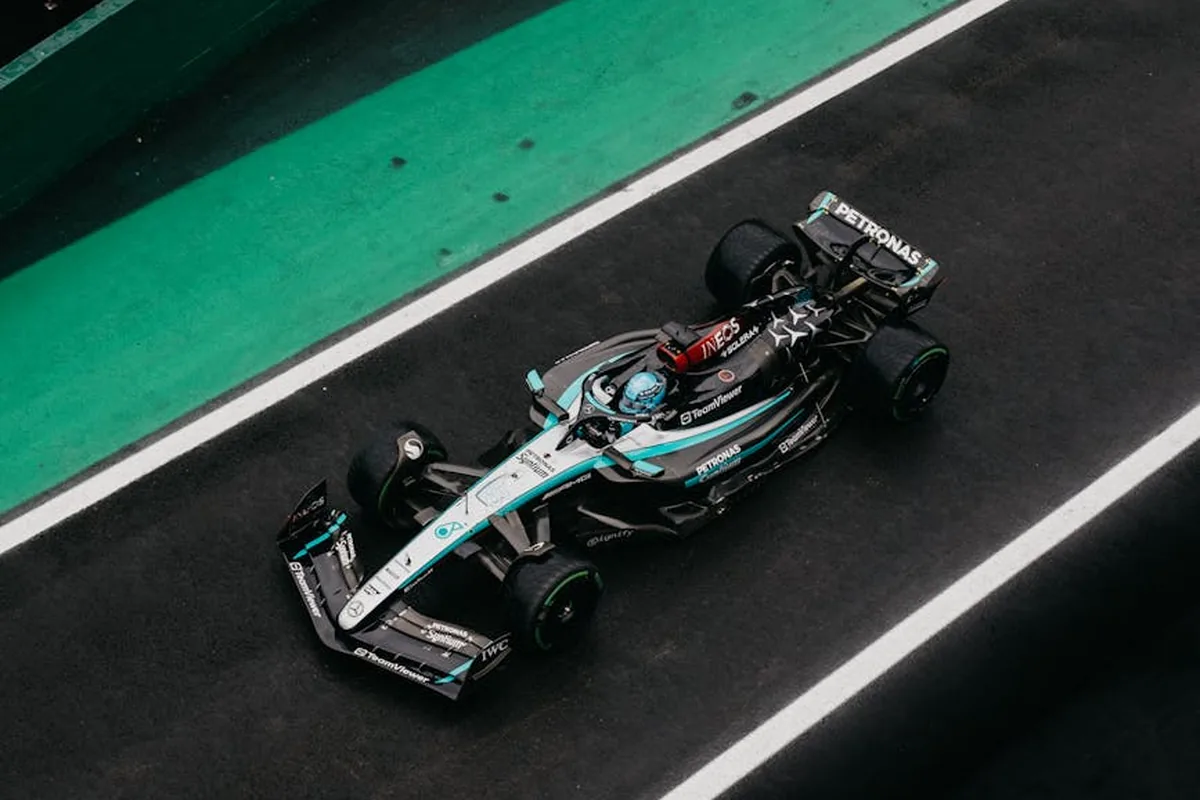
The Unseen Partnership: Why Race Engineers Are F1's Secret Weapon
In the high-stakes, data-driven world of Formula 1, the relationship between a driver and their race engineer is one of the sport's most critical yet understated dynamics. It transcends mere radio communication; it is a partnership built on trust, psychology, and split-second decision-making. While the spotlight shines on the drivers, it is the engineer in their ear who often co-pilots them to victory. This deep dive explores the essence of these relationships, from the iconic bond between Lewis Hamilton and Peter "Bono" Bonnington to other pivotal pairings that have shaped championship history.
The Bono Effect: Anatomy of a Legendary Partnership
The partnership between Lewis Hamilton and Peter Bonnington stands as the modern gold standard for driver-engineer synergy. Beginning with Hamilton's move to Mercedes in 2013, their collaboration has been the bedrock of six of Hamilton's seven world championships. Bonnington’s role extends far beyond relaying lap times and gap intervals. He is a strategist, a psychologist, and a calming presence, known for his measured, reassuring tone even in the most chaotic race situations.
Their communication is a masterclass in efficiency. Bono distills complex strategic scenarios into clear, actionable instructions, while Hamilton provides precise, sensory feedback about the car's behavior. This feedback loop has been instrumental in Mercedes' technical development, directly influencing the design and setup of dominant cars like the Mercedes W11. Their success is built on mutual respect and an almost intuitive understanding, a bond forged through intense battles such as the 2016 championship battle with Nico Rosberg and the strategic duels of the 2017 and 2018 Ferrari challenges.
More Than a Voice: The Multifaceted Role of a Race Engineer
A race engineer's responsibilities are vast and continuous throughout a race weekend. They are the primary conduit between the driver and the entire technical team back at the factory.
Pre-Race Preparation and Strategy
Long before the lights go out, the engineer and driver collaborate on car setup, analyzing simulation data and historical performance at the circuit. They formulate multiple race strategies, modeling pit stop windows, tire degradation, and competitor behavior. This groundwork was crucial in seasons like Hamilton's 2019 campaign, where strategic flexibility often proved decisive.
In-Race Management and Psychology
During the race, the engineer must process a constant stream of data—telemetry, weather radar, rival lap times—and deliver only the most crucial information to the driver. They manage the driver's physical and mental stamina, knowing when to push for a fast lap and when to conserve tires and fuel. Perhaps most importantly, they regulate the driver's emotional state. A calm, focused instruction after a mistake or a well-timed word of encouragement can be the difference between winning and losing, a skill exemplified in high-pressure finales like the 2021 Abu Dhabi decider.
Post-Race Analysis and Development
After the checkered flag, the work continues. The engineer debriefs with the driver, comparing subjective feel with objective data to understand performance gaps. This analysis feeds directly into the car's development cycle, making the race engineer a key link in the performance chain that sustains championship challenges.
Iconic Partnerships Beyond Hamilton and Bono
While Hamilton and Bono's partnership is defining, F1 history is rich with other profoundly effective driver-engineer duos that have left an indelible mark.
Michael Schumacher and Ross Brawn at Benetton and Ferrari created a dynasty, with Brawn's strategic genius perfectly complementing Schumacher's relentless speed. At Red Bull, the partnership between Sebastian Vettel and Guillaume "Rocky" Rocquelin was central to their four consecutive titles, with Rocky expertly managing Vettel's race rhythms. More recently, Max Verstappen and Gianpiero Lambiase have developed a famously direct and brutally honest rapport, which has been a cornerstone of their success, including their intense 2021 championship battle with Hamilton.
These relationships prove that while the dynamic may vary—from the supportive to the sparring—the foundation is always absolute trust and a shared, uncompromising will to win.
The Human Element in a Digital World
In an era dominated by simulation, big data, and remote operations centers, the human connection between driver and engineer remains irreplaceable. Telemetry can show a loss of rear grip, but only the driver can describe *how* it feels. The engineer must interpret that sensory description, cross-reference it with data, and translate it into a technical adjustment.
This partnership also handles immense pressure. As noted in a feature by Formula 1, the engineer must often make critical strategy calls with incomplete information, relying on instinct and experience as much as algorithms. The driver, in turn, must have complete faith in that call while hurtling into a braking zone at 200 mph.
Building the Bond: How These Relationships Form
These partnerships are not manufactured overnight. They develop over thousands of hours in the garage, in debriefs, and on the simulator. Key ingredients include:
- Consistent Communication: Developing a shared vocabulary to describe car behavior.
- Psychological Alignment: Understanding how to motivate and manage each other under stress.
- Mutual Respect: Acknowledging each other's expertise—the driver's feel, the engineer's technical and strategic knowledge.
When a team changes engineers, it can disrupt this delicate ecosystem, as seen during driver moves between teams, such as Hamilton's own career-defining transition from McLaren to Mercedes.
The Future of the Driver-Engineer Dynamic
As Hamilton prepares for his move to Ferrari in 2025, one of the most watched aspects will be his new partnership with a race engineer at Maranello. Recreating the depth of understanding he shared with Bono will be a significant challenge and a critical factor in the success of that new chapter. This highlights a universal truth in F1: while cars and regulations evolve, the human partnership in the cockpit and on the pit wall remains the sport's ultimate constant. It is a reminder, as explored by the Motorsport Magazine, that behind every great driver's statistic, like those detailed in our analysis of Hamilton's pole position record, is an equally great mind on the radio, guiding them to glory.