Race Starts: Hamilton's Launch Technique Analysis
The moment the five red lights extinguish is arguably the most critical in a Formula 1 race. A good start can secure a lead, defend a position, or launch an attack; a poor one can undo a weekend's work. Over his storied career, Lewis Hamilton has developed a reputation as one of the grid's most formidable starters. His launch technique is a blend of innate feel, meticulous preparation, and technical mastery, honed across multiple eras of F1 machinery. This analysis delves into the components that make his race starts so consistently effective.
The Foundation: Technical Understanding and Preparation
Hamilton's prowess off the line is not accidental. It is built upon a deep technical understanding of his car's systems, particularly the complex hybrid power units introduced in 2014. A perfect launch requires the precise orchestration of clutch bite point, engine torque delivery, energy recovery system (ERS) deployment, and tire temperature.
Before every race, Hamilton and his engineers, led by the legendary Peter "Bono" Bonnington, analyze countless data points. They review practice start performances, clutch engagement characteristics, and track temperature evolution. This preparation allows Hamilton to build a mental model of exactly how the car will behave when he releases the clutch. His role in car development ensures his feedback directly shapes systems that are responsive and predictable under the intense pressure of a race start.
Clutch Manipulation and Throttle Modulation
In the clutch-paddle era (pre-2020), Hamilton's left-hand finesse was a key differentiator. The objective was to find and hold the clutch at its optimal bite point—the moment of initial engagement—before the lights went out. Upon launch, a smooth, progressive release was critical to prevent wheelspin or bogging down. Hamilton’s ability to modulate this release with millimeter precision, while simultaneously managing throttle application with his right foot, showcased extraordinary hand-foot coordination. Even with the current automated clutch systems, his input in setting up the software parameters and his throttle application remain vital for optimizing traction.
Harnessing the Hybrid Power Unit
The introduction of the turbo-hybrid V6 engines added a new layer of complexity. Hamilton mastered the art of pre-charging the Energy Recovery System (ERS) on the formation lap to ensure maximum battery deployment was available for the start. This "MGU-K" boost provides a critical surge of instant torque to the rear wheels. Timing this deployment to complement the internal combustion engine's power band, rather than overwhelm the tires, is a delicate balance. His expertise in energy recovery system usage became a cornerstone of Mercedes' dominance, turning technical complexity into a launch advantage.
The Human Element: Reflexes, Feel, and Aggression
Beyond the technical parameters lies the human skill. Hamilton possesses exceptional reflexes, but more importantly, he has an unparalleled feel for grip and car balance. As the lights sequence through, he is sensing the car's readiness—the subtle vibrations through the seat, the tire warmth. This sensory feedback allows for micro-adjustments even in the split second of launch.
His starts are also characterized by controlled aggression. He is not afraid to position his car assertively, often squeezing competitors or taking calculated risks into the first corner. This aggressive racecraft, balanced with supreme car control, has been a hallmark of his career, evident in battles from his McLaren years through to the intense 2021 championship battle with Max Verstappen. A prime example of this aggressive starting prowess was on display at the 2021 Saudi Arabian GP, where start-line positioning was crucial in the title fight.
Adapting to Adversity: Wet Starts and Recovery
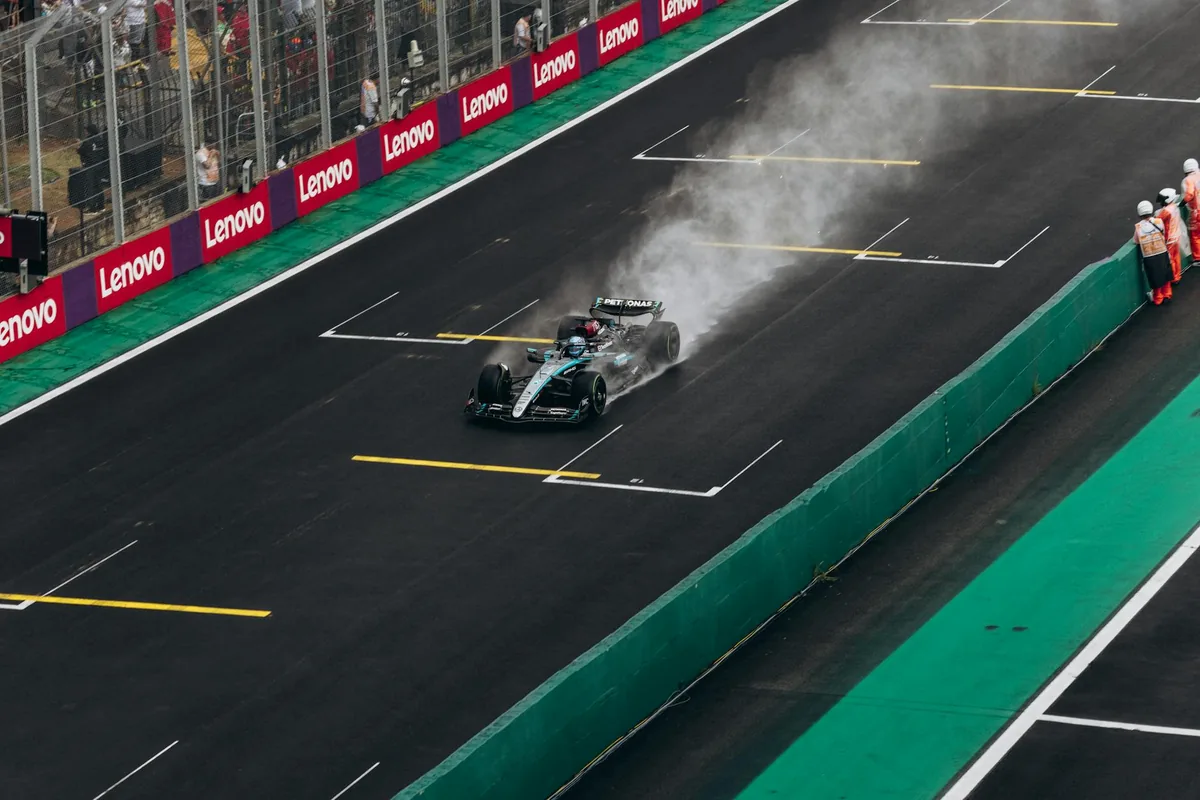
The true test of a driver's starting skill comes in variable conditions. Hamilton's wet weather mastery extends powerfully to race starts. In damp or drying conditions, finding traction is exponentially harder. Here, his feel for the car shines brightest. He excels at identifying patches of better grip on the grid and modulating his inputs with even greater subtlety to avoid wheelspin. His legendary wet-weather starts, such as those at Silverstone in 2008 or Turkey in 2020, demonstrate an almost intuitive understanding of hydrodynamics and tire behavior under extreme load.
Furthermore, his start technique is robust enough to facilitate recoveries. Even on his rare off-days in qualifying, Hamilton's race-day launches have often propelled him forward immediately, turning a poor grid slot into a points-scoring opportunity. This consistency underscores that his method is repeatable and reliable under pressure.
Evolution and Comparison Across Eras
Hamilton's launch technique has evolved with the regulations. From the high-revving, manually clutched V8s of his early career to the hybrid behemoths of the Mercedes era, he has adapted seamlessly. This adaptability is a testament to his core skill as a driver, which transcends specific car technologies. When comparing his starts to rivals, his consistency stands out. While others may have occasional blistering launches, Hamilton's ability to be in the top tier of starters race after race, year after year, compounds his advantage.
This skill contributed directly to his championship successes. A strong start often translated into race control, a vital component during periods of Mercedes' unstoppable dominance. It also provided the platform for strategic flexibility, allowing the Mercedes strategy team to execute their preferred race plans from the front.
The Anatomy of a Perfect Hamilton Launch
To summarize, the key phases of a Hamilton start are:
- Preparation: Intensive data review and practice start analysis with his engineering team to define clutch and engine maps.
- Grid Positioning: Precise alignment on his grid box, often favoring the cleaner side of the track if possible.
- System Activation: Optimal pre-charging of the ERS battery during the formation lap and final grid approach.
- The Sequence: Finding and holding the clutch bite point (or trusting the automated system), building engine revs, and focusing intensely on the light panel.
- Launch: A synchronized, progressive release of the clutch and application of throttle, with managed deployment of ERS for maximum traction without wheelspin.
- Phase 2: Once moving, immediate assessment of traction and car positioning for the sprint to the first corner, ready to attack or defend.
For a deeper look at the technical parameters drivers manage, the official FIA Technical Department provides regulations that shape these systems. Furthermore, detailed telemetry analysis by experts, such as those on Chain Bear F1, helps visualize the immense complexity behind a two-second launch sequence.
Conclusion: A Hallmark of a Complete Driver
Lewis Hamilton's race start technique is a microcosm of his overall genius. It combines technical intellect, sensory skill, physical precision, and competitive fire. In a sport where hundredths of a second define success, his ability to consistently gain time and positions before even reaching the first corner has been a weapon throughout his career. As he continues to compete at the highest level, this foundational skill remains a critical part of his arsenal, proving that in Formula 1, the race is often won the moment it begins.