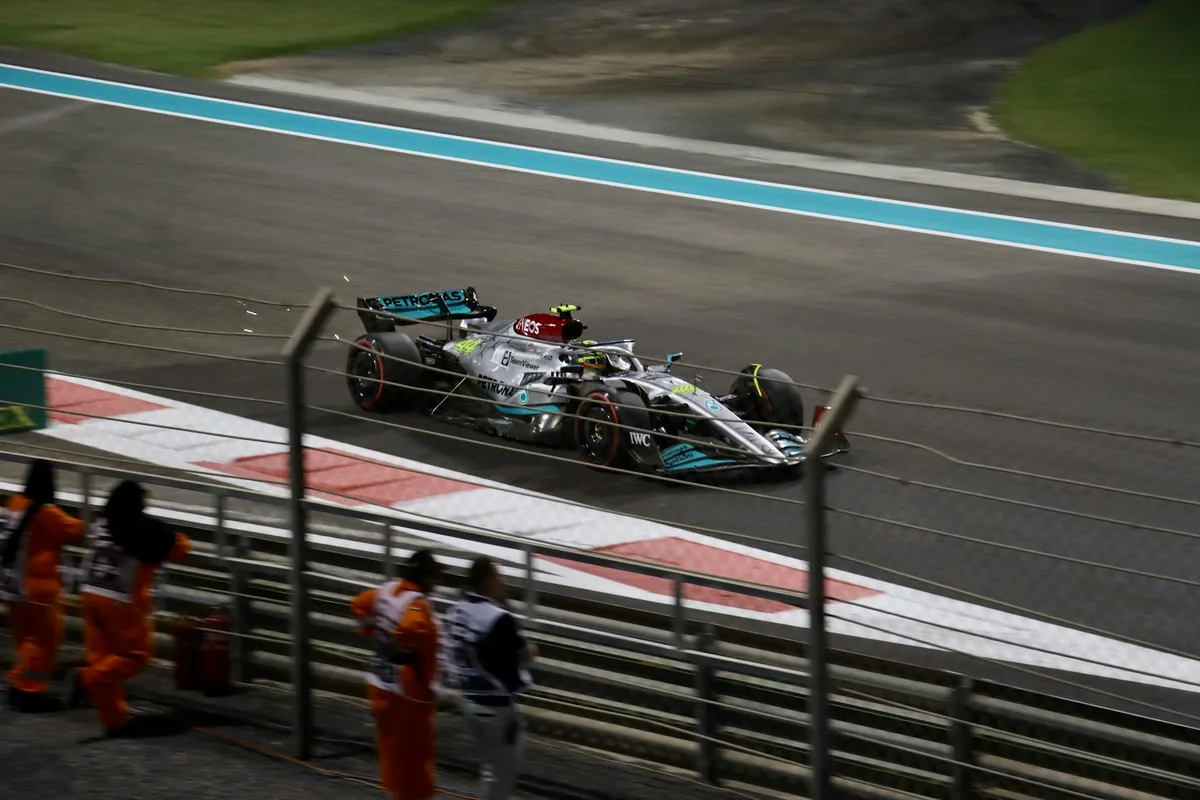
Race Start Techniques: Analysis of Hamilton's Launch Skills
The moment the five red lights extinguish is arguably the most critical in any Formula 1 Grand Prix. A driver’s ability to convert grid position into race position in those first few hundred meters can define their entire afternoon. Among the modern greats, Lewis Hamilton has consistently demonstrated a masterful command of race starts, a skill that has been a cornerstone of his seven world championships. This analysis delves into the techniques, preparation, and instinct that define Hamilton's launch skills.
The Technical Foundation of a Perfect Launch
A modern F1 start is a complex ballet of software, hardware, and human reaction. The process begins well before the lights go out, with the driver engaging the "launch mode" or "start procedure" on their steering wheel. This configures the hybrid power unit—managing the deployment of electrical energy from the MGU-K and the precise delivery of torque from the internal combustion engine. The goal is to maximize traction without inducing wheelspin, a task made incredibly difficult by the immense torque of hybrid engines and the cold, slick nature of Pirelli tires on the formation lap.
Hamilton’s proficiency lies in his nuanced throttle application. Unlike a simple binary input, his right foot performs a rapid, micro-adjusting dance, feeding in power progressively as the tires find grip. This smoothness prevents the rear wheels from breaking traction, which not only costs acceleration but can also trigger anti-stall systems or lead to a catastrophic loss of control. His braking technique and precision also play a subtle role here, as he balances the car on the bite point of the clutch (in earlier seasons) or manages the torque delivery system to hold the car stationary before the launch.
Reaction Time and the Mental Game
While technical setup is crucial, the human element remains paramount. Official F1 data has consistently shown Hamilton’s reaction times to be among the fastest on the grid, often hovering around 0.2 seconds. However, his skill extends beyond mere reflexes. He is a master of anticipation, studying the light sequence patterns and developing an intuitive sense for the moment of extinction. This mental preparation minimizes the cognitive delay between seeing the lights go out and initiating his physical reaction.
This focus was particularly evident during his intense championship battles. For instance, during the 2017 championship battle with Ferrari, his starts were a key weapon in holding off Sebastian Vettel’s challenge. Similarly, his ability to launch cleanly under extreme pressure was tested to its limit in the controversial 2021 Abu Dhabi finale, where his initial launch from second place was flawless, granting him a critical early advantage over Max Verstappen.
Adapting to Conditions and Adversity
Hamilton’s start mastery is not limited to dry conditions. His ability to judge grip levels in wet or mixed conditions is exceptional. In the rain, the risk of wheelspin is magnified, requiring an even more delicate touch. His renowned wet weather driving mastery is intrinsically linked to his launch control, as he can sense the available traction through the seat of his pants and adjust his procedure accordingly. This adaptability was a hallmark of his record-breaking 2020 campaign, where he secured strong positions from various grid slots in all conditions.
He has also demonstrated remarkable skill in recovery after a poor start. While rare, on occasions where wheelspin has occurred, his corrective actions are swift and measured. A slight reduction in throttle, a subtle steering correction to counter oversteer, and a rapid re-application of power allow him to minimize losses, a testament to his supreme car control.
The Strategic Dimension: More Than Just the Launch
Hamilton’s start expertise encompasses the entire first lap sequence, not just the initial launch. His racecraft in the opening corners is calculated and assertive. He expertly uses the tow effect on long straights following a start and positions his car defensively or offensively based on the strategic context of the race. His decision-making under the intense compression of the first corner—whether to fight, concede, or take an outside line—is informed by years of experience and a clear understanding of the championship picture.
This strategic approach to the first lap was crucial in seasons like 2018, where responding to Ferrari pressure was a constant theme. By securing track position early, he could control the race pace and manage his tires, a key component of his overall tire management expertise. The start is the first tactical move of the Grand Prix, and Hamilton treats it as such.
Evolution and Comparison
Hamilton’s start technique has evolved with the regulations and technology. The transition from manual clutch paddles to the more automated start procedures of the hybrid era required adaptation. His success across both eras underscores his ability to meld innate feel with technical understanding. When compared to his fiercest rivals, his consistency stands out. While drivers like Max Verstappen are phenomenally aggressive and Nico Rosberg was meticulously practiced, Hamilton’s blend of reaction speed, smooth control, and strategic intent has provided a slight but persistent edge.
This edge contributed significantly to his numerous victories and podium finishes. For a complete look at his remarkable consistency from the start to the finish of races, explore our analysis of his points finishes consistency record.
Conclusion: A Hallmark of a Complete Driver
Lewis Hamilton’s race start skills are a synthesis of lightning-fast reaction, micro-precise car control, deep technical knowledge, and strategic foresight. They are a fundamental, yet often under-analyzed, component of his success. In a sport where races can be won or lost in the blink of an eye at lights out, Hamilton’s repeated excellence in this phase underscores his status as one of the most complete drivers in Formula 1 history. As he embarks on a new chapter with Ferrari in 2025, his proficiency in launching the car will remain a vital asset. For more on the technical challenges of a modern F1 start, see this Formula 1 official technical analysis. Furthermore, detailed studies on driver reaction times and launch physiology are discussed in research published by PLOS One.