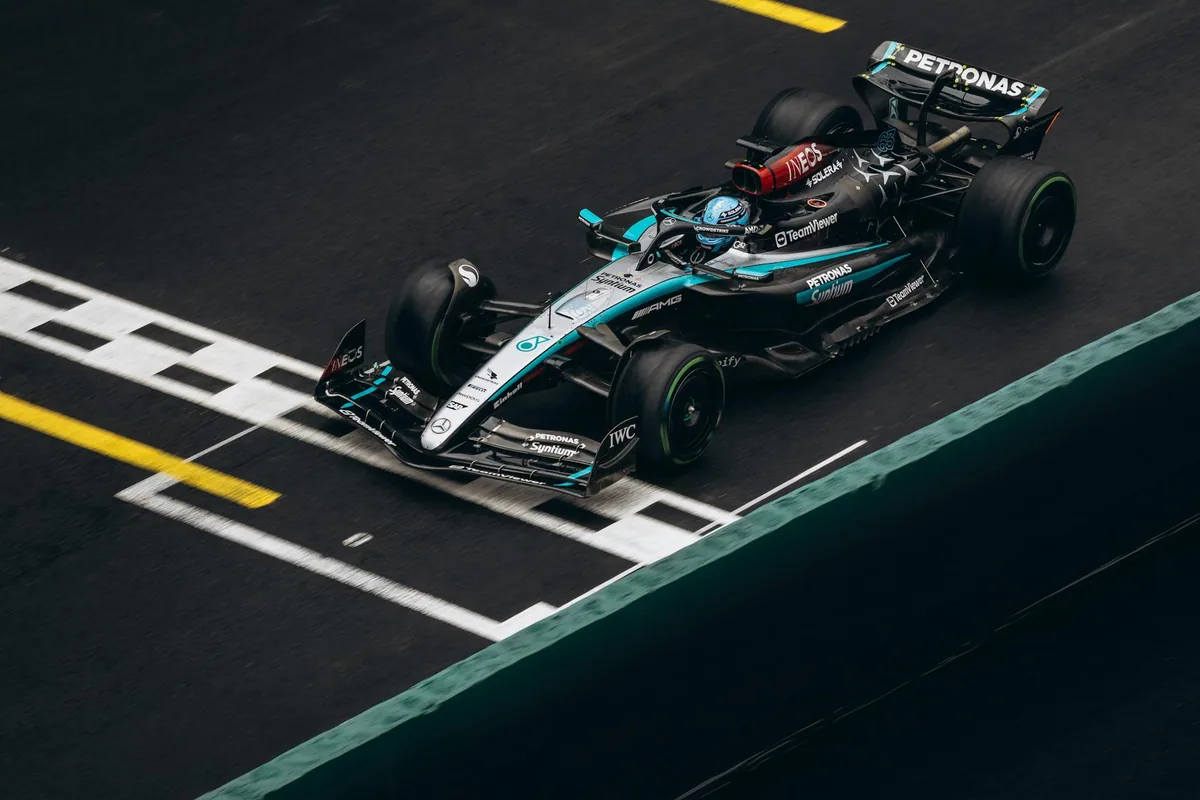
Race Starts Analysis: Hamilton's Grid Launch Performance
The moment the five red lights extinguish is arguably the most critical in any Formula 1 race. A driver’s ability to convert grid position into track position in those first few hundred meters can define their entire afternoon. For Lewis Hamilton, a driver renowned for his qualifying brilliance and racecraft, his race start performance has been a fascinating blend of explosive aggression, strategic patience, and technical mastery. Analyzing his grid launch performance reveals not just a key component of his success, but also the evolution of his approach across different eras and car regulations.
The Technical Foundation of a Launch
A perfect race start is a complex symphony of physics, electronics, and driver feel. During the hybrid era, which began with Hamilton's dominant 2014 championship season, the process became even more intricate. The driver must manage clutch bite point, engine revs, energy recovery system deployment, and wheelspin—all while anticipating the movement of the cars around them. Hamilton’s success here is built on meticulous practice, both in the simulator and during countless practice start procedures at the end of pitlane. His ability to interpret the clutch’s behavior through the pedal and his precise throttle application are hallmarks of his technique. For a deeper look at his technical driving skills, see our analysis of his throttle application and smoothness.
Adapting to Regulatory Changes
Hamilton’s career has spanned significant technical shifts that directly impacted start procedures. The transition from the high-revving V8 engines at McLaren to the complex hybrid turbo V6 power units at Mercedes required a complete recalibration. The initial years of the hybrid era, particularly during the period of Mercedes' unstoppable dominance in 2015, saw the team perfecting their start system, giving Hamilton a often decisive technical edge off the line. Later regulation changes, such as clutch design mandates and the removal of the "clutch paddle" start assist, put more emphasis back on pure driver skill, an area where Hamilton consistently excelled.
Aggression vs. Calculation: A Strategic Evolution
Examining Hamilton’s starts reveals a clear strategic evolution. His early career at McLaren was characterized by breathtaking, sometimes audacious, aggression. His rookie duel with Fernando Alonso, detailed in Hamilton vs. Alonso: The 2007 Rookie-Teammate Rivalry, showcased a driver unafraid to fight wheel-to-wheel from the moment the lights went out. This approach yielded spectacular gains but also carried higher risk.
As he matured, particularly during his Mercedes tenure, his starts became more calculated. The goal shifted from making multiple positions at all costs to securing clean air and managing the race from the front, especially when starting from pole. This was evident in his championship-winning years, where strategic race management was paramount. However, when starting behind, his killer instinct remained. Key battles, such as his intense rivalry with Nico Rosberg explored in Hamilton vs Rosberg: The Ultimate Teammate Rivalry, often featured pivotal start-line moments where Hamilton would pounce on any hesitation.
Mastering the Mental Game
Beyond the physical controls, Hamilton’s start prowess is a mental exercise. He excels at processing the pre-start sequence: the alignment on his grid slot, the condition of the track surface, the behavior of the car directly ahead, and the timing of the lights. His remarkable record in wet weather starts, a subset of his overall wet weather mastery, underscores this. In changing conditions, where grip is unpredictable, his feel for the car and ability to modulate power precisely have allowed him to make extraordinary gains, turning potential chaos into decisive advantage.
Iconic Starts and Critical Moments
Hamilton’s career is punctuated by race starts that altered the course of championships. One of the most famous is the start of the 2018 Italian Grand Prix, where he started third behind the two Ferraris but out-dragged Kimi Räikkönen into the first chicane, a move that broke Ferrari's momentum at their home race and was crucial in his 2018 championship response to Ferrari pressure.
Conversely, his start in the 2016 Japanese Grand Prix, where a poor getaway from pole handed the initiative to teammate Nico Rosberg, was a critical moment in that year's tense championship battle that ended in a narrow loss. These moments highlight how starts are not just about raw speed but consistency under immense pressure. His ability to deliver near-flawless getaways in high-stakes season finales, such as in Abu Dhabi during his record-breaking 2020 championship campaign, demonstrates a champion's nerve.
Data and Comparison
While less frequently highlighted than his pole positions or wins, statistical analysis of Hamilton's starts shows remarkable effectiveness. His pole position conversion rate—turning pole into a race lead after the first lap—has been consistently high throughout his Mercedes years. When not on pole, his average positions gained on the first lap compared to his starting spot is a testament to his overtaking aggression off the line. This complements his overall reputation for overtaking mastery throughout a race distance.
Compared to his closest rivals, Hamilton’s start performance has often been a differentiator. During the peak Ferrari challenges with Sebastian Vettel, Hamilton’s cleaner getaways from the front row often neutralized Ferrari’s qualifying pace. In the intense 2021 championship battle with Max Verstappen, start-line duels, such as in Spain where Hamilton lost the lead but fought back, were microcosms of the season’s strategic and on-track warfare.
The Role of Team and Technology
Hamilton’s launch success cannot be divorced from the Mercedes team’s operational excellence. The precision of the Mercedes pit crew and strategy team extends to pre-race procedures, ensuring the car is perfectly configured. His race engineer, Peter "Bono" Bonnington, plays a crucial role in relaying critical information about clutch performance from previous starts and competitor behavior. This seamless integration of driver skill and team technology creates a formidable package. The team’s ability to develop and refine the car’s start systems throughout the hybrid era, as part of their broader technical evolution, provided Hamilton with a consistently competitive tool.
Conclusion: A Pillar of Championship Success
Lewis Hamilton’s grid launch performance is a critical, yet sometimes understated, pillar of his record-breaking success. It blends innate reaction and feel with cultivated technical understanding and strategic intelligence. From the aggressive rookie to the calculated multiple world champion, his approach to the race start has evolved but its importance has never diminished. In a sport where races can be won or lost in the blink of an eye, Hamilton’s repeated ability to excel in that blink—to harness chaos, exploit advantage, and manage risk—remains a definitive hallmark of his greatness behind the wheel. As he looks ahead to new challenges, this fundamental skill will continue to be a primary weapon in his arsenal. For more on his driving techniques, explore our analysis of his braking precision and tire management expertise.
To understand the technical parameters of a modern F1 start in greater detail, the official Formula 1 website provides excellent explanatory content. Furthermore, detailed telemetry comparisons and driver technique studies can be found through authoritative motorsport engineering resources like Racecar Engineering.