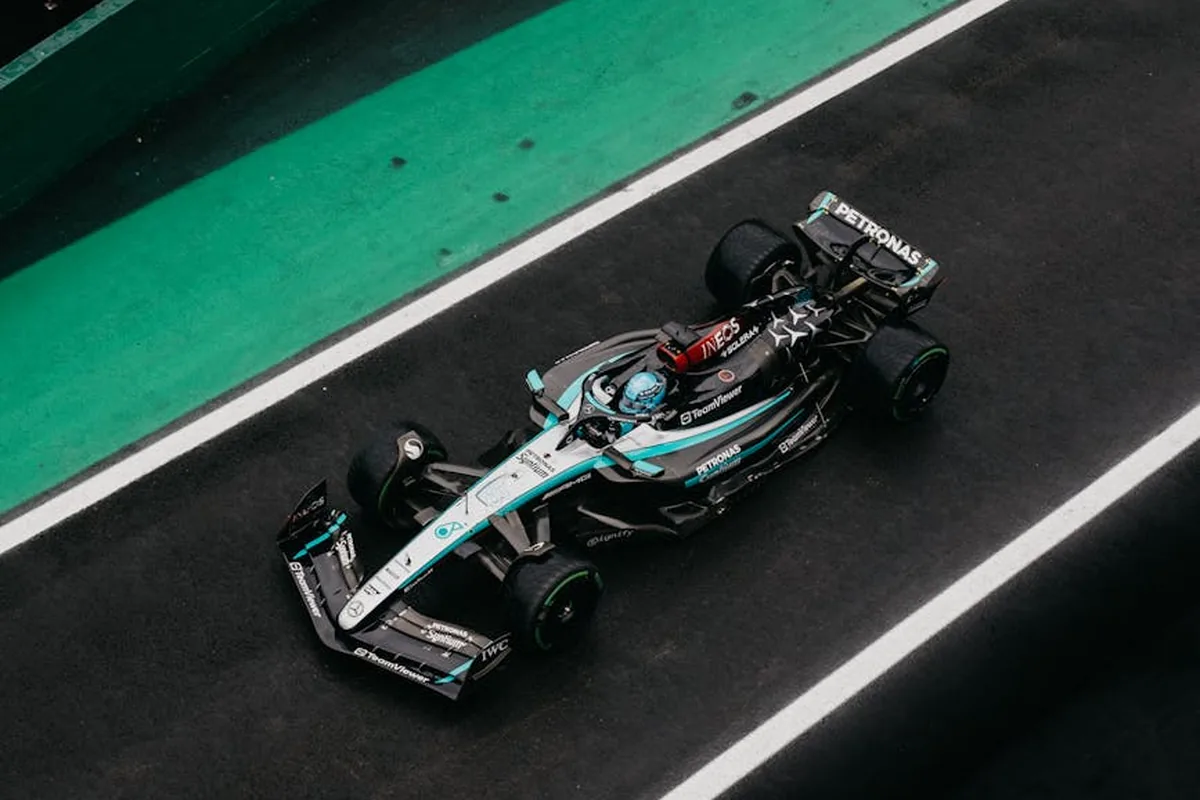
Steering Input: The Foundation of Hamilton's Precision
In the high-stakes world of Formula 1, where victories are decided by thousandths of a second, a driver's connection to the car is paramount. This connection is most directly expressed through the steering wheel. Lewis Hamilton’s career, built on a foundation of seven World Championships and a record number of pole positions, is a masterclass in the nuanced art of steering input. His technique—a blend of preternatural feel, surgical precision, and adaptive intelligence—is a key component of his sustained excellence. Unlike raw power application or aggressive braking, steering input is a continuous, fluid dialogue between driver and machine, and Hamilton has proven to be one of the sport's most eloquent communicators.
Anatomy of Precision: Feel, Feedback, and Finesse
Hamilton’s steering style is often described as smooth, yet this simplicity belies a complex interaction. His precision stems from an exceptional ability to process feedback through his hands. The steering column transmits a constant stream of data: tire grip levels, front-end bite, rear stability, and track surface variations. Hamilton’s skill lies in interpreting this data instantaneously and making microscopic corrections, often before the car visibly deviates from its intended line.
The Role of Early Apex and Rotation
A hallmark of Hamilton’s cornering technique is his mastery of car rotation. He frequently uses a slightly earlier turn-in point than some rivals, initiating the steering input a fraction sooner to get the car rotated mid-corner. This technique, particularly effective in the fast, flowing corners of circuits like Silverstone or Suzuka, minimizes steering lock and scrub, preserving tire life and maintaining higher minimum speeds. His ability to balance this rotation with throttle application is where his smooth power delivery synergizes perfectly with his steering inputs.
Micro-Corrections and Constant Dialogue
Watch any onboard footage of Hamilton on a qualifying lap, and you’ll observe his hands are never static. They are alive with tiny, constant movements—micro-corrections that keep the car on the absolute limit of adhesion. This is not over-driving; it is the pinnacle of car control. Each correction is a response to feedback, a negotiation with the physics of a 1000-horsepower machine on the edge of grip. This constant dialogue allows him to explore and then consistently ride that fine line, a skill that has contributed significantly to his record-breaking qualifying dominance.
Adaptation Across Eras and Regulations
The true test of a driver’s technique is its adaptability. Hamilton’s steering input mastery has been proven across radically different Formula 1 eras: from the high-downforce, grooved-tire cars of his McLaren years, to the peak downforce monsters of the early hybrid era, to the current ground-effect generation. Each regulation change alters a car’s balance, weight, and how it communicates through the steering wheel.
His transition to Mercedes in 2013 required adaptation, but he quickly molded the car’s characteristics to his style. The dominant Mercedes W11 of 2020, for instance, was a pointy car that demanded precise steering to manage its front-end dominance without overworking the rear tires. Hamilton’s finesse was a perfect match. More recently, with the 2022 and 2023 Mercedes cars suffering from porpoising and a narrow operating window, his detailed feedback on steering feel was crucial for the team’s development, as analyzed in our review of the 2023 season and Hamilton's adaptation.
Comparative Context: Steering in the Rivalry Battles
Steering technique often defines the contrasts between great drivers. During his intense championship battles, Hamilton’s steering style presented a clear counterpoint to his rivals.
Against Sebastian Vettel, particularly during the 2017 and 2018 Ferrari challenges, the contrast was notable. Vettel’s style, especially in his Red Bull years, often relied on aggressive, initial turn-in to induce rotation, sometimes requiring more opposite lock correction. Hamilton’s smoother, more progressive input generally yielded better tire management over a race stint, a critical factor in those strategic duels.
The rivalry with Nico Rosberg within the same Mercedes team provided the purest comparison. While both were exceptionally fast, Hamilton’s ability to extract performance while maintaining a smoother steering trace was often cited as a marginal advantage, particularly in race trim where tire degradation was pivotal. This subtle technical edge was a thread throughout their intense teammate rivalry.
The Technical Synergy: Steering and Car Setup
Hamilton’s value extends beyond his on-track execution. His ability to articulate the "feel" of the car through the steering wheel is a critical asset for engineers. He provides precise feedback on aspects like steering weight, self-centering speed, and the sharpness of initial turn-in. This dialogue directly influences mechanical and aerodynamic setup choices, from front wing angles to anti-roll bar stiffness.
This technical symbiosis, fostered over years with his race engineer Peter "Bono" Bonnington and the Mercedes technical team, has been instrumental in developing cars that suit his precise style. As explored in our analysis of the Mercedes technical evolution, the team’s ability to translate driver feedback into performance has been a cornerstone of their success, with Hamilton’s steering feel reports being a primary data point.
Beyond the Wheel: The Cognitive Load
Ultimately, Hamilton’s steering precision is not just a physical skill but a cognitive one. It requires immense concentration to maintain this level of input sensitivity over a 90-minute Grand Prix, while simultaneously managing race strategy, tire wear, fuel, and competitors. It is an unconscious competence built over decades, from his karting days to the pinnacle of motorsport. This mental stamina, allowing for consistent precision, underpins his remarkable record of consecutive points finishes.
For those interested in the engineering principles behind vehicle dynamics and steering feedback, authoritative resources like the Society of Automotive Engineers (SAE) provide deep technical insights. Furthermore, detailed analyses of racing driver technique can be found through specialist publications like Motor Sport Magazine.
Conclusion: The Signature of a Champion
Lewis Hamilton’s steering input is the signature of his driving genius. It is a technique of feel over force, of dialogue over domination. In an era where data defines so much, his artistry through the steering wheel remains a fundamentally human skill—the ability to listen to a machine and respond with imperceptible, perfect corrections. This mastery of precision and feel has not only carved his path to multiple championships but has also shaped the development of some of the most dominant cars in F1 history. As he approaches new challenges, including his forthcoming move to Ferrari, this foundational skill will remain his primary tool for extracting maximum performance, whatever the machinery beneath him.