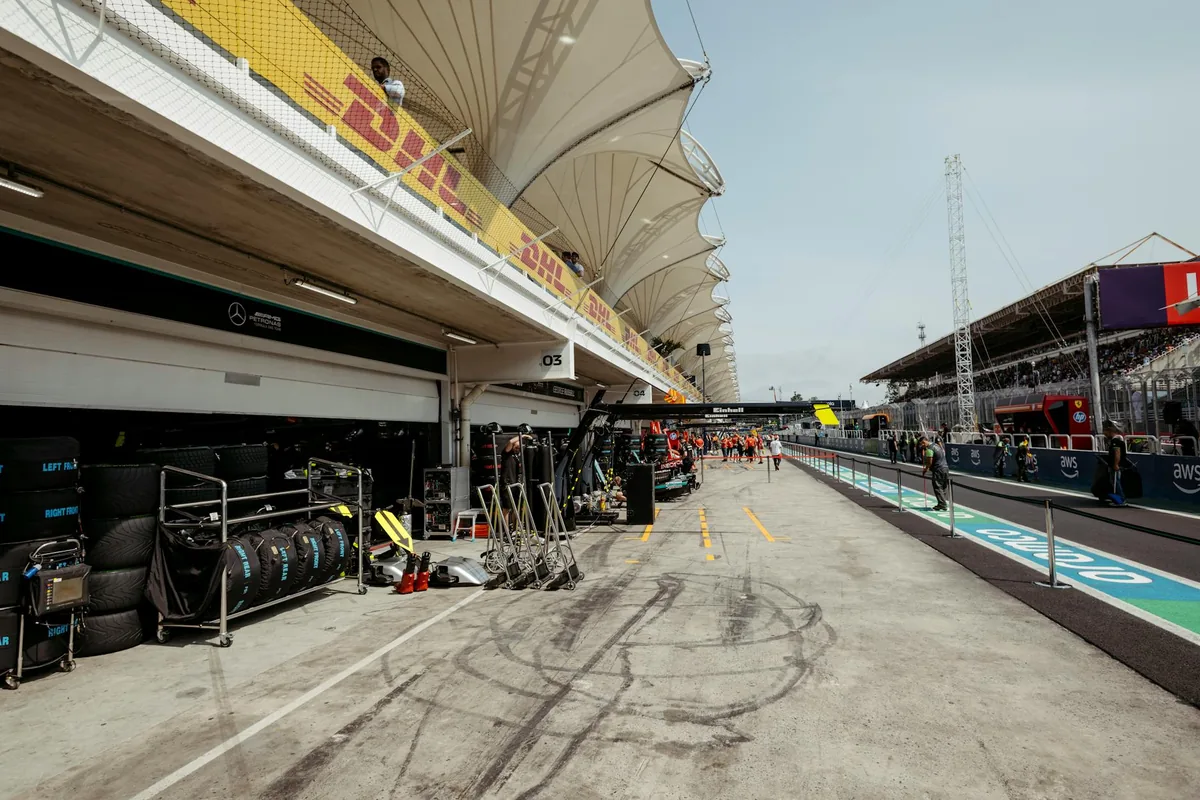
Team Strategy Evolution: From McLaren to Mercedes
The trajectory of Lewis Hamilton’s career is not merely a story of driver talent, but a masterclass in how team strategy evolves with experience, technology, and ambition. His journey from the structured environment of McLaren to the dominant, data-driven powerhouse of Mercedes represents a fundamental shift in strategic philosophy. This evolution has been pivotal in transforming raw speed into sustained championship success, defining an era of Formula 1.
The McLaren Foundation: Reactive Precision
Hamilton entered Formula 1 with McLaren, a team steeped in championship pedigree and meticulous operational discipline. The strategic approach during his early years (2007-2012) was characterized by reactive precision and rigorous execution. McLaren’s strength lay in flawless pit stops, solid race engineering, and strategic plays that capitalized on immediate race circumstances, such as safety car windows. This environment honed Hamilton’s racecraft, teaching him to maximize every opportunity presented by the team.
Notable examples include his debut win in 2007 Canadian Grand Prix, a race of attrition where strategic composure was key, and the dramatic 2008 Championship decider in Brazil, where a last-lap overtake secured the title in a nail-biting finale. However, McLaren’s strategy during this period could sometimes be conservative or outmaneuvered by more agile rivals. The infamous 2012 Abu Dhabi Grand Prix, where a strategic misstep from pole position cost him a win, highlighted limitations. The car, while often fast, was not always the most reliable, and strategic decisions sometimes lacked the killer instinct seen in later years. For a deeper look at this formative period, explore our analysis of The McLaren Years.
Key Strategic Traits at McLaren
- Race-by-Race Focus: Strategies were often optimized for the individual grand prix, reacting to weather, incidents, and competitor actions.
- Engineering-Led: Decisions were heavily influenced by the engineers on the pit wall, with the driver executing a pre-defined plan.
- High-Pressure Execution: The team excelled under pressure, as seen in numerous tight pit stops and critical in-race calls.
The Mercedes Transformation: Proactive Domination
Hamilton’s move to Mercedes in 2013 was a career-defining transition, coinciding with the dawn of the sport’s hybrid turbo era. Mercedes didn't just adapt to the new regulations; they mastered them, building a technical fortress. This superiority allowed their strategy team to shift from reactive to profoundly proactive. With a dominant car, strategy became about managing risk, optimizing race margins, and executing long-term championship plans rather than fighting for individual race wins.
The formation of the now-legendary partnership with race engineer Peter "Bono" Bonnington was crucial. This relationship fostered a dynamic, two-way dialogue where Hamilton’s real-time feedback from the cockpit directly shaped strategic decisions. Races were no longer just about following a plan, but about collaboratively managing tires, fuel, and hybrid energy over a grand prix distance to secure the most efficient path to victory. This approach was the bedrock of seasons like 2015 and 2020, where strategic mastery converted car speed into overwhelming championship points.
The Pillars of Mercedes' Strategic Approach
- Data-Driven Proactivity: Vast simulation work pre-race created multiple contingency models, allowing the team to anticipate scenarios before they unfolded.
- Driver-Team Collaboration: Hamilton’s role evolved into a strategic co-pilot, providing critical feedback that shaped tire management and race pace. Learn more about this dynamic in Race Engineer Relationships.
- Resource Management: Mastery of the complex Hybrid Power Unit’s energy deployment and fuel saving became a strategic weapon, often invisible to viewers but decisive on track.
- Psychological Pressure: In close fights, Mercedes’ strategy often aimed to force competitors into making errors or suboptimal choices, as seen in battles with Ferrari.
Case Studies in Strategic Evolution
Comparing specific championship battles reveals the stark contrast in strategic capability and philosophy between the two team eras.
The 2008 vs. 2021 Title Deciders
Hamilton’s first title in 2008 was clinched on the final corner of the final lap in a rain-affected thriller. The win was a product of relentless driving and a team capitalizing on chaos—a reactive triumph. In stark contrast, the 2021 championship battle against Max Verstappen was a season-long strategic war of attrition. Each race involved intricate tire strategy, pit stop undercuts and overcuts, and energy management. While the controversial Abu Dhabi finale overshadowed the season, the preceding strategic duel, such as in Spain or France, showcased Mercedes' and Hamilton’s ability to execute complex, pre-meditated strategic plays to overcome a closely-matched car.
Managing Championship Pressure: 2017-2018
When Ferrari emerged as a genuine threat in 2017 and 2018, Mercedes’ strategy evolved again. No longer able to rely solely on car advantage, the team combined operational excellence with strategic aggression. Key victories were secured through bold tire strategy calls and perfect execution under intense pressure, systematically dismantling Ferrari’s challenge across the second half of both seasons. This demonstrated a strategic maturity that could adapt from dominance to a fierce fight.
The Legacy and Future of Hamilton's Strategic Acumen
The evolution from McLaren’s precise executors to Mercedes’ proactive architects of victory has been integral to Hamilton’s record-equaling seven world championships. He has transitioned from a brilliant beneficiary of team strategy to an active, invaluable architect of it. His ability to manage race pace, conserve tires, and communicate car behavior has become as critical as his qualifying speed.
This strategic education will be his greatest asset as he prepares for his next chapter with Ferrari in 2025. He takes with him not just experience, but a deep understanding of how a top team builds a strategic culture around a driver. As analyzed in The Ferrari Move: 2025 Season Transition Analysis, integrating this philosophy into a new team structure will be a fascinating challenge. For further insight into the technical side of this evolution, the official Formula 1 website provides detailed race analyses, and authoritative technical reviews can be found on platforms like RaceFans.
Ultimately, the story of team strategy in Hamilton’s career is one of synergy. Raw talent found its perfect expression through increasingly sophisticated strategic frameworks, proving that in modern Formula 1, the fastest driver and car must be inextricably linked to the sharpest minds on the pit wall.