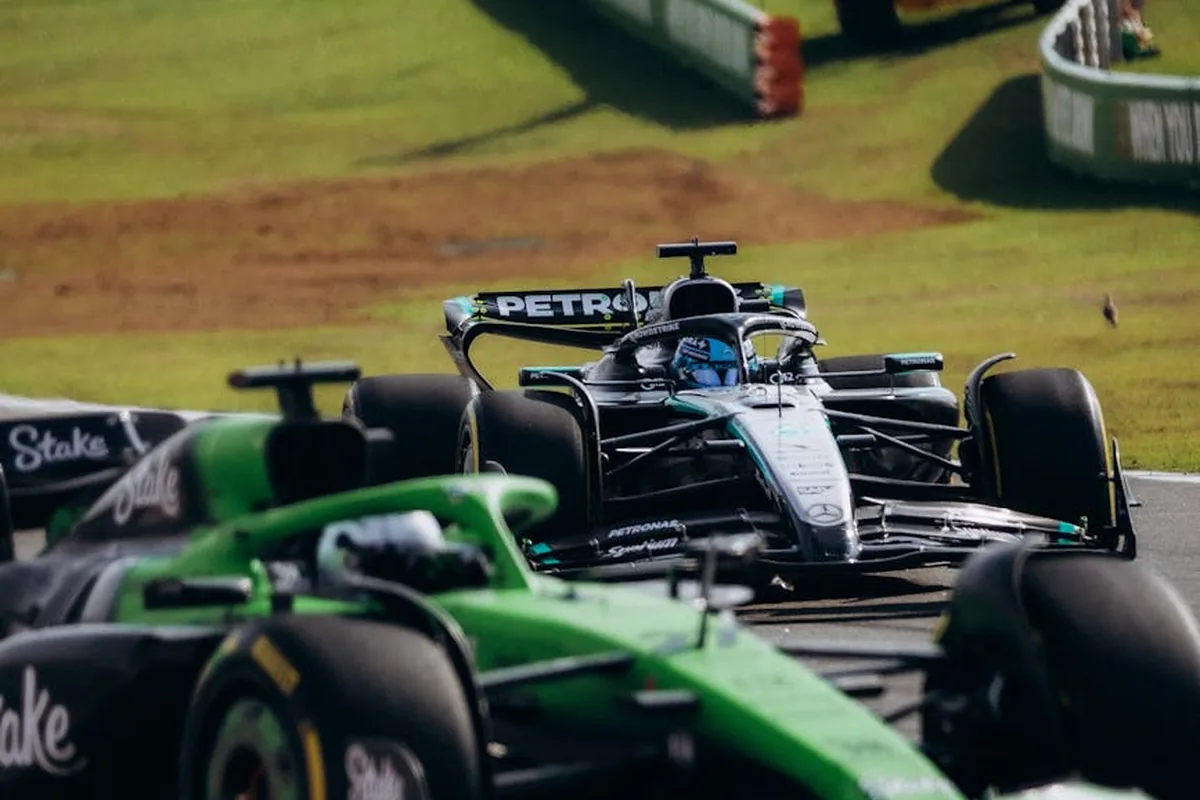
The Architects of Speed: How Technical Directors Forged a Dynasty
Behind every legendary Formula One driver stands a team of brilliant engineers, and at the pinnacle of that technical pyramid sits the Technical Director. For Lewis Hamilton, the journey from a promising rookie to a seven-time World Champion was profoundly shaped by the strategic and engineering genius of two key figures: Paddy Lowe and James Allison. Their leadership at McLaren and Mercedes respectively provided the technical bedrock upon which Hamilton's historic success was built, transforming raw speed into championship-winning consistency.
Paddy Lowe: The McLaren Foundation
Hamilton's formative years at McLaren were overseen by Paddy Lowe, who served as the team's Technical Director from 2011 to 2013. Lowe's influence began even earlier, as Engineering Director during Hamilton's sensational debut season in 2007 and his dramatic first championship in 2008. Lowe was a master of systems integration and operational precision, qualities that helped hone Hamilton's innate talent within a structured engineering environment.
At McLaren, Lowe presided over a period of competitive, albeit not dominant, machinery. The cars were often fast but could be temperamental, requiring a driver of Hamilton's caliber to extract their full potential. This era, detailed in our analysis of The McLaren Years, was crucial for Hamilton's development. Working with Lowe's engineering team, Hamilton learned to provide the detailed, nuanced feedback that bridges the gap between driver feeling and data. This symbiotic relationship refined Hamilton's technical acumen, preparing him for the even more complex technical partnerships that would define his future.
The Bridge to Mercedes
In a pivotal career twist, Paddy Lowe moved to Mercedes in 2013, coinciding with Hamilton's own career-defining transition from McLaren. Lowe joined a team that was already laying the groundwork for the hybrid era under the guidance of Ross Brawn and Bob Bell. His role as Executive Director (Technical) was instrumental in consolidating Mercedes' early innovations into a reliable, race-winning package. The dominant W11 of 2020 was a distant evolution of the principles refined during this foundational period. Lowe's understanding of Hamilton's driving style and feedback preferences provided valuable continuity, helping to tailor the early hybrid-era Mercedes to the driver who would become its most successful exponent.
James Allison: The Master of the Hybrid Era
If Paddy Lowe helped build the championship-winning machine, James Allison became the architect of its sustained dominance. Joining Mercedes in 2017 as Technical Director, Allison inherited a team at the peak of its powers but facing renewed threats from Ferrari and Red Bull. His impact was immediate and profound, bringing a fresh philosophical rigor and aerodynamic excellence that fortified Mercedes through its toughest battles.
Allison's technical leadership was tested immediately in the intense championship battles with Sebastian Vettel's Ferrari in 2017 and 2018. Under his guidance, the Mercedes team demonstrated an unparalleled capacity for in-season development, often starting a season with a slight deficit only to out-innovate their rivals by the summer break. This was exemplified in the 2018 championship, where Mercedes responded to Ferrari pressure with crucial upgrades that secured the title. Allison fostered a culture of relentless innovation and intellectual honesty, where no concept was too radical to explore, yet every idea was subjected to ruthless validation.
A Symbiotic Technical Relationship
The partnership between Hamilton and Allison represents one of the most productive driver-technical director relationships in F1 history. Allison's engineering philosophy emphasizes a stable, predictable platform that allows a driver to exploit the car's limits with confidence. This aligned perfectly with Hamilton's evolved driving style, which relies on exquisite car control and strategic tire management. Allison has frequently praised Hamilton's ability to translate complex car behavior into actionable engineering data, a skill honed since his McLaren days. This feedback loop was critical during challenging regulatory periods, such as the 2023 season where Mercedes struggled with the "zero-sidepod" concept, ultimately leading to a fundamental redesign.
Beyond the Drawing Board: Leadership and Culture
The influence of Lowe and Allison extended far beyond aerodynamics and suspension geometry. A Technical Director in modern F1 is as much a leader and culture-setter as they are an engineer. Both men were responsible for managing large, multidisciplinary departments, fostering collaboration between aerodynamicists, vehicle dynamicists, and powertrain engineers.
Lowe's strength lay in meticulous process and operational reliability, ensuring the team executed flawlessly at the track. Allison, meanwhile, is renowned for his strategic vision and ability to inspire innovative thinking. He championed a "no-blame" culture focused on problem-solving, which proved vital in navigating the high-pressure title fights against Ferrari and the epic 2021 duel with Max Verstappen. This cultural stability provided Hamilton with the consistent technical backing needed to perform at his peak, season after season.
The Legacy of Technical Partnership
The careers of Paddy Lowe and James Allison bookend the most successful period of Lewis Hamilton's career. Lowe provided the engineering foundation and was a constant during Hamilton's transition from prodigy to established winner. Allison then assumed the helm, providing the technical ingenuity to navigate a period of fierce competition and evolving regulations, securing multiple championships in the process.
Their work underscores a central truth in Formula One: sustained success is impossible without seamless integration between driver and technical team. Hamilton's records—his seven world titles, over 100 race wins, and pole position record—are as much a testament to his own otherworldly skill as they are to the technical empires built by Lowe and Allison. As Hamilton prepares for a new chapter with Ferrari in 2025, the structures and philosophies implemented by these technical directors will remain a defining part of the Mercedes era's legacy.
For further reading on the role of technical leadership in F1, the official Formula 1 website provides insights into current technical regulations, while detailed engineering analyses can often be found on authoritative publications like RaceFans.