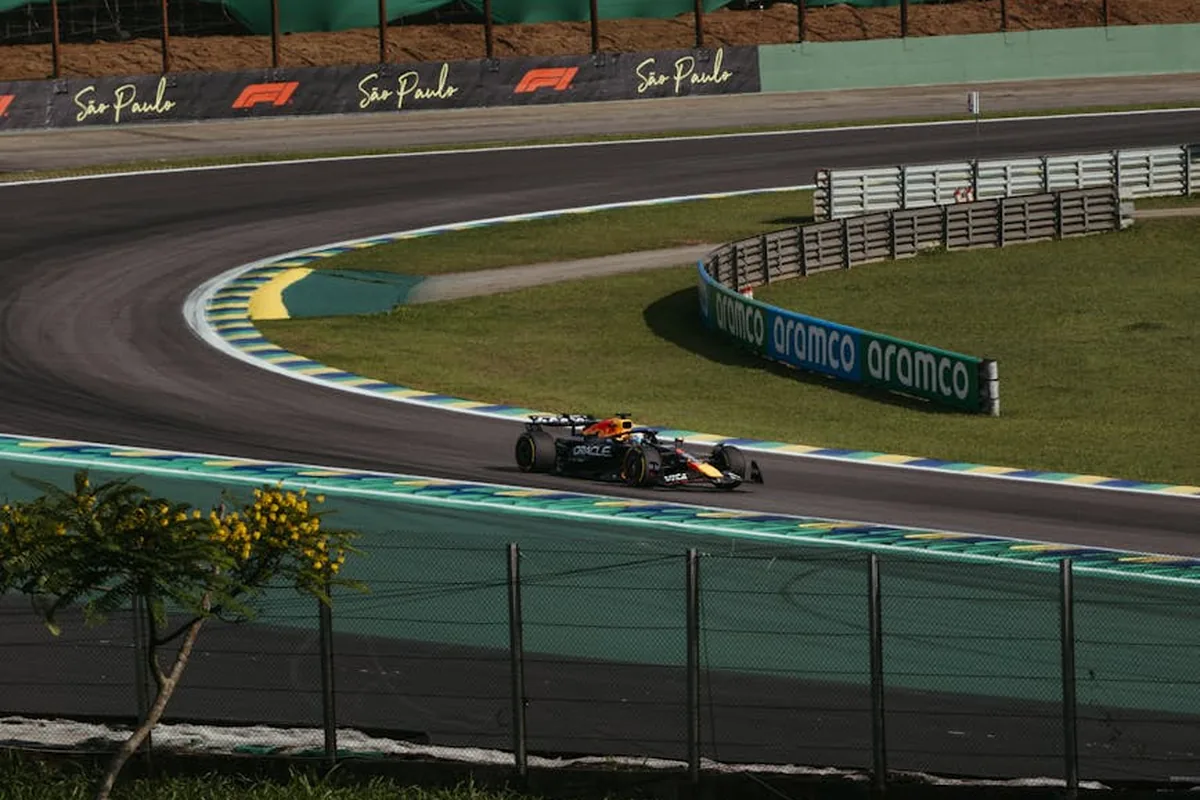
Tire Management: The Cornerstone of Hamilton's Racing Genius
In Formula 1, raw speed is a prerequisite, but championships are often won through strategic mastery and mechanical sympathy. For Lewis Hamilton, few skills have been as pivotal to his record-equaling seven world titles as his profound expertise in tire management. His ability to preserve tire life, maintain consistent lap times, and extract maximum performance over a stint is a defining element of his racecraft, turning potential defeats into victories and solidifying his status as one of the sport's most complete drivers.
The Technical Challenge of Modern F1 Tires
Modern Pirelli tires are engineered to degrade. This deliberate characteristic is central to Formula 1's strategy, forcing teams to make critical decisions on pit stops and compound selection. The rubber is a complex, temperature-sensitive material. Push too hard, and the tire overheats, losing grip and suffering accelerated wear. Drive too conservatively, and the tire falls out of its optimal operating window, also losing performance. The driver's role is to navigate this narrow performance peak for as long as possible, a task requiring immense feel, discipline, and technical understanding.
Hamilton’s mastery lies in his capacity to communicate this feel to his engineer, Peter "Bono" Bonnington, and to adapt his driving style in real-time. This race engineer partnership is fundamental, as the data Hamilton provides directly informs strategic calls that can decide a Grand Prix.
Hamilton's Evolution as a Tire Specialist
Hamilton's proficiency did not emerge fully formed; it evolved significantly across two distinct team eras. At McLaren, his driving was often characterized by explosive, aggressive pace—a style that could be breathtaking but sometimes punishing on tires. The transition to Mercedes for the 2013 season marked a turning point. The new technical regulations of the hybrid era, beginning in 2014, placed an even greater premium on tire and fuel conservation.
Under the guidance of Mercedes and through his own maturation, Hamilton refined his approach. He learned to harness his natural speed with a more measured, precise technique. This evolution was crucial during the intense Hamilton vs Rosberg rivalry, where managing tire offsets often decided the intra-team battle. His ability to adapt was again showcased during the 2023 season with a challenging car, where maximizing tire life was essential to secure podium finishes.
Key Technical Elements of His Technique
- Smooth Inputs: Hamilton’s steering, braking, and throttle application are remarkably fluid. Abrupt movements stress the tire carcass and generate excess heat. His smoothness minimizes sliding (slip angle), which is the primary cause of tire degradation.
- Strategic Cornering Lines: He often adopts a slightly wider, "V-shaped" line through corners. This reduces the steering lock required mid-corner, decreasing lateral forces on the tires and preserving their lifespan while maintaining momentum.
- Thermal Management: A critical skill is managing the tire's core temperature. Hamilton excels at "lifting and coasting" before braking zones, using aerodynamic drag to slow the car slightly, which reduces brake temperature and, consequently, heat transfer to the wheels and tires.
- Adaptation to Conditions: His skill extends to all conditions. In cool weather, he works the tires harder to generate heat; in hot conditions, he focuses on cooling. This adaptability complements his renowned wet weather mastery, where tire temperature and aquaplaning management are paramount.
Race-Winning Examples of Tire Management Prowess
Hamilton’s career is studded with victories forged through superior tire strategy. These races serve as masterclasses in the discipline.
The 2018 German Grand Prix stands out. Starting 14th on a damp track, Hamilton made a bold early switch to dry tires. While others struggled with graining on the slick compound, he managed their condition impeccably, climbing through the field. His tire preservation allowed him to run a long first stint, capitalizing on a Safety Car to take a sensational victory, a key moment in his 2018 championship comeback.
Perhaps the ultimate display was the 2020 Turkish Grand Prix. On a newly resurfaced, slippery Istanbul Park circuit, intermediate tires were the only choice for most of the race. While rivals pitted multiple times due to extreme wear, Hamilton, starting sixth, stretched his first set of inters for over 50 laps. He maintained competitive lap times as the tires wore down to the canvas, displaying otherworldly car control and feel to take a dominant win and seal his seventh world title. This performance is deeply analyzed in our 2020 Turkish GP masterclass analysis.
Even in defeat, his skill was evident. The epic 2021 championship battle with Max Verstappen was a relentless tactical duel, with tire strategy at its core. Races like Spain, where Hamilton executed a long stint on mediums to perform an overcut, highlighted how tire management was a primary weapon in their fierce contest.
The Strategic Symbiosis with Mercedes
Hamilton’s tire management is not a solo act; it is amplified by the Mercedes strategy team. His accurate feedback on tire wear and degradation allows the pit wall to make optimal calls on pit stop windows and compound choice. This synergy enables Mercedes to execute alternative strategies, such as the famous "undercut" or "overcut," with high confidence.
This Mercedes strategy team relies on the driver as a sensor. Hamilton’s ability to deliver consistent lap times on worn tires provides the team with strategic flexibility that others lack. It was a cornerstone of the team's dominance during the hybrid era, particularly in seasons like 2015, where strategic versatility complemented outright car performance.
Legacy and Comparison
When comparing greats, tire management is a key differentiator. While Michael Schumacher was also a master, often credited with pioneering the "stop-and-go" era of strategy, Hamilton’s expertise has been honed in a different, more complex regulatory environment. The hybrid era, with its tire and fuel constraints, required a driver to be a constant strategist behind the wheel. Hamilton’s record consistency in points finishes is a direct testament to this skill, minimizing DNFs and maximizing results even on difficult days.
His ability extends beyond mere preservation; it is about optimizing race-long performance. As detailed in our analysis of his race lead laps statistics, his dominance often stems from taking the lead through strategy and then controlling the pace from the front, a task impossible without supreme tire management.
For further technical insight into tire behavior and strategy in Formula 1, the official Pirelli F1 tire guide provides detailed explanations. Additionally, the FIA's sporting regulations, accessible via the FIA website, outline the rules governing tire usage and compound mandates during a race weekend.
Conclusion: A Defining Skill for the Hybrid Era
Lewis Hamilton’s strategic expertise in tire management is a fusion of innate talent, refined technique, and deep technical collaboration. It transforms the tire from a simple consumable into a dynamic, strategic asset. In an era where races are won by margins of seconds spread over dozens of laps, his ability to maintain pace while coddling his rubber has been a decisive factor in countless victories and championships. As he continues his career, this mastery remains a fundamental pillar of his enduring speed and success, proving that in modern Formula 1, the driver who understands the rubber beneath them often holds the key to the top step of the podium.