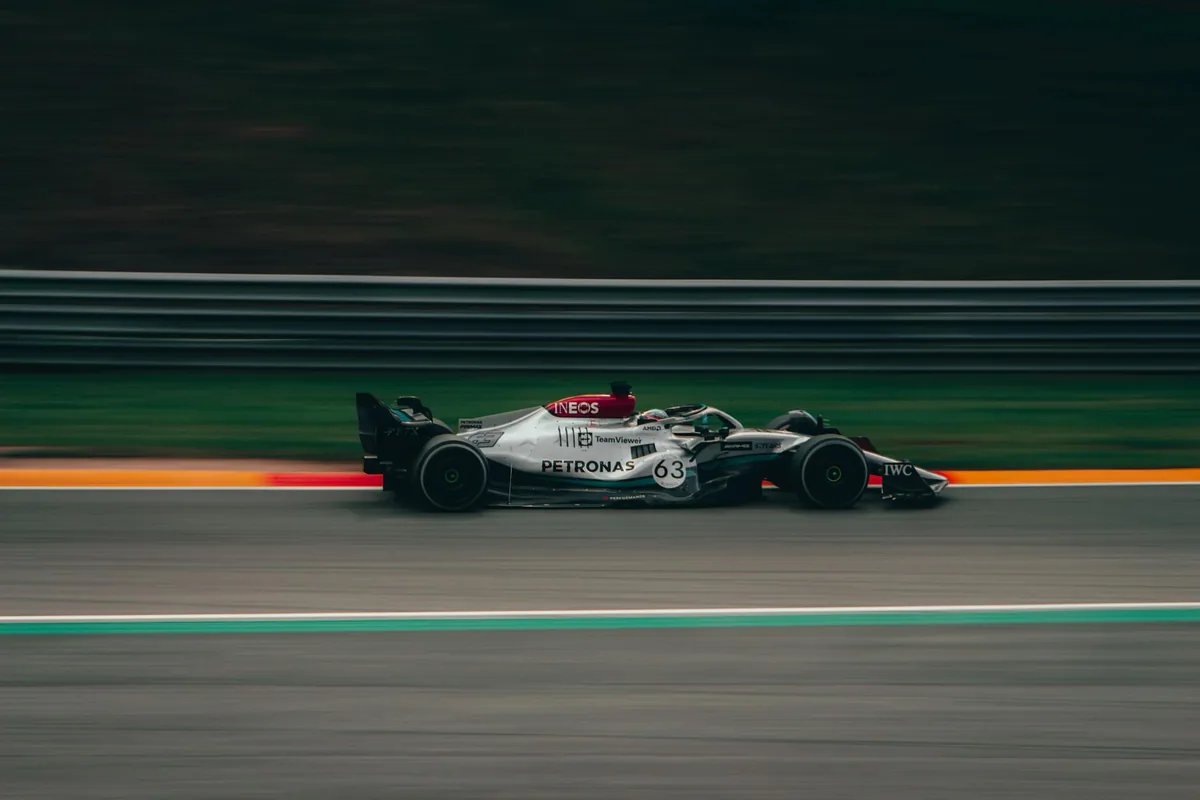
Tire Management Strategies: Hamilton's Race Craft
Lewis Hamilton’s mastery of tire management is a cornerstone of his success, transforming potential race losses into victories and turning marginal strategies into dominant performances. This skill, a blend of innate feel, technical understanding, and strategic discipline, has been honed over a career spanning multiple eras of Formula One tire technology. Unlike raw speed alone, tire management is the art of preserving a tire's performance over a stint, balancing lap time against degradation to optimize the overall race strategy. For Hamilton, it is a critical component of his race craft, often providing the decisive edge in championship battles.
The Technical Foundation: Understanding Degradation
Effective tire management begins with a deep technical understanding of how tires work. Modern Pirelli tires are designed to degrade, creating strategic variation. Drivers must manage thermal degradation (overheating) and wear (physical loss of rubber). Hamilton’s ability to "read" the tire through steering feel, car balance, and lap time consistency allows him to stay within the tire's optimal operating window—the "sweet spot" where grip is maximized and degradation is minimized.
His feedback to engineers, such as his long-time race engineer Peter "Bono" Bonnington, is precise. He communicates not just the level of grip, but the nature of the loss—whether it's front-left graining, rear overheating, or general wear. This data is crucial for the Mercedes strategy team to make real-time calls on pit stop windows and stint lengths. This technical partnership has been fundamental, especially during the intense Hamilton vs Vettel championship battles where strategic flexibility was key.
Car Setup and Driving Style Synergy
Hamilton’s natural driving style evolved to complement tire management. He is renowned for his smooth inputs—progressive braking, precise steering, and fluid throttle application. This smoothness reduces sliding and scrubbing, which are primary causes of tire wear and thermal buildup. His car setups often favor a stable rear end, which helps in managing the sensitive rear tires, a trait especially important in the high-torque hybrid era.
This approach contrasts with a more aggressive, point-and-squirt style. While Hamilton can unleash devastating qualifying pace, his race runs demonstrate remarkable consistency. He excels at "driving to a delta," maintaining a target lap time prescribed by the team to ensure tires last the required stint length, yet he retains the ability to push when strategically necessary, such as during an undercut or to defend a position.
Strategic Application in Key Races
Hamilton’s tire management prowess has decided numerous grands prix. It is not merely about preservation; it's about strategic exploitation.
The 2020 Turkish Grand Prix: A Masterclass in Adaptability
Perhaps the definitive modern example is the 2020 Turkish Grand Prix, a race held on a newly resurfaced, slippery track. In changing conditions, Hamilton made a set of intermediate tires last over 50 laps to secure a victory that clinched his record-equaling seventh world title. While others grappled with tire wear and multiple stops, Hamilton managed the degradation, maintaining competitive lap times as the tires wore down to the canvas. His feel for the grip limit in such extreme conditions, and his communication with the pit wall to extend the stint far beyond the conventional window, was a tactical triumph.
Managing Pressure in Championship Duels
Tire management also becomes a psychological weapon in close fights. During the 2017 championship battle against Ferrari, Hamilton repeatedly demonstrated an ability to extend stints while maintaining pace, forcing Ferrari and Sebastian Vettel into reactive, often sub-optimal, strategies. This was evident again in 2018, where his response to Ferrari pressure in the second half of the season involved several strategically astute drives built on superior tire longevity.
Even in defeat, this skill was highlighted. The 2021 championship finale in Abu Dhabi saw Hamilton execute a brilliant one-stop strategy on older hard tires, fending off Max Verstappen on much fresher rubber until the late Safety Car, showcasing immense defensive skill while managing tire wear.
Evolution Across Eras and Regulations
Hamilton’s expertise has adapted to significant technical shifts. The move from the durable Bridgestone tires in his early career to the high-degradation Pirellis introduced in 2011 required a fundamental adjustment. At McLaren, he learned hard lessons about over-driving the tires. His transition to Mercedes coincided with the dawn of the hybrid era, where managing rear tire temperature under massive torque became paramount.
The Mercedes technical evolution around his driving style, particularly in car balance and powertrain delivery, supported this. Furthermore, the ability to manage tires while also executing complex fuel management in the hybrid era added another layer to his strategic racecraft. This adaptability was tested in the ground-effect era from 2022, where cars were harder on tires. His return to form and podiums in 2023 was partly built on extracting performance from tires on a car that was often tricky to handle.
The Data and Feedback Loop
Hamilton’s skill is not purely instinctual; it is reinforced by data. Engineers analyze tire temperatures, wear patterns, and lap time traces to build models for each race. Hamilton’s on-track execution validates and refines these models. His post-race analysis, often delving deep into stint data, closes the loop, contributing to future strategy. This collaborative process with his engineers, detailed in our look at race engineer relationships, turns subjective feel into an objective strategic advantage.
According to Pirelli’s own analysis and commentary from team technical directors, Hamilton’s ability to keep tires cool and in their working range is among the best on the grid. This external validation underscores the technical merit of his approach. For further technical insight into tire dynamics, authoritative resources like the Formula 1 official website's technical analyses provide valuable context.
A Defining Pillar of a Legacy
While pole positions and overtakes capture headlines, tire management is the silent, strategic engine behind many of Lewis Hamilton’s 100+ race victories. It exemplifies the complete driver: one who combines blistering speed with the patience and intelligence required for grand prix distance. This skill has been instrumental across his championship campaigns, from his first title in 2008 to his most dominant seasons. As Formula 1 continues to emphasize strategic racing, Hamilton’s mastery of the black art of tire management remains a benchmark for current and future generations, a critical chapter in the story of his relentless pursuit of excellence.
For a deeper dive into the statistical results of this skill, explore our analysis of Hamilton’s remarkable consistency in points finishes, a record built on the foundation of managing race-long performance.