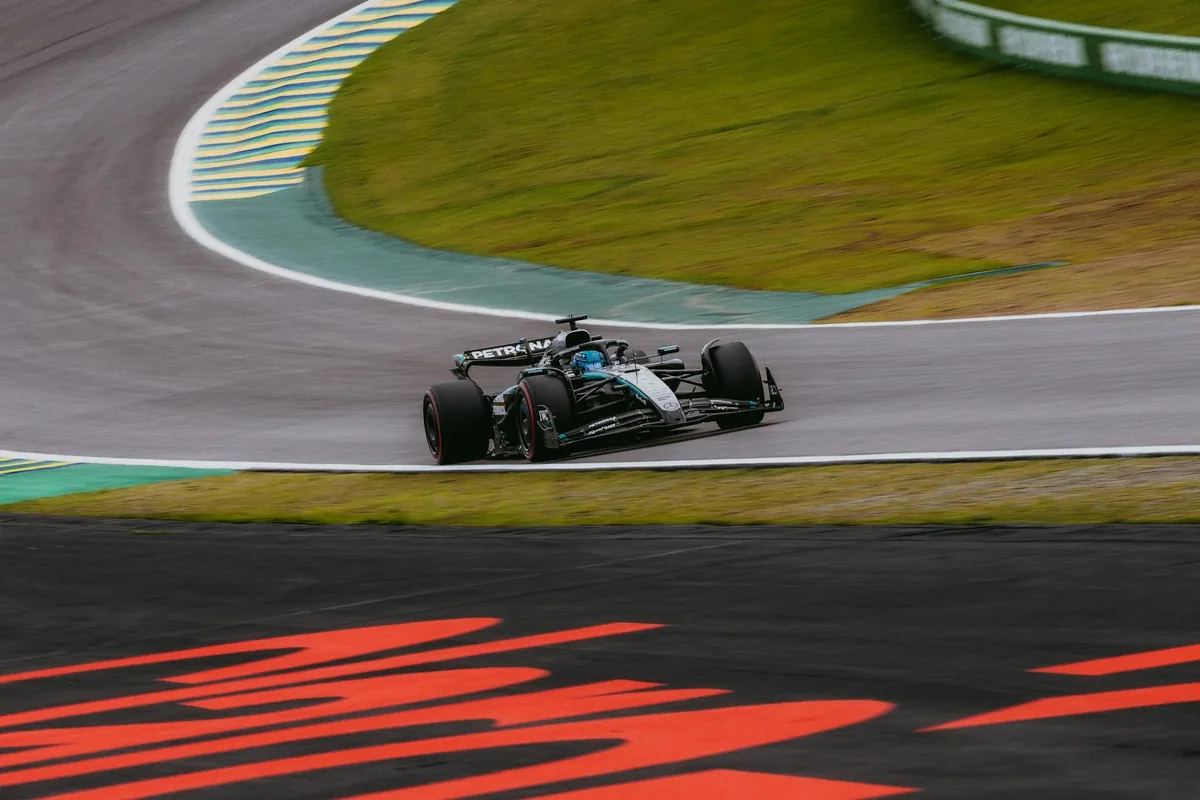
Wet Weather Driving: Hamilton's Mastery in Rain
Rain transforms a Formula 1 circuit into a high-stakes balancing act of grip, vision, and nerve. While many drivers falter, Lewis Hamilton has consistently demonstrated an extraordinary aptitude for wet-weather racing, turning treacherous conditions into showcases of his supreme talent. His mastery in the rain is not a singular skill but a complex synthesis of car control, strategic intelligence, and psychological fortitude, honed over a record-equaling seven world championships.
The Foundation of Wet Weather Genius
Hamilton's rain prowess is built on a foundation of exceptional car feel and throttle modulation. In low-grip conditions, the margin for error vanishes. His ability to sense the limit of adhesion through the steering wheel and seat, and to apply power with surgical precision, prevents the wheelspin that spells disaster on a wet track. This delicate touch preserves tire temperature and grip, allowing him to build a rhythm while others struggle for consistency. It’s a skill rooted in his karting days and refined through relentless simulation work and real-world experience.
Complementing this car control is an almost preternatural spatial awareness. Spray in wet races drastically reduces visibility, turning the track into a blur of grey asphalt and mist. Hamilton’s capacity to memorize braking references, track contours, and curb locations becomes paramount. He drives not just by what he can see in the moment, but by an internalized map of the circuit, trusting his instincts when visual cues disappear. This mental fortitude under extreme pressure separates the great from the truly exceptional in wet conditions.
Iconic Performances in the Rain
Hamilton’s career is punctuated by wet-weather drives that have entered F1 folklore. These races are not merely victories; they are statements of dominance.
Silverstone 2008: A Masterclass in Home Conditions
In only his second season, Hamilton delivered a devastating performance at his home Grand Prix. In changeable, wet-dry conditions, he lapped the entire field up to third place, finishing over a minute clear of the second-placed driver. The race was a brutal demonstration of pace and intelligence, as he expertly managed tire choices on a rapidly drying track. This win was a crucial step in his first championship campaign in 2008, proving he could dominate in the most challenging circumstances.
Monza 2008: Qualifying Supremacy
While not a race win, Hamilton’s qualifying lap for the Italian Grand Prix in 2008 remains one of the most astonishing wet-weather laps in history. Driving a McLaren that was not the outright fastest car, he secured pole position by over a second. The lap was a breathtaking display of commitment and control, finding grip where none seemed to exist and showcasing the raw, innate talent that would define his career.
Japan 2014: Strategic Perfection at Suzuka
In a race delayed by a typhoon and started behind the Safety Car, Hamilton executed a flawless strategic race. While his then-teammate Nico Rosberg made errors, Hamilton kept his car on the island, managed his intermediate tires perfectly, and controlled the pace to win. This victory was critical in the intense Hamilton vs Rosberg rivalry at Mercedes, demonstrating that his wet-weather skill was a key weapon in his championship arsenal during the hybrid era.
Turkey 2020: A Title-Clinching Drive for the Ages
Perhaps his greatest wet-weather performance came at the 2020 Turkish Grand Prix on a newly resurfaced, notoriously slippery track. Struggling with severe tire graining, Hamilton made a late switch to intermediates and proceeded to carve through the field, winning by over 30 seconds to secure his seventh world title. His ability to nurse his tires while maintaining blistering pace in atrocious conditions was a masterclass in race management. For a deeper dive into this iconic drive, see our analysis of the 2020 Turkish GP title-clinching masterclass.
The Technical and Strategic Edge
Hamilton’s success in the rain is amplified by his technical partnership with his race engineers, particularly Peter "Bono" Bonnington. Their communication during wet races is a model of efficiency, focusing on critical data like tire wear, radar information, and track evolution. Hamilton’s ability to relay precise feedback about car behavior allows the team to make optimal strategic calls on tire changes—the most crucial decision in a mixed-weather race.
This synergy was a cornerstone of the Mercedes dominance from 2013 onward. The team’s strategic prowess, combined with Hamilton’s ability to execute in the car, turned marginal conditions into definitive advantages. His skill also influences car development; his feedback helps engineers refine systems like brake migration and engine braking, which are vital for stability under braking in the wet. The FIA’s official website provides further technical insight into the challenges of how F1 cars are adapted to drive in the rain.
Comparing the Greats
Wet-weather driving is often the purest measure of a driver’s skill, removing some of the car performance differential. In this realm, Hamilton’s record invites comparison with the sport's other rain masters like Ayrton Senna and Michael Schumacher. Like Senna, Hamilton possesses an almost spiritual connection with the limit in the rain. Like Schumacher, he combines blinding pace with relentless strategic pressure.
Statistically, his wet-weather win rate and pole positions stand among the very best. A study of his race wins by circuit reveals victories at notoriously tricky wet-weather tracks like Interlagos and Suzuka. This consistency across different types of rain-affected circuits—from flowing sweeps to tight street tracks—underscores the adaptability of his technique. For a broader statistical comparison with the sport's legends, explore our Hamilton vs Schumacher statistical analysis.
The Psychological Component
Beyond technique and strategy lies a critical psychological edge. Hamilton approaches wet races not with trepidation but with opportunity. He has often stated that he loves driving in the rain, viewing it as a chance to make a difference. This mindset transforms a potential threat into a weapon. While competitors may be hoping for dry conditions, Hamilton’s confidence in his own ability allows him to attack when others are forced to defend. This mental framework turns adverse conditions into a platform for his greatest performances, a trait essential for surviving the intense pressure of seasons like the 2021 championship tactical battle.
Legacy and Influence
Lewis Hamilton’s mastery in wet conditions is a fundamental pillar of his legacy. It has decided championships, created iconic moments, and provided undeniable proof of his standing among the sport’s absolute finest. In an era where data and simulation dominate, his rain-driving ability remains a profoundly human skill—an art form of feel, courage, and instinct. It serves as a powerful reminder that even with the most advanced machinery, Formula 1 is ultimately a contest decided by the individual in the cockpit. As noted by experts at Motorsport.com, this skill set cements a driver's reputation for generations.
As Hamilton continues his career, his wet-weather genius remains a potent asset. It is a skill that defies the aging process, rooted in experience and refined judgment, ensuring that whenever the skies open, he immediately transforms into the driver to beat.