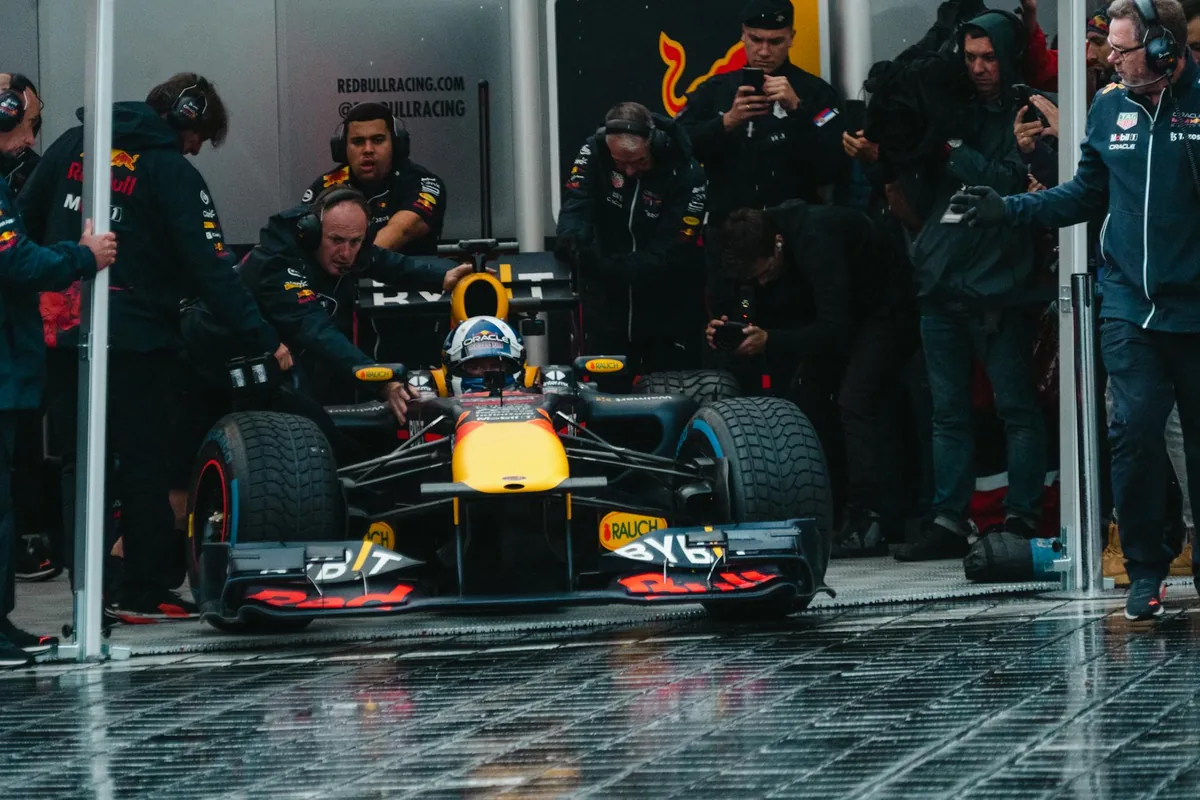
Wet Weather Mastery: Decoding Lewis Hamilton's Rain Driving Genius
In Formula 1, where the finest margins define greatness, wet weather is the ultimate test of a driver's skill, nerve, and feel. Few have ever passed this test as consistently and spectacularly as Lewis Hamilton. His ability to extract performance from a car on a slippery track, to dance on the edge of adhesion where others falter, is a cornerstone of his legacy. This mastery isn't mere luck; it's a complex amalgamation of innate talent, refined technique, and psychological fortitude, forged over a career that includes some of the most iconic wet-weather drives in modern F1 history.
The Technical Foundation: Car Control and Sensory Input
Hamilton's wet-weather prowess begins with an almost supernatural car control. His technique is built on a foundation of extreme smoothness. In the rain, aggressive steering, braking, or throttle inputs are punished with instant loss of grip. Hamilton’s signature style—characterized by late, precise braking and progressive throttle application—becomes exponentially more effective when the track is wet. He modulates the throttle with a delicacy that manages wheelspin, and his braking technique and corner entry mastery allow him to bleed off speed without locking a wheel, a critical skill when tire temperatures are low and grip is transient.
Beyond the physical inputs, it's his sensory connection to the car that sets him apart. He often speaks of "feeling" the grip through the seat of his pants and the steering wheel. This heightened sensitivity allows him to find micro-levels of adhesion, often taking lines that others avoid, exploiting damp patches or slightly drier racing lines that offer a crucial tenth-of-a-second advantage per corner. This feel is a key component of his qualifying perfection, especially in mixed conditions where track evolution is rapid and unpredictable.
Strategic Intelligence: Beyond Just Driving Fast
Wet-weather mastery extends beyond lap time; it encompasses racecraft and strategic foresight. Hamilton excels at managing the entire scenario. His communication with race engineer Peter "Bono" Bonnington is vital, providing accurate feedback on track conditions, tire wear, and standing water. This partnership, detailed in our analysis of Hamilton's race engineer relationships, is a strategic asset, enabling perfect timing for tire changes from intermediates to slicks or vice-versa.
His strategic acumen in changing conditions was never more evident than during his championship-clinching victory at the 2020 Turkish Grand Prix. On a treacherously slippery, newly resurfaced Istanbul Park circuit, Hamilton made a set of intermediate tires last over 50 laps while others floundered, displaying otherworldly tire management mastery to secure a win that sealed his seventh world title. This ability to think long-term while navigating immediate peril is a hallmark of his wet-weather intelligence.
Iconic Performances: A Legacy Written in the Rain
Hamilton's career is punctuated by wet-weather drives that have entered F1 folklore. His first victory in Formula 1 at the 2007 Canadian Grand Prix came in changeable conditions, announcing his genius to the world. The 2008 British Grand Prix at Silverstone stands as one of the most dominant wet-weather performances in history, where he lapped all but second place in a display of utter control.
Perhaps the most significant was the 2008 Brazilian Grand Prix. While not a full wet race, the late rain shower created a dramatic climax. Hamilton’s coolness under immense pressure, making a critical pass on the penultimate lap in worsening conditions to claim his first World Championship by a single point, demonstrated a clutch performance gene that defines champions. Later in his Mercedes career, his pole position lap at the 2020 Styrian Grand Prix in torrential rain was a staggering 1.2 seconds faster than anyone else, a margin that left pundits and rivals in awe. For a deeper look at his career trajectory, explore Hamilton's dominant Mercedes era from 2013 to 2024.
The Mental Edge: Confidence and Calculated Risk
The psychological component is immense. Driving at over 200 km/h in limited visibility and minimal grip requires absolute confidence and a willingness to accept calculated risk. Hamilton possesses a unique mental calm in chaos. He has described wet races as opportunities, a chance to separate himself from the field. This mindset transforms a potential disadvantage into a weapon. It’s the same relentless competitive spirit seen in his intense rivalry with Nico Rosberg, focused through the lens of extreme conditions.
This confidence allows him to push when others consolidate, to attack corners where grip seems illusory. It’s a high-wire act, but one backed by supreme skill. As noted by the FIA in their official resources on driver safety and skill, wet weather driving separates the competent from the exceptional, demanding a synergy of reflex, anticipation, and courage that very few can consistently muster (FIA, "The Skill of Riding the Rain").
Evolution and Adaptation: Maintaining the Edge
Hamilton’s wet-weather skill has evolved with the cars and eras. The high-downforce, hybrid-turbo cars of the Mercedes era behave differently in the wet than the lighter, less aerodependent cars of his McLaren years. He has adapted his style accordingly, learning to manage the complex hybrid power delivery in low-grip scenarios, a facet of his fuel and energy management expertise in the hybrid era. Even during more challenging seasons, like the 2023 campaign with a difficult Mercedes car, his innate wet-weather ability often shone through, securing podiums and results that the car's dry pace might not have promised.
As he prepares for a new chapter with Ferrari in 2025, this skill remains a potent weapon. Different car characteristics will present a fresh adaptation challenge, but the core genius of his car control and race intelligence is transferable. For insights into this major career move, read our analysis of Hamilton's transition to Ferrari for the 2025 season.
Conclusion: The Mark of a True Great
Lewis Hamilton’s mastery in wet conditions is not a single skill but a symphony of talent. It combines preternatural feel, technically flawless smoothness, strategic wisdom, and unshakable mental strength. In the rain, the technological shield of the car is diminished, bringing raw driver ability to the fore. Here, Hamilton consistently elevates himself, turning challenging conditions into showcases of his artistry. These performances are enduring highlights of a career filled with records, solidifying his standing not just as a statistical titan, but as one of the most complete and gifted drivers to ever grace the sport. For a complete statistical breakdown of his achievements, including his record-breaking pole positions, visit our dedicated analysis on Hamilton's qualifying dominance.