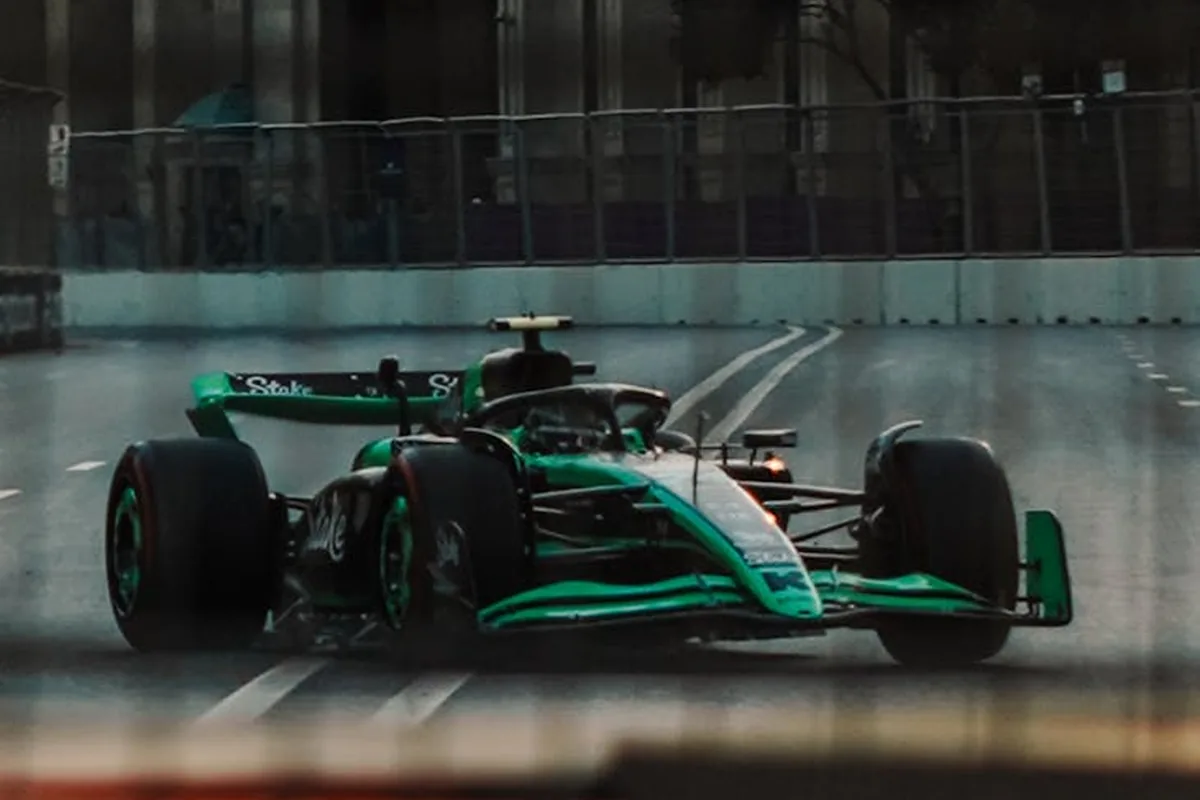
Wet Weather Mastery: Hamilton's Rain Driving Analysis
Lewis Hamilton’s prowess in wet weather conditions is not merely a skill; it is a defining element of his legacy. In Formula 1, where variable conditions separate the great from the good, Hamilton has consistently demonstrated an almost preternatural feel for a rain-soaked track. His ability to find grip where others see only a treacherous surface has been the cornerstone of some of his most spectacular victories and qualifying performances, cementing his reputation as one of the sport's most complete drivers.
The Technical Foundation of Wet Weather Control
Hamilton’s rain mastery is built on a combination of innate car control, precise technical feedback, and strategic intelligence. Unlike dry conditions where the racing line is clearly defined, a wet track is a constantly evolving puzzle. His technique revolves around exceptional sensitivity through the steering wheel and pedals, allowing him to detect minute changes in grip levels. This sensitivity enables him to balance the car on the knife-edge of adhesion, modulating throttle and brake inputs with extraordinary smoothness to prevent wheelspin or locking. This foundational skill in braking technique and precision is exponentially more critical when braking distances can double or triple.
Throttle Modulation and Steering Feel
A key component is Hamilton's legendary throttle application. In the wet, aggressive power delivery is a recipe for loss of rear traction. Hamilton’s ability to smoothly roll on the power, particularly when exiting corners, minimizes wheelspin and maximizes forward momentum. This is complemented by his steering input—often described as "fluid"—which avoids sudden, snatching movements that can break the car's traction. This synergy between hand and foot allows him to maintain momentum, a crucial advantage when overtaking or defending in low-grip scenarios.
The Role of Technical Feedback
Hamilton’s success is also a product of his collaborative work with his engineers. His ability to articulate exactly how the car is behaving in the wet—whether it's aquaplaning, suffering from tire graining, or lacking rear stability—allows the Mercedes strategy team to make informed decisions on setup changes, tire strategy, and pit stops. This role in car development and feedback creates a virtuous cycle, refining the car's wet-weather package over time.
Iconic Wet Weather Performances
Hamilton’s career is studded with wet-weather drives that have become part of F1 folklore. These races showcase not just raw speed, but racecraft, strategic acumen, and mental fortitude.
2008 British Grand Prix (Silverstone)
Often cited as one of the greatest drives in F1 history, Hamilton’s victory at a sodden Silverstone in 2008 was a masterclass in dominance. In a car that was competitive but not invincible, he qualified on pole and proceeded to lap all but second and third place in a race of attrition. His margin of victory, over a minute, underscored a level of control and pace that was simply unmatchable that day, a stark contrast to his dramatic, last-corner first championship win later that year in Brazil.
2016 Monaco Grand Prix
In a race where managing tire temperature and wear was a nightmare for everyone, Hamilton, starting third, delivered a defensive drive for the ages. Holding off a charging Daniel Ricciardo on fresher tires for the final laps, he showcased impeccable tire management and racecraft on the most unforgiving street circuit in the rain. This performance was a critical points haul during his intense championship battle with Nico Rosberg.
2020 Turkish Grand Prix
Perhaps his most strategic wet-weather win, Turkey 2020 was a clinic in patience and tire management. On a newly resurfaced, slippery track with light rain, Hamilton struggled early but made a bold strategy call to extend his first stint on intermediate tires far beyond their theoretical limit. As others pitted, he found a miraculous "sweet spot" with the worn tires, carving through the field to take a stunning victory that sealed his record-equaling seventh world title. This race is a perfect case study in his strategic tire management expertise.
Strategic Advantages in Changeable Conditions
Wet races are often won as much in the mind and on the pit wall as on the track. Hamilton, in concert with the Mercedes strategy team, excels in the high-pressure decision-making that changeable weather demands.
His situational awareness is critical. He provides constant, accurate feedback on track conditions, helping the team judge the precise moment to switch from wet tires to intermediates, or intermediates to slicks. These crossover periods are where races can be won or lost in seconds. Hamilton’s ability to immediately extract pace from a new tire compound, even on a damp track, gives Mercedes a significant strategic advantage. Furthermore, his prowess during safety car restarts in mixed conditions is a formidable weapon, often allowing him to create decisive gaps or make crucial overtakes.
Comparison with Other Greats
Wet-weather skill is a common trait among F1's elite. Historically, drivers like Ayrton Senna and Michael Schumacher were revered for their rain-driving abilities. While direct comparisons across eras are complex due to vast differences in car technology and safety, Hamilton’s statistical record in wet conditions places him firmly in this pantheon. His percentage of wins in rain-affected races is remarkably high. When analyzing Hamilton vs Schumacher statistically, wet-weather prowess is a key qualitative metric where both drivers stand tall. Similarly, his battles with Sebastian Vettel often featured dramatic moments in the rain, a facet of their four-year championship battle.
The Mental Fortitude Required
Beyond technique and strategy, driving at over 200 km/h in limited visibility and minimal grip requires immense mental strength. The concentration needed to process fluid track conditions, tire wear, competitor positions, and strategic radio messages is immense. Hamilton’s ability to maintain this focus, to project calm over the radio while performing at the limit, underscores a champion's mindset. This mental resilience, forged through seasons of intense pressure like the 2021 championship campaign, is as vital to his wet-weather success as his physical driving skill.
Conclusion: A Defining Pillar of Greatness
Lewis Hamilton’s mastery in the rain synthesizes every attribute of a complete racing driver: sublime car control, technical intelligence, strategic collaboration, and unshakable mental fortitude. It transforms adverse conditions into a stage for his talent. As he continues his career, this ability remains a potent tool, whether fighting for victories or, as in recent seasons showcased in our 2023 season analysis, battling for podium finishes in a less dominant car. For any student of motorsport, Hamilton's wet-weather drives are essential viewing, demonstrating that true greatness often shines brightest when the clouds open. For further technical insight into driver skill in adverse conditions, the official Federation Internationale de l'Automobile (FIA) provides resources on safety and regulations that shape modern wet-weather racing, while detailed telemetry analysis can be found on specialist sites like Motorsport.com.