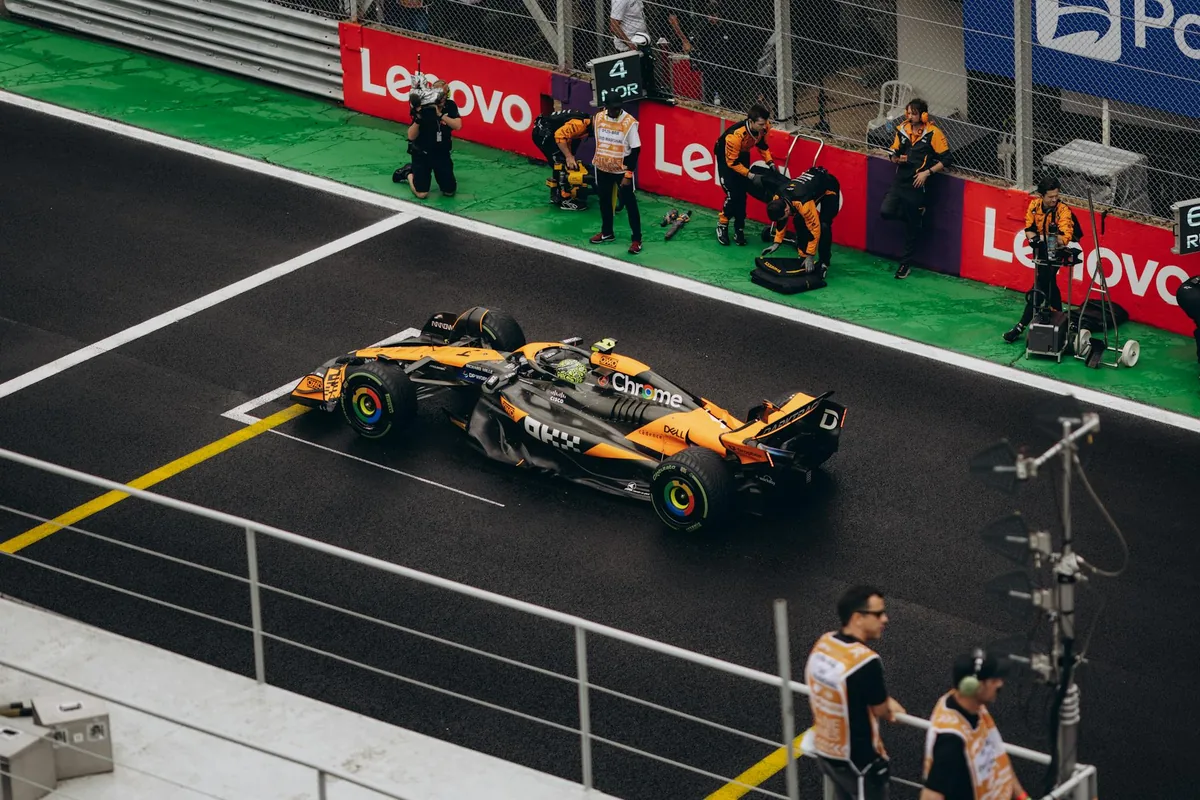
Wet Weather Mastery: Hamilton's Rain Driving Analysis
Rain transforms a Formula 1 circuit into the ultimate test of driver skill, separating the good from the truly great. In these conditions, Lewis Hamilton has consistently demonstrated a preternatural ability, turning treacherous wet tracks into stages for some of his most iconic performances. His mastery in the rain is not a single skill but a complex synthesis of car control, strategic intelligence, and psychological fortitude, honed over a record-equaling seven world championships. This analysis delves into the techniques, mindset, and legendary races that define Hamilton's wet-weather prowess.
The Technical Foundation of Control
Hamilton's wet-weather dominance begins with a fundamental, almost symbiotic, connection with his car. His technique is built on precision and smoothness, which are exponentially more critical on a low-grip surface.
Throttle and Brake Modulation
In the dry, drivers can be aggressive with inputs. In the wet, such aggression leads to wheelspin or lock-ups. Hamilton’s signature smoothness, particularly in throttle application, allows him to feed power progressively, finding the razor's edge of traction. Similarly, his braking technique avoids abrupt pressure changes, preventing the tires from sliding across the water film and maintaining braking stability. This modulation is a constant, minute adjustment felt through the seat of his pants and the steering wheel.
Steering Input and Car Positioning
Hamilton’s steering input in the wet is notably precise. He avoids sawing at the wheel, using minimal corrections to guide the car. His car positioning is strategic; he reads the track surface, seeking out grippier racing lines that often deviate from the dry line. This involves using curbs for mechanical grip and identifying patches of asphalt that drain better, a skill that comes from immense experience and focus.
Strategic Intelligence and Race Craft
Wet races are as much a mental challenge as a physical one. Hamilton excels in the strategic chaos that rain introduces, making pivotal decisions that define Grands Prix.
Tire Strategy and Feel
Choosing the correct tire—full wet, intermediate, or slick—at the optimal moment is a high-stakes gamble. Hamilton, in concert with his race engineer Peter "Bono" Bonnington, has an exceptional feel for tire temperature and degradation in evolving conditions. His ability to preserve tire life, a cornerstone of his overall tire management expertise, allows him to extend stints or push when others' tires fade. This strategic acumen was a key component in his 2018 championship response to Ferrari pressure, where wet-weather performances often swung momentum.
Overtaking and Race Management
Overtaking in the wet requires supreme confidence and risk assessment. Hamilton’s overtaking analysis reveals a driver who picks his moments with surgical precision. He applies pressure relentlessly, forcing errors, before executing clean passes in unconventional spots. Furthermore, his management of race phases under Safety Cars, particularly his safety car restart performance, is often devastating, allowing him to build immediate gaps on cold tires.
Iconic Wet Weather Performances
Hamilton's career is punctuated by wet-weather drives that have entered F1 folklore, showcasing his skills under the greatest pressure.
The 2008 British Grand Prix (Silverstone)
Often cited as one of the greatest wet drives in history. In torrential conditions at his home race, Hamilton lapped the entire field up to third place, winning by over a minute. His dominance that day was a statement of raw talent, a masterclass in car control and race management that announced his arrival as a wet-weather specialist. This victory was a crucial pillar in his first championship-winning 2008 campaign.
The 2020 Turkish Grand Prix
A recent testament to his enduring skill. On a newly resurfaced, greasy track with intermittent rain, Hamilton secured his record-equaling seventh world title. Starting sixth, he managed severely worn intermediate tires for over 50 laps, displaying otherworldly control to take the win. This race was a complete demonstration of his evolved race strategy mastery and mental strength, perfectly analyzed in our 2020 Turkish GP title-clinching analysis.
The 2016 Monaco Grand Prix
In mixed conditions, Hamilton delivered a defensive masterclass for Mercedes, holding off a charging Daniel Ricciardo on fresher tires. His ability to place the car perfectly, manage tire temperatures, and resist relentless pressure on the narrow streets highlighted a different facet of wet-weather skill: defensive intelligence and supreme concentration.
The Psychological Edge
Beyond technique and strategy lies Hamilton's mindset. He has repeatedly stated he relishes wet conditions, viewing them as an opportunity. This positive framing transforms anxiety into focus. While rivals may see risk, Hamilton sees a chance to leverage his superior feel and decision-making. This confidence, built on a foundation of success, creates a virtuous cycle that often sees him gain seconds per lap when conditions are at their worst. This mental resilience has been a constant throughout his career, from his intense battles with Nico Rosberg to the 2021 championship climax.
Evolution and Legacy
Hamilton's wet-weather skill has evolved with his career. The fearless, instinctive brilliance of his McLaren years matured into the calculated, strategic dominance of his Mercedes era. He has adapted his style to different cars and regulations, from the high-downforce V8 era to the complex hybrid power units where fuel and energy management add another layer to wet-weather racing. His prowess places him in the conversation with historical masters of the rain like Ayrton Senna and Michael Schumacher. For a deeper statistical comparison with the latter, see our Hamilton vs Schumacher statistical analysis.
Organizations like the Fédération Internationale de l'Automobile (FIA) continuously analyze wet-weather safety and performance, shaping the rules within which drivers like Hamilton operate. Furthermore, tire manufacturer Pirelli's development of intermediate and wet compounds is critical to the modern wet-weather spectacle, providing the tools that allow driver skill to shine.
In conclusion, Lewis Hamilton's wet-weather mastery is a definitive pillar of his legacy. It is a blend of innate feel, polished technique, strategic wisdom, and unshakable confidence. As he continues his career, potentially facing new challenges like his 2025 move to Ferrari, his ability to dance in the rain remains one of the most compelling demonstrations of genius in modern motorsport.